Venezuela Down, Is Greenland Next? US Imprudence Rears Its Head Again
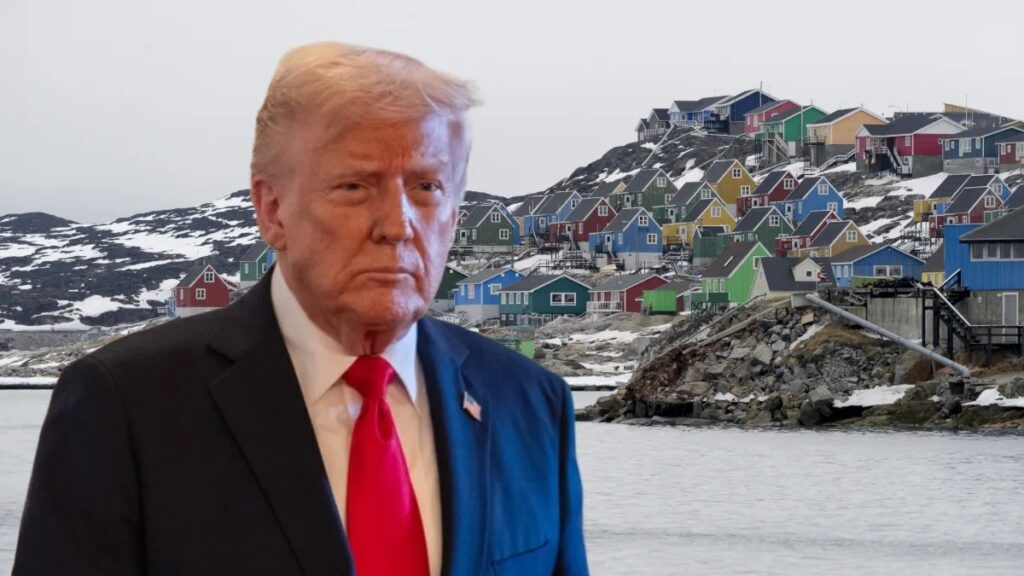
After affecting regime change in Venezuela, Trump has his sights set on Greenland, the world’s largest island, located between the North Atlantic and the Arctic Ocean. A self-governing territory part of the kingdom of Denmark, Greenland is the next coveted geopolitical trophy for him (Image: HeraldoUSA)
When news came in on January 3, 2026 that the US has launched Operation Absolute Resolve to capture Venezuelan President Nicolas Maduro and his wife Cilia Flores – and take them to the US — geopolitical watchers were mildly, if even that, surprised.
The tone and tenor of US foreign policy under President Donald Trump – as the 47th president — since his inauguration on January 20, 2025 has consistently indicated an approach based on machismo and adventurism.
Surrounded by advisors gung-ho about re-asserting the United States’ erstwhile dominance as the sole, formidable world power it once claimed to be, Trump’s decision to enter Venezuela and capture Maduro appears largely driven by his desire to remain relevant to his MAGA base and buttress his swashbuckling image.
Some neutral observers are also drawing a link between the timing of the release of the Epstein Files and the US military action in Venezuela. The Epstein Files could prove to be highly-damning for Trump; several photographs already in the public domain show him in close proximity with convicted sex offender and paedophile Jeffrey Epstein; any spirited denials of wrongdoing by Trump are met with the stone-wall of hard, substantial photographic evidence of his relations with Epstein and the subsequent fallout such involvement involves.
Meanwhile, US monitors colligate that nation’s current foreign policy adventurism with its long history of interference and involvement in other, sovereign countries’ affairs. From the 20-year-long Vietnam War to the invasion of Iraq and Afghanistan, and supporting terrorist regimes and puppet governments in between, the US State Department has been busy for the better part of the 20th century.
This comes in the backdrop of the current Trump administration pledging to follow an ‘America First’ policy – eschewing intercession in other nations’ domestic and foreign matters.
However, the US seems to be falling back on old patterns and reckless behaviour. After affecting regime change in Venezuela, it has its sights set on Greenland, which is the world’s largest island, located between the North Atlantic and the Arctic Ocean. A self-governing territory part of the kingdom of Denmark, Greenland is the next coveted geopolitical trophy for Trump.
Greenland is a highly-important strategic region owing to three interconnected factors — its geopolitical position, its natural resources and the prospective shipping routes around it. These are accentuated by the climate crisis.
Greenland is situated between the US and Europe, and astride the GIUK gap, which is a maritime passage between Greenland, Iceland and the UK; it links the Arctic to the Atlantic Ocean. This location puts Greenland in a unique position to control access to the North Atlantic, for reasons of both security and trade.
The elephant in the room – the sovereignty of this island – seems not to figure in Trump and team’s plans even remotely.
Closer home, India has first-hand experience of the fickleness, transactionalism and volatility that underscores all major policy decisions taken by the US President during both his first and present terms.
Levying punishing tariffs on India while hobnobbing with Pakistani political and military leaders and awarding them defence contracts is just one example of the transactionalism practised by him. Evidently, the fact that Pakistan follows terrorism as a principle of state policy – as proven on multiple occasions – seems to not make a dent in the US President’s decision to reward and award that rogue South Asian nation.
In such circumstances, the world, including India, watches Trump’s next moves apprehensively. Embattled at home and prodded on by his (still) loyal MAGA base and advisors to undertake adventurism beyond the US shores, the future decisions by this malevolent, misogynist, transactional leader of the so-called ‘free world’ may just be shaped by trademark myopia and short-term advantage.