US Raid On Venezuela Signals A New ‘Great Power’ Carve-Up Of The World

In custody: Nicolás Maduro, handcuffed and wearing prison clothes, with Drug Enforcement Agency officers (Image: X)
Donald Trump and his senior officials have hailed Operation Absolute Resolve, the raid on Caracas and the capture and abduction of Venezuelan president, Nicolás Maduro, as an outstanding military success.
It’s also easy to argue it was a blatant and unashamed violation of international law. And it signals a further erosion of what is left of the rules-based international order.
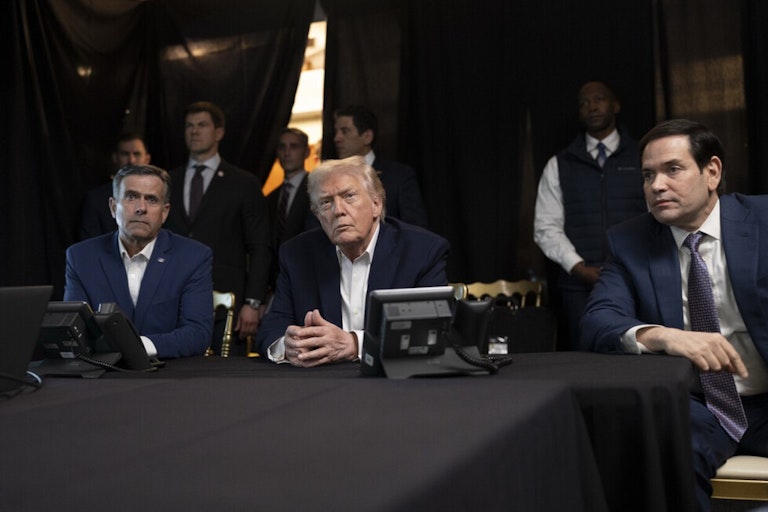
The temptation for the White House now is to declare victory and quickly move on to other targets while the world is still stunned by the audacity of kidnapping a sitting foreign leader. The people and leaders of Cuba (long an obsession for Trump’s secretary of state, Marco Rubio), Colombia (the largest supplier of cocaine to the US) and Mexico (the key route through which fentanyl gets into the US) will be deeply worried about their future prospects in a Trumpian world.
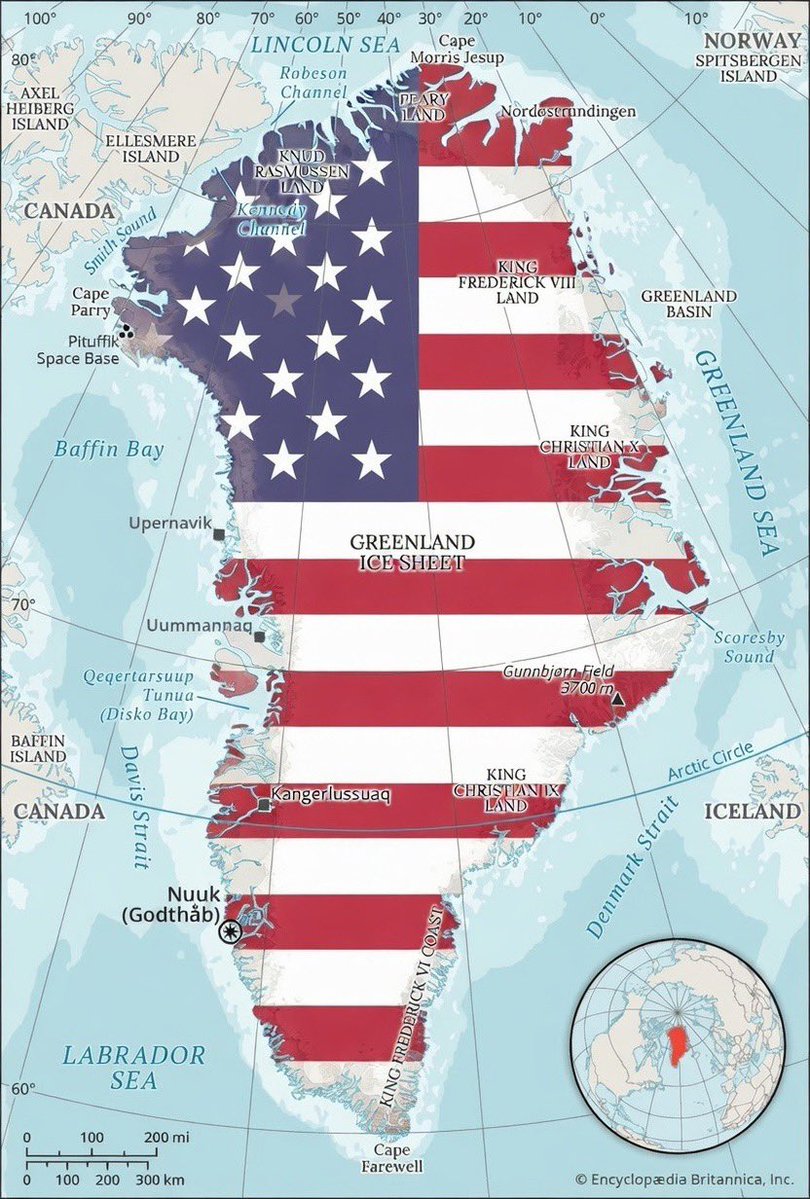
As will Greenlanders, particularly in light of Trump’s comments over the weekend that the US “need[s] Greenland from the standpoint of national security”. Not to mention the ominous tweet by Maga influencer, Katie Miller – the wife of Trump’s influential deputy chief of staff, Stephen Miller – showing a map of Greenland in the colours of the US flag.
The US president certainly won’t be discouraged by the meek response from many European officials. This has been deeply disconcerting, signalling that many of the most ardent defenders of international law appear to have given up pretending it matters any more.
The EU’s foreign policy chief, Kaja Kallas, was first out of the block, with a post that started by pointing out Maduro’s lack of legitimacy as president and ended with an expression of concern for European citizens in Venezuela. She just about managed to squeeze in that “the principles of international law and the UN charter must be respected”. But this sounded like – and most likely was – an afterthought.
A subsequent joint statement by the EU26 (all member states except Hungary) was similarly equivocal and did not explicitly condemn Washington’s breach of international law.
The British prime minister, Keir Starmer, focused his statement on the fact that “the UK has long supported a transition of power in Venezuela”, that he “regarded Maduro as an illegitimate president” and would “shed no tears about the end of his regime”. Before closing with his desire for a “safe and peaceful transition to a legitimate government that reflects the will of the Venezuelan people”, the former human rights lawyer briefly reiterated his “support for international law”.
The German chancellor, Friedrich Merz, however, wins the prize for prevarication. As well as making almost identical comments about Maduro’s lack of legitimacy and the importance of a transition in Venezuela, he also noted that a legal assessment of the US operation is complicated and that Germany will “take its time” to do so.
The view from Moscow and Beijing
While there was a mixture of enthusiasm and worry across Latin America, the strongest condemnations came from Moscow and Beijing.
The Russian president, Vladimir Putin, had signalled his support for Maduro early on in the escalating crisis at the beginning of December. A statement by the Russian foreign ministry on January 3 initially merely offered support for efforts to resolve the crisis “through dialogue”. In subsequent press releases, Russia has taken a stronger line, demanding that Washington “release the legitimately elected president of a sovereign country and his spouse”.
China similarly expressed concern about the US operation as a “clear violation of international law”. A foreign ministry spokesman urged Washington to “ensure the personal safety of President Nicolás Maduro and his wife, release them at once, stop toppling the government of Venezuela, and resolve issues through dialogue and negotiation”.
Moscow’s position in particular is, of course, deeply ironic. To condemn the US operation as an “unacceptable violation of the sovereignty of an independent state” may be correct. But it is hardly credible in light of Moscow’s decade-long war against Ukraine that has involved the illegal occupation and annexation of nearly 20% of Ukraine’s territory.
China, on the other hand, can now have its cake and eat it in Taiwan, which, unlike Venezuela, is not widely recognised as a sovereign and independent state. With regime change back on the international agenda as a seemingly legitimate endeavour, little is left, from Beijing’s point of view, of the case against reunification – if necessary by force.
Trump’s actions against Venezuela may not have accelerated Chinese plans for forceful reunification, but they will have done little to deter them. The episode is likely to have emboldened more Chinese assertiveness in the South China Sea.
Carving up the world
All this points to a further gradual conversion of American, Chinese and Russian great power interests – to have their recognised spheres of influence in which they can do as they please. But while China and Russia may be unable to do much about their now-deposed ally Maduro, there is no obvious or straightforward way to delineate where one sphere of influence begins and another one ends.
The expectation of a carve up of the world between Washington, Moscow and Beijing also explains the lack of European outrage over Trump’s operation against Venezuela. It signals a European realisation that the days of the liberal international order are well and truly over. Europe is unlikely to take a futile stand that would only risk being abandoned by Trump and assigned to Putin’s sphere.
On the contrary, European leaders will do their utmost to gloss over differences with the US and try to capitalise on an almost throwaway remark by Trump at the end of his press conference on Saturday that he is “not thrilled” with Putin.
What matters for Europe now are no longer the niceties of international norms. It’s now a question of keeping the US and its mercurial president on side in the hope of being able to defend Ukraine and deter Russia from further aggression.
Such efforts to accommodate the US president are only going to work to some extent. Trump’s decision to restate his ambition to annex Greenland, whose vast critical mineral resources he covets, plays into his vision of absolute dominance in the western hemisphere.
This revival of the two century-old Monroe doctrine (recast by Trump at the weekend as the “Donroe doctrine”) was outlined in the new US national security strategy in December. It clearly does not end with regime change in Venezuela.
The strategy set out to “reestablish conditions of strategic stability across the Eurasian landmass” or “mitigate the risk of conflict between Russia and European states”. But further destabilising the transatlantic alliance by threatening the territorial integrity of Denmark over Greenland and possibly abandoning Europe and Ukraine to the Kremlin’s imperial designs are likely to have the opposite effect.
Likewise, if the Venezuela incursion further encourages Chinese territorial claims in the South China Sea and possibly a move on Taiwan, it will hardly achieve America’s aim, spelled out in the national security strategy, of preventing military confrontation with its most significant geopolitical rival.
Like other US regime change efforts since the end of the cold war, US action in Venezuela is likely a self-isolating and self-defeating move. It signals a return of law of the jungle for which the US, and much of the rest of the world, will ultimately pay a heavy price.
(Published under Creative Commons from The Conversation)