Tourism Boom In Goa Has Locals Fighting To Save Their Land And Water
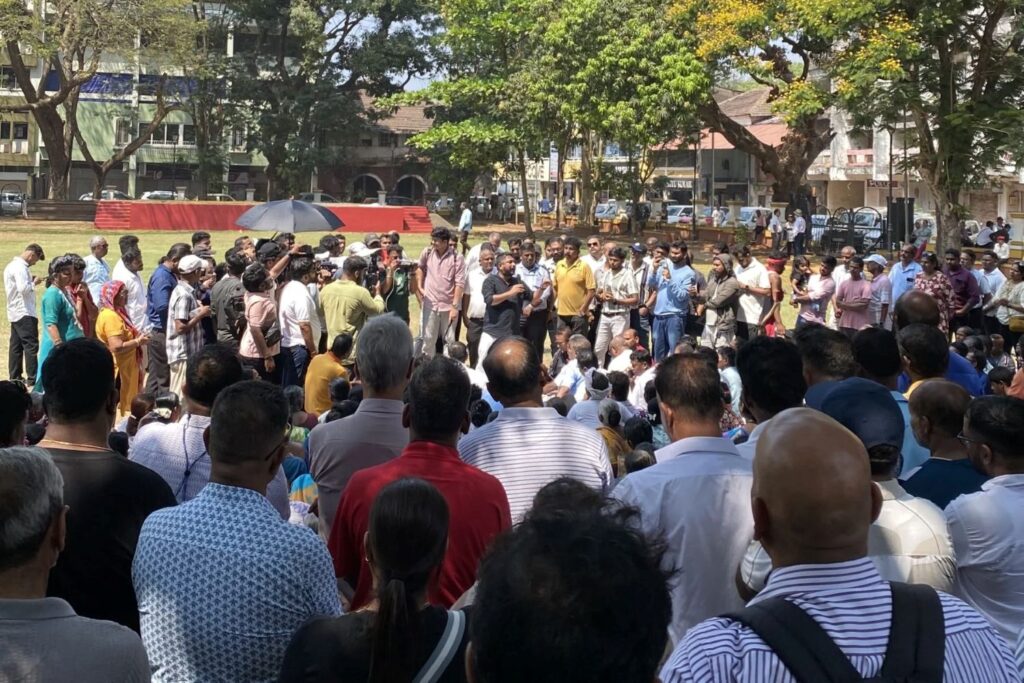
Protestors gather in Panaji, Goa’s capital, to rally against a 2024 amendment to Goa’s Town and Country Planning Act they say could enable the development of swathes of land without robust community consultation (Image: Arnav Poulekar)
Ana Gracias and Govind Shirodkar gaze out at the main source of water for agriculture in Chimbel village, North Goa.
Growing up, Shirodkar would swim in Toyyar Lake, nestled between forested hills in an area largely inhabited by Gauda Indigenous communities.
“Our ancestors settled here because of the water body,” he explains. “A canal runs into the village from the lake, carrying water for irrigation. The surrounding hills are [still] used for foraging and other traditional gathering activities.”
The hills are aquifers that feed into the lake and create natural springs in the nearby villages, including Chimbel. The lake supports local farming, recharges wells and groundwater systems in the area, acts as a flood control zone, and sustains wild bird and boar populations.
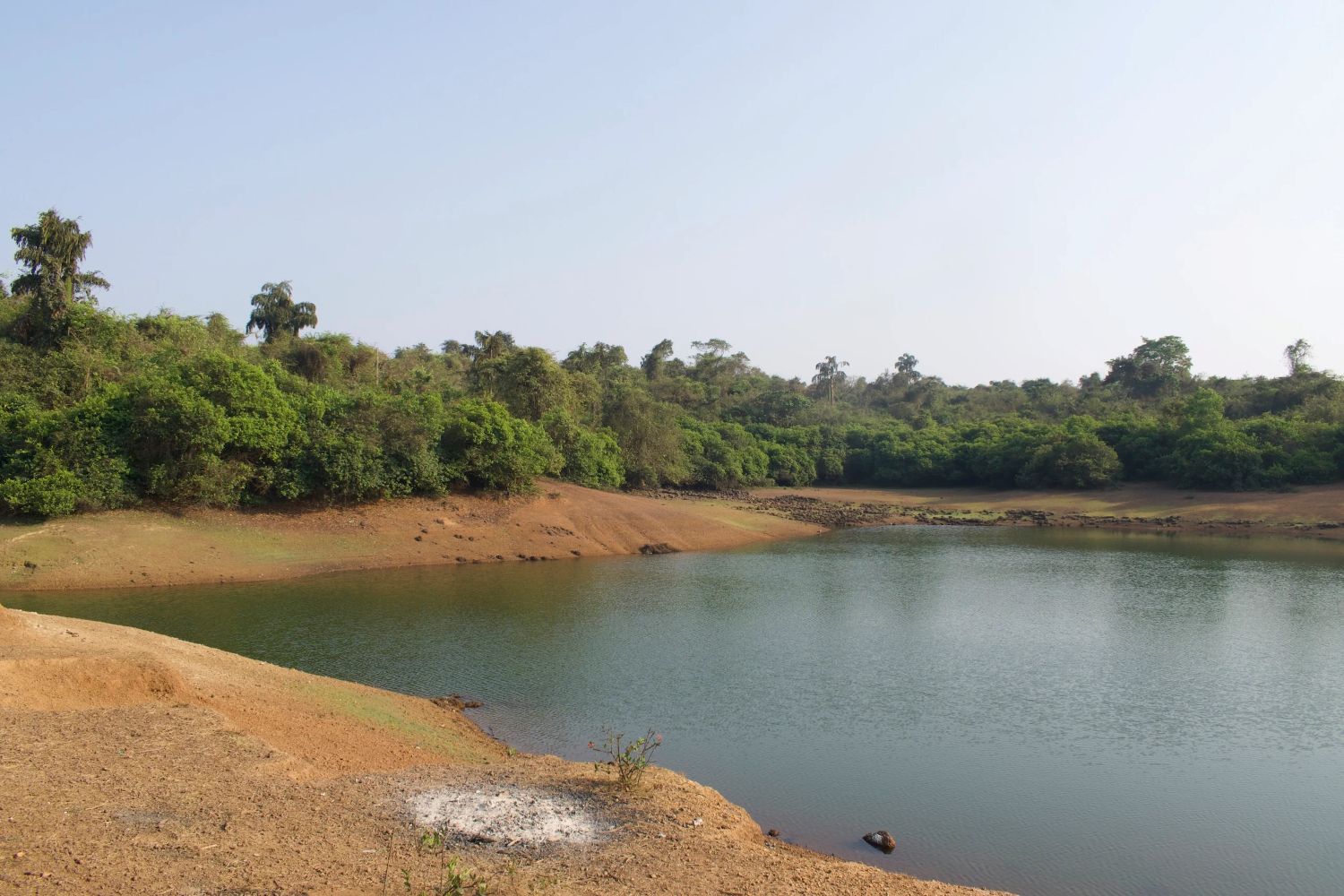
It is also a “notified wetland”, meaning its use is subject to government regulations. But controversial demarcation of its boundaries allowed construction work to begin on what would have been Goa’s tallest building, as well as a sprawling mall for local art and crafts, on one of its surrounding hills.
The structures will no longer be built following one of the state’s longest and largest peaceful public agitations in recent years – a 44-day action, which ended in early February and included a chain hunger strike. Over 1,000 locals from Chimbel were involved in the push to relocate the projects, says Gracias.
“The government ultimately decided to shift the project, keeping villagers’ sentiments in mind,” Pradip Sarmokadam tells Dialogue Earth. He is the head of nodal agency for the Goa State Wetland Authority (GSWA), which is responsible for regulating wetlands.
The Toyyar Lake action is just one in a wave of recent protests against the threat of development in eco-sensitive parts of Goa. Villagers in nearby Santa Cruz have been demanding clear demarcations of a lake boundary. Meanwhile, residents of Palem-Siridao took to the streets to call for the scrapping of a regulatory amendment they say could enable the development of swathes of land without robust community consultation.
Behind this rampant construction, protestors say, is the desire to accommodate more tourists, settlers and digital nomads in the area, which is famed for its beaches.
Goa’s wetlands are particularly vulnerable to this push for concretisation. The national Wetlands Rules of India’s Environment Act prohibit the conversion of wetlands and the setting up or expanding of industries. But authorities often fail to enforce these protections. In the case of Toyyar Lake, the relevant authority set boundaries for the wetland area that were significantly smaller than those recommended by a research body.
Unclear boundaries
Across Goa, even when wetlands are notified, authorities do not clearly demarcate their boundaries, and permissions are granted for construction activities close by. But these boundaries are vital to protect the recharge zones for water supplies.
Shirodkar is chairperson of two village-level statutory bodies formed to promote conservation – Chimbel’s committees to manage biodiversity and wetlands.
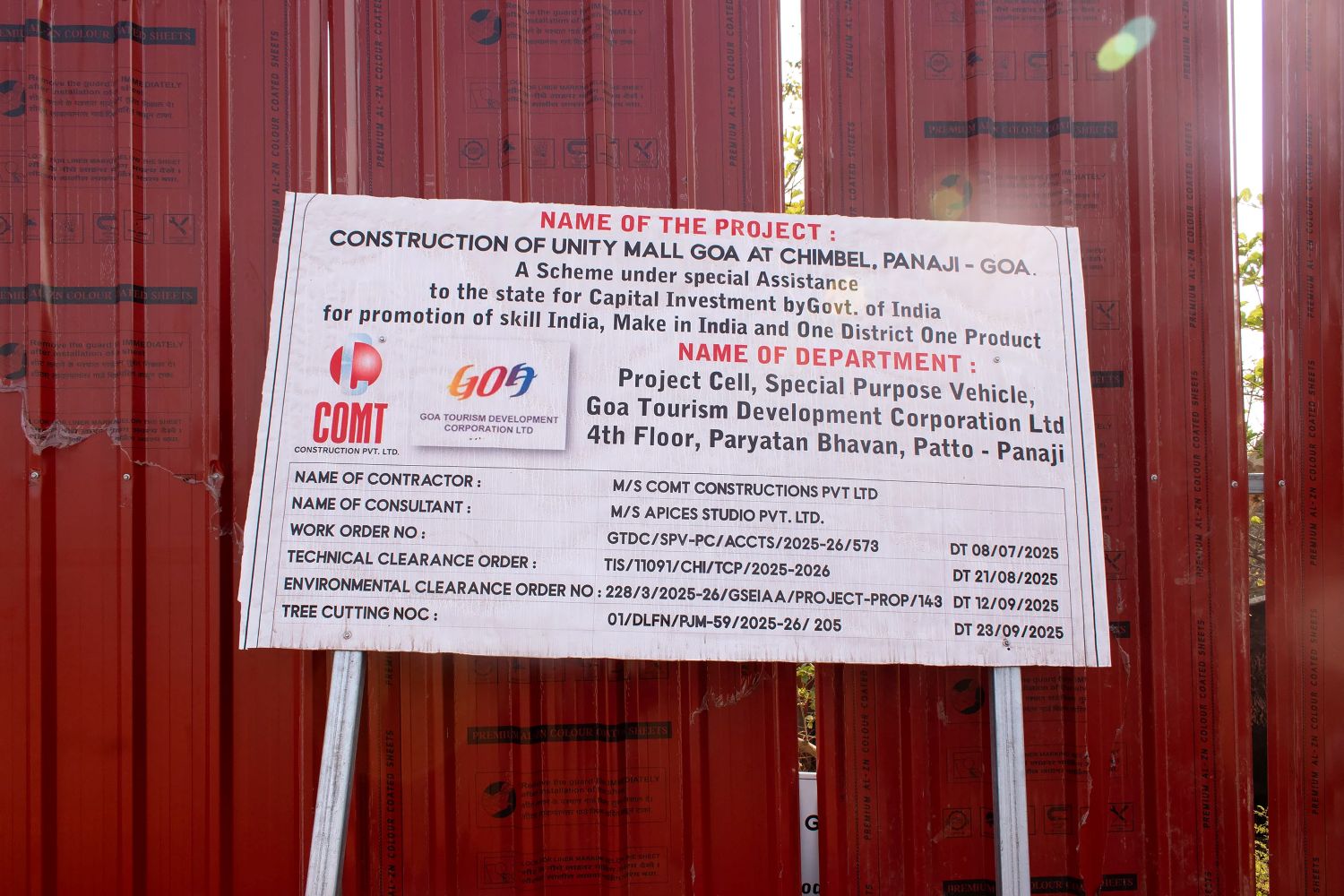
Both committees were blindsided by the announcement in early 2025 of the proposed tower and mall near Toyyar Lake, he says, noting they were not consulted about the projects. In January of this year, a North Goa court ordered a halt to construction work after Shirodkar filed a petition challenging the validity of the construction permissions granted for the projects. Villagers had begun their peaceful agitation and hunger strikes a few days before the ruling.
Sarmokadam of the GSWA says the land around the lake where the projects were to be built belongs to the government.
He told Dialogue Earth that, “after following due process and conducting surveys”, the proposed construction sites were determined to fall “well beyond” the 50-metre buffer zone required by Goan state law for wetlands. The buffer zone starts from a water body’s high water mark. They sit within a lake’s wider “zone of influence”, the catchment area in which development is considered likely to harm the functioning of the ecosystem.
Tahir Noronha, a Goa-based architect, planner and PhD researcher at the University of California, Berkeley, has been tracking government records of proposed and completed land conversions. He notes that GSWA mapped Toyyar Lake’s zone of influence more tightly than the National Institute of Oceanography (NIO), which conducts scientific assessments of areas proposed for wetland notification. Dialogue Earth has found the difference in the zones mapped by the two organisations amounts to a 33% decrease in size.
Both mappings were undertaken before the announcement of the construction projects. Noronha points out that the wetland authority has the mandate to adopt NIO’s recommendations in full, in part, or reject them. At Toyyar Lake the discrepancy between the two maps show they were accepted in part, he says.
He adds that a large portion of the land parcel which includes the site of the two projects, was included in NIO’s zone of influence but left out of GSWA’s map. According to his assessment, the site of the mall was on the fringe of NIO’s zone of influence, making it difficult to determine with certainty whether the site was in or out of the map, he says.
Noronha says around the same time the recommendations were accepted, the land was transferred to the tourism department that proposed the projects, citing a deed of conveyance Shirodkar obtained via a Right to Information request. In October 2025, the GSWA issued a clearance document, seen by Dialogue Earth, for the mall stating the site was outside the notified wetland area.
The villagers of Chimbel thought otherwise, insisting the projects were within Toyyar Lake’s zone of influence. They pushed for a new survey to be conducted in late January this year measuring the lake’s zone of influence and features like vegetation cover and sub-surface water flows. Just days after the survey was complete, the government announced the projects would be moved elsewhere.
Sarmokadam notes that under the Wetlands Rules, a zone of influence only covers part of a catchment and not its entirety. “Though activities in the catchment can influence the wetland, this can be mitigated with the right technology to prevent contamination,” he insists.
He adds that despite the wetland authority’s jurisdiction not extending beyond the 50-metre buffer, it “still imposed conditions like proper sewage and waste management, and measures such as groundwater development to offset the area being concretised”.
In North Goa, it is not just Toyyar Lake facing boundary irregularities. Villagers in nearby Santa Cruz are demanding clear demarcation of the zone of influence around the protected Bondvoll Lake before any construction is allowed. Dialogue Earth found a 77% decrease in the size of the lake’s zone of influence in the official notification for the lake compared to the NIO’s recommendation report. Alongside the demarcation, they are seeking the suspension of construction licences issued without ecological assessment or consultation with local biodiversity management committees.
The government has instructed the Town and Country Planning Department not to permit any construction activity within a 200-metre radius of the lake until the wetland authority clarifies the official status of the zone.
Pushback has been successful in the past, with the lake being designated a wetland in 2022 after sustained public pressure.
Rezoning: another threat to wetlands
As more people visit Goa, short holidays turn into extended stays and second homes, incentivising the construction of additional hotels, resorts, villas and residential colonies.
“The biggest crisis in Goa is rampant, indiscriminate construction, with absolutely no regard for the people who live here,” says Noronha.
Section 39A is one thing enabling this construction. This 2024 amendment to Goa’s Town and Country Planning Act allows the chief town planner to modify land-use zoning even for areas marked as not for development, with a 30-day window for public objection.
In February, hundreds of villagers in Palem-Siridao took to the streets to demand the scrapping of the amendment. They claim it is allowing the authorities to rezone over 84,000 square metres in their area as settlement land, permitting construction.
Protestors say the amendment could enable the conversion of Goan orchards, hills and even wetlands, into construction-ready land, all without sufficient community consultation.
Wetlands in Goa are actively being threatened. For instance, rezoning under Section 39A is also being proposed around Savlem and Zuari lakes, respectively a notified wetland and one being proposed for notification.
Section 39A is currently being discussed in Goa’s legislative assembly. In the meantime, the Town and Country Planning Department has reportedly offered to convert over a dozen tracts of land across Goa for settlement use. Among the proposals is an application by a construction company seeking conversion of land partly classified as orchard and natural cover, including a section marked as being not for development, reported the Times of India.
The Goan government has commemorated World Wetlands Day and participated in nationwide wetlands conservation campaigns. Yet its actions suggest different priorities.
As of May 2025, Goa had 34 notified wetlands, according to the Navhind Times, but several ecologically critical areas remain unprotected. One example is Torda Creek in the village of Salvador do Mundo, parts of which fall under CRZ-I, the highest level of protection within India’s coastal regulation framework.
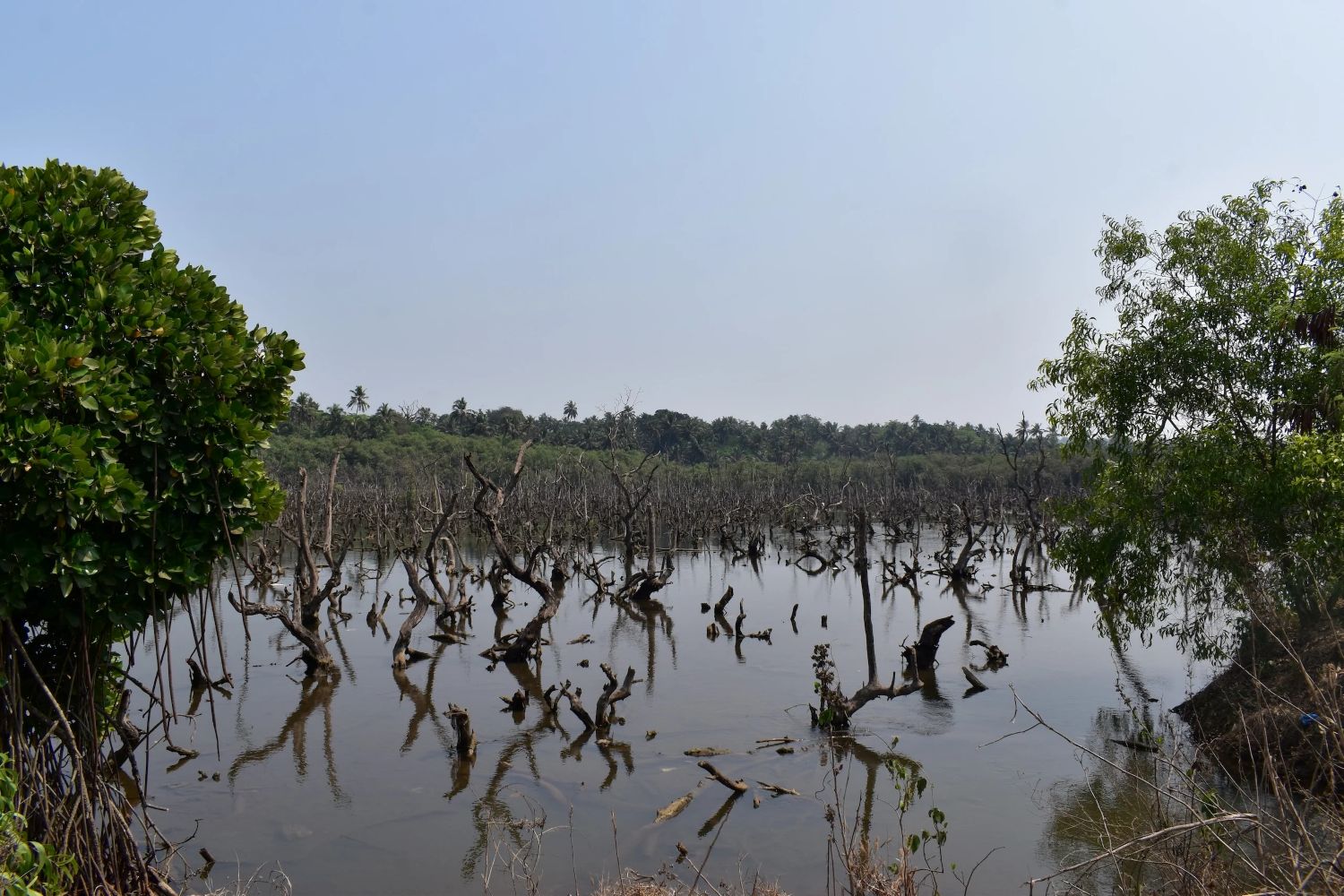
Under a national tourism ministry project, this site has been proposed for development as a tourist promenade. Locals and campaigners fear such concretisation will choke mangroves, disrupt tidal flow and damage the wetland’s natural flood-control functions.
“The proposed beautification is neither sustainable nor eco-friendly,” says Anthony D’Souza, an activist pushing for official wetland notification for the creek with the group Goa Worth A Fight. He fears the project, which estimates tourist footfall in the proposed tourism area that includes Torda Creek to grow from just over 72,000 this year to 111,000 in 2029, does not account for the ecological limits of the land.
Dialogue Earth reached out to the tourism ministry on this matter but received no response.
While talking about the long-term ecological impacts of construction on wetlands in Goa, D’Souza points to the mangroves along the Panaji-Merces highway, which, he says, “have died because highway construction and related concretisation blocked the natural flow between creeks and rivers”.
Noronha notes how India’s Supreme Court compelled state governments to identify and protect wetlands. “If not for this judgment, states would not be required to identify and notify wetlands at all,” he says. “State governments do not necessarily prioritise wetland protection, but they also cannot afford to be in contempt of court.”
There are also larger interests shaping the decisions of the wetland authority, he notes. “Planning is built on assumptions, and almost any decision can be justified through a set of assumptions,” Noronha says. “It is important to view regulatory bodies through a political lens alongside power structures that shape it to understand how decisions emerge.”