Review: Ghosh Fable Pushes Us To Re-Examine Received Wisdom
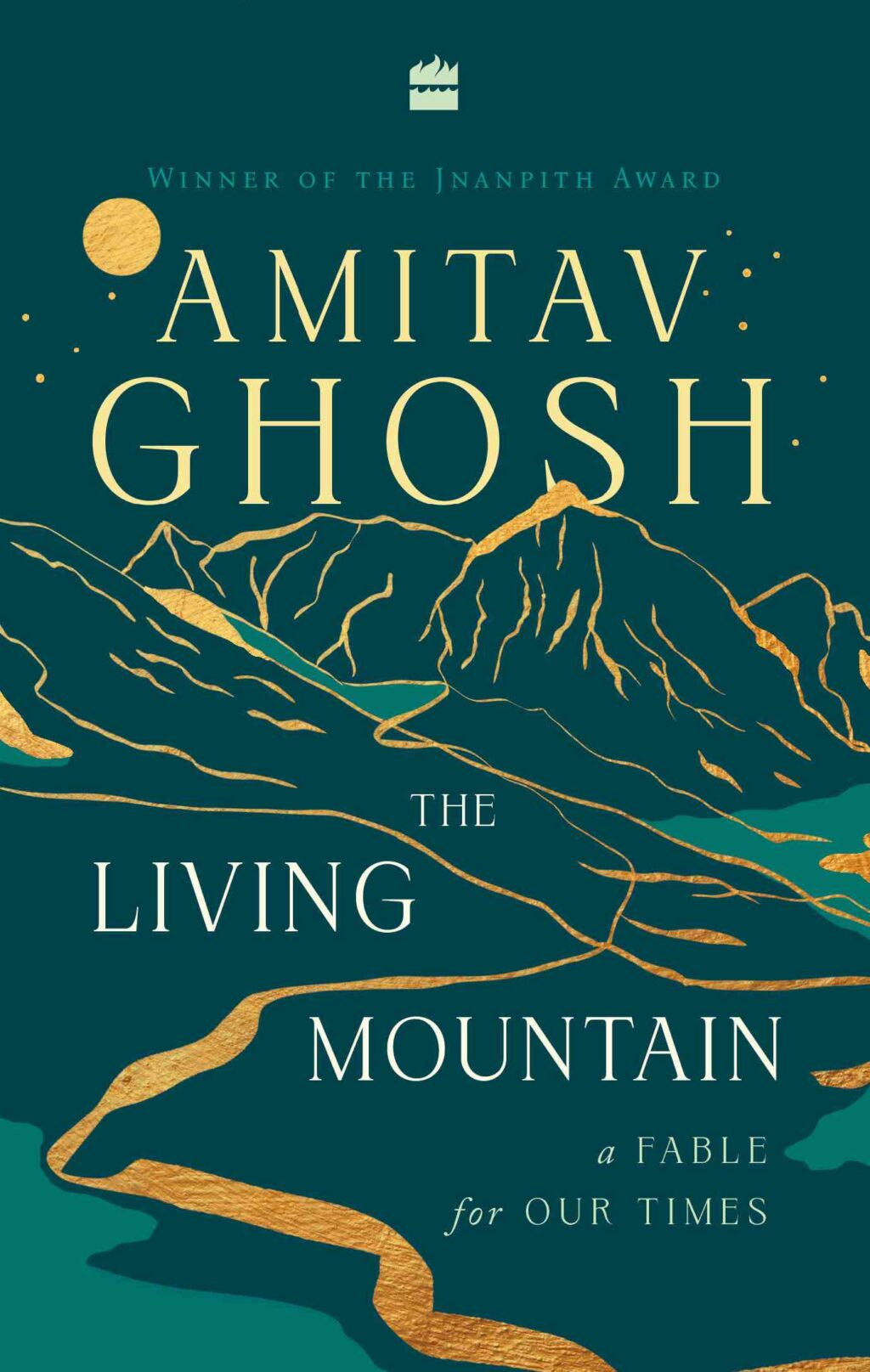
In 'The Living Mountain', Amitav Ghosh draws a sharply etched story of humanity hurtling towards environmental apocalypse in its ill-advised efforts to scale forbidden peaks
Amitav Ghosh’s latest book, The Living Mountain: A Fable for Our Times, defies easy reactions. A review is supposed to describe what a book is trying to achieve, outline how the author has tried to do so and assess whether they have succeeded. But a slim volume of 35 pages cannot be treated in the same manner as a longer work, and a fable – by definition – has little to do with things like character development, or showing the decisions of normal people in extraordinary circumstances, as a novel would.
None of this is to say that the book is light or superficial. Humanity has contemplated parables and koans for thousands of years. Their brevity adds to, rather than subtracts from, their power. Similarly, Ghosh’s short tale, a story of a dream, draws power from its elegant simplicity.
Beyond A Simple Retelling Of Colonialism
The story at the core of The Living Mountain is of warring tribes living around a sacred, unscaled mountain, who are forced to become the servants of foreigners – the ‘Anthropoi’, who wish to climb and mine the mountain. With the support of the tribes, the conquering foreigners start up the slopes.
In time, as the Antropoi climb, some among the conquered tribes start to conquer and achieve domination over their own. Ghosh describes how “A great orgy of bloodletting filled our Valley, bringing slaughter and destruction on a scale far beyond that which the Anthropoi had inflicted on us in the past.” Then the conquerors among the formerly conquered also climb the mountain.
As they do so, the mountain becomes destabilised. Ruin flows down in landslides. With every step upward, disaster comes closer, but neither the tribes nor Anthropoi can or want to head back.
You could see Ghosh’s tale as a simple retelling of the history of colonisation and extractive industrialisation, the twin themes that he has explored at least since the publication of The Hungry Tide in 2004. But it is a telling with no easy moral lessons. Nobody is spared – not the colonisers or the formerly colonised; not even the scientists among the Anthropoi counselling “sustainable development”. A race to the top of the mountain while the world crumbles beneath our feet is what they have all condemned us to.
The Looming Himalayas
Like most widely applicable fables, The Living Mountain is not set in a clearly recognisable place, but there are clues to the deep Himalayan nature of the piece. One is in its alternative Hindi title “Mahaparbat”, meaning Great Mountain.
The other is more subtle. While mountains have been considered sacred sites by many civilisations, the Himalayas hold a special place. Mount Kailash on the Tibetan Plateau, for example, is considered sacred in the Bon, Hindu, Buddhist and Jain traditions.
The ban on scaling the mountain that is central to Ghosh’s story echoes Bhutanese prohibitions today. The country, which has some of the highest peaks in the world, banned mountaineering at over 6,000 metres in 1994, and then all mountaineering in 2003. The wisdom of this ban seems to have been borne out by the increasing dangers, brawls, ill-will and trash that have sullied the commercial summits of Mount Everest.
Another geographic marker of this fable is the declining role of women as decision-makers as new modes of ‘development’ take hold, leading to environmental degradation. A 2010 publication by the International Centre for Integrated Mountain Development, “Gender Perspectives in Mountain Development”, noted that in the Himalayas, “despite receiving much smaller and more degraded forests, all-women groups outperform other groups and show better forest regeneration and improvement in canopy cover”.
Ghosh Taps Into Powerful Zeitgeist
Nonetheless, The Living Mountain is hardly parochial in its vision. One of its interesting elements is how closely it links to similar cultural themes emerging from other parts of the world. Ghosh is famously well read, and might have – at least in passing – become familiar with the lyrics of a 2005 song by the alternative rock band Gorillaz, “Fire Coming Out of the Monkey’s Head”. In this the “Happyfolk” live in peace and harmony at the foot of a mountain named Monkey, until the arrival of the “Stangefolk” and their mining of the mountain bring instability and destruction to the people and the wider world.
Like the song, Ghosh’s fable leaves us with a clear view of our chosen doom. Neither provide easy answers. What they do, though, is push us to re-examine received wisdom; to question whether wisdom can even be drawn from those who have brought us to where we are, or whether we need to learn to listen, once again, to old tales we have long dismissed.
What both works show us is that a powerful part of the global cultural zeitgeist revolves around environmental concerns. In these stories, great mountains stand in the centre.
(Published under Creative Commons from The Third Pole)