Old Kilns, New Blocks, Uncertain Futures
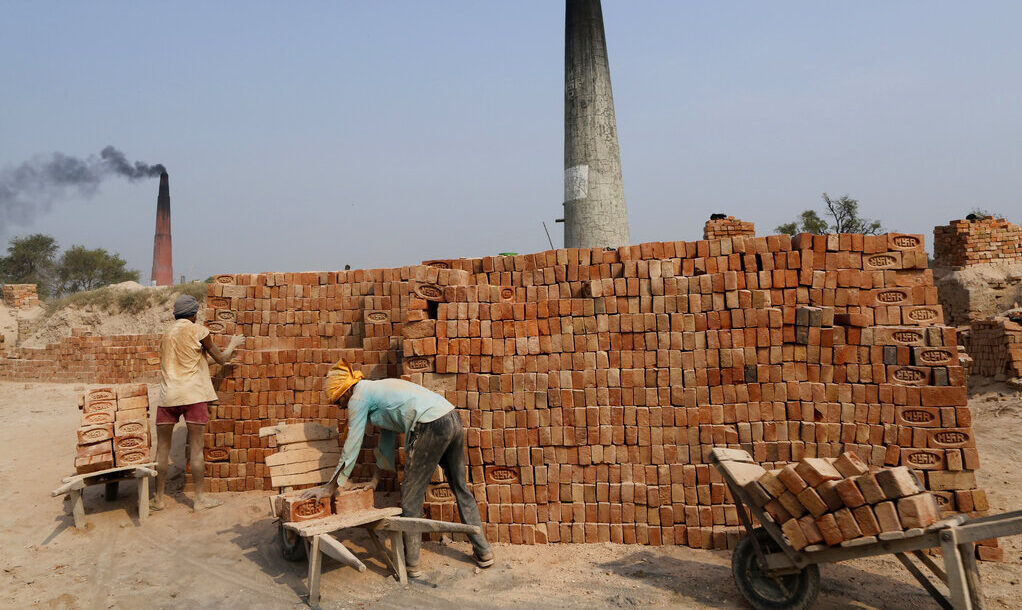
Workers use hand carts to transport bricks at a brick kiln in Farrukhabad district, Uttar Pradesh (AP Photo/Rajesh Kumar Singh)
- India’s construction boom is driving rapid growth in the brick sector, making traditional brick kilns a significant contributor to carbon emissions due to coal-intensive firing processes.
- In Kanpur, traditional brick kilns are gradually shifting to cleaner technologies, such as zigzag kilns, while a few enterprises are experimenting with low-carbon alternatives, such as fly-ash bricks, AAC blocks, and CSEBs.
- Shifting from high-emission clay bricks to low-carbon alternatives offers environmental benefits but also raises questions about costs, labour, and the equitable distribution of gains.
With expanding cities, rising housing demand, and large-scale infrastructure projects, India is witnessing one of the world’s fastest construction booms.
Under the government’s urban housing scheme, over a period of 10 years, 11.8 million houses were sanctioned, 11.4 million grounded for construction, and over 8 million completed as of 2024. Meanwhile, under the rural housing scheme the government plants to construct 20 million houses by 2029. Every year, the country constructs millions of buildings, reflecting both the scale and pace of this growth.
The construction sector is a critical contributor to climate change. According to the World Green Building Council, buildings and construction together account for 39% of global energy-related carbon emissions, with materials and construction alone contributing 11%.
The growing construction demand has increased the demand for bricks and the brick industry is growing. India is the world’s second-largest producer of bricks, after China. Yet, much of the sector is unorganised, widely dispersed, and largely informal. Traditional brick-making methods rely on coal-fired, energy-intensive kilns, resulting in higher emissions from fired clay bricks used in construction. The brick industry is one of the largest (coal) energy users and a source of GHG emissions from India. But it also employs some of the largest workforces in India, after agriculture.
Kanpur, an industrial city in Uttar Pradesh, has a well-established brick manufacturing industry. Its peripheral regions host numerous traditional brick kilns that fuel the city’s rapid construction growth. At the same time, several enterprises here are experimenting with low-carbon alternatives such as fly-ash bricks, compressed stabilised earth blocks (CSEBs), and autoclaved aerated concrete blocks (AAC). These alternatives reduce emissions and resource use, but their wider adoption is constrained by cost, awareness, and market acceptance.
Kanpur’s brick kilns
On the outskirts of Kanpur in Ramaipur, rows of brick kilns stretch across the fields. Ramaipur is home to a number of brick kilns, ranging from Fixed Chimney Bull’s Trench Kilns (FCBTKs) and the newer zigzag kilns. Ramaipur’s kilns are typical of much of Kanpur: small, family-run or individually owned units that operate on traditional methods, often with minimal resources or support.
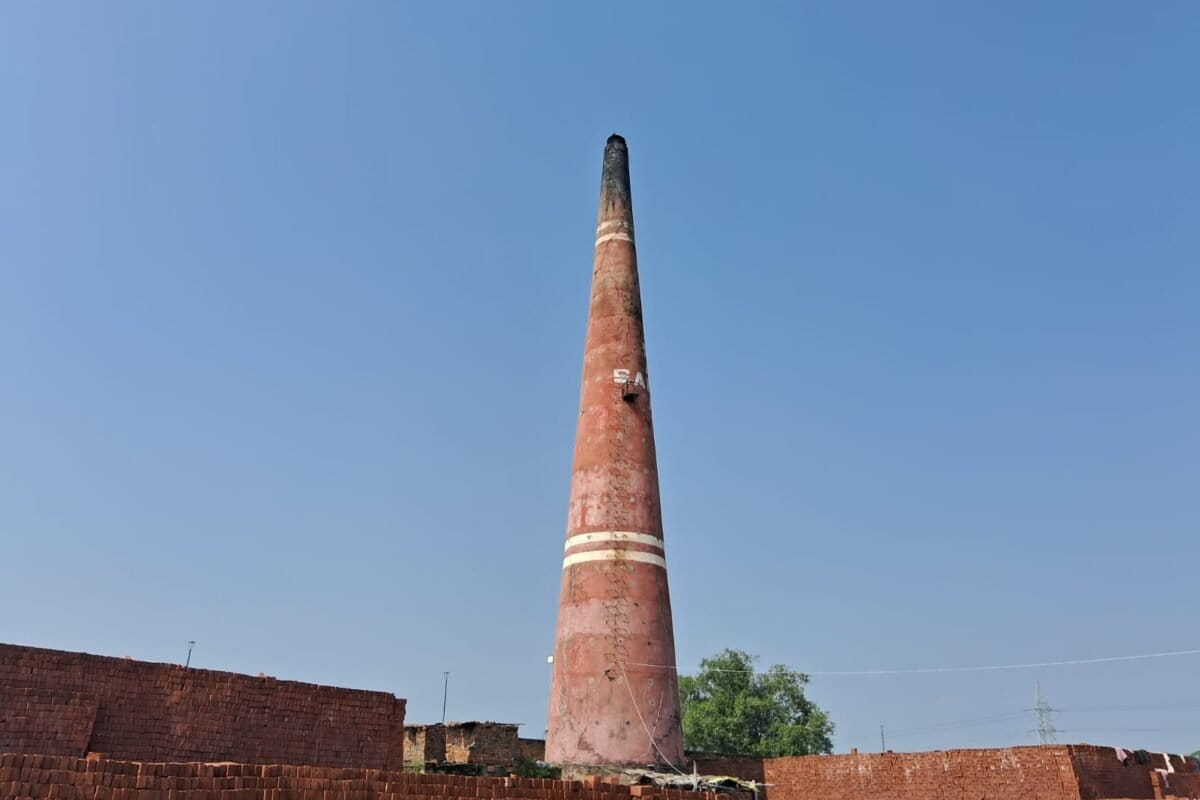
The shift from FCBTK to zigzag firing may sound like a technical detail, but on the ground, it is reshaping how bricks are produced. Traditional FCBTK kilns rely on straight-line airflow, which inefficiently burns coal, often leaving bricks unevenly fired and increasing pollution and waste. Zigzag kilns, in contrast, guide hot air in a winding pattern, improving combustion and reducing coal usage.
At Samat Brick Field, based in Ramaipur, preparations were still underway in September for the next firing season, which typically begins in November and continues until June. Standing near the kiln’s main chamber, supervisor Amit Paul pointed towards a far-off chimney.
“That one is still the old FCBTK,” he said, shading his eyes with his hand. “They’re planning to convert it soon. Now all of them are converting to zigzag according to government guidelines.”
Paul oversees the zigzag kiln at Samat Brick Field, a role that demands constant attention to airflow, fuel feeding, and maintaining consistent monitoring. He shared that while traditional clay brick making is largely manual, the recent adoption of more efficient technologies, such as the zigzag kiln, has helped reduce emissions and improve production efficiency.
“The zigzag helps us use less coal and make better-quality bricks,” Paul explained. “Earlier, we used to lose many bricks because of uneven firing, around a third of them. Now, waste has come down a lot.”
On the ground, this transition to cleaner kilns is experienced less as a technological transition and more as a daily negotiation with labour and wages. Rahul Sonkar, a 26-year-old worker at the zigzag kiln in Ramaipur, where his day is spent washing freshly fired bricks before they are stacked and sent out. The work is repetitive, and his hands are constantly coated in red dust and slurry. He has been working at the kiln for four years. Before that, he stayed at home in his village, Audha, located in the Auraiya district of Uttar Pradesh, unable to find regular work.
“I work around five to six hours a day,” Sonkar said. His earnings depend entirely on how many bricks he washes. On slower days, he earns about ₹300; on better days, about ₹700. “If I wash around 3,000 bricks, I get ₹600-₹700,” he explained.
The shift to zigzag has reduced coal use and waste, but for workers like Sonkar, wages remain uncertain and tied to output rather than fixed hours. The condition of workers remains much the same. While the technology is updated, the nature of work remains informal, offering little predictability or long-term security.
A larger push
These incremental changes in brick-making are not just about efficiency; they are part of a larger push, supported by government policies, to reduce kiln emissions. In Uttar Pradesh, the shift to zigzag kilns gained momentum after the 2012 Brick Kiln Siting Rules, which introduced clearer criteria for establishing and operating kilns, including distance requirements, emission norms, and restrictions on fuel use. But the most significant policy change came with the 2022 amendment to the Environment (Protection) Rules, which made cleaner technology mandatory.
Manoj Kumar, Regional Officer at the Uttar Pradesh Pollution Control Board (UPPCB) in Kanpur, said that the shift is well underway.
“Close to 70-80% of kilns in this region have already converted to zigzag”, he said. “The 2012 and 2022 guidelines have accelerated the transition.”
But he also noted the cost barrier. “Converting a traditional kiln to zigzag typically costs between ₹5 to 6 million,” he said. “For many small kiln owners, this is like building a new kiln altogether.”
According to UPPCB data, Kanpur Nagar district has 307 brick kilns. While 264 have received consent to operate, only about 120 have upgraded to zigzag technology so far, with closure orders issued to 32 kilns and 11 already dismantled, highlighting an uneven transition.
This lack of financial support creates a gap between policy ambition and ground reality. While the environmental benefits of zigzag kilns are well documented, the burden of transition falls entirely on kiln owners, many of whom operate on thin margins and rely heavily on seasonal labour. In Ramaipur, the chimneys, both old and new, stand side by side, symbolising a transition in progress rather than one achieved.
Material transition
While Kanpur’s traditional brick kilns continue to evolve, a quieter but significant shift is emerging in parallel: the rise of low-carbon building materials. Among the handful of enterprises leading this transition is Mahana Industries, located in Maharajpur, Kanpur.
The Mahana family has been part of Kanpur’s construction story for more than seven decades. Their journey began in the 1950s, when the family operated a clay brick kiln, which has since shifted entirely to manufacturing fly-ash bricks and CLC (Cellular Lightweight Concrete) blocks, a low-carbon alternative to clay bricks.
“We stopped clay brick production nearly two years ago,” Madhv Mahana, a fourth-generation family member now running the enterprise, told Mongabay-India. “It just wasn’t viable anymore. We couldn’t get raw materials easily during the pandemic. According to the guidelines, we were only allowed to dig 4-5 feet. Then came coal. Prices rose steeply, but the market price of red bricks remained unchanged. Because clay brick production is seasonal, getting workers, coal, and materials in place was always a challenge.”
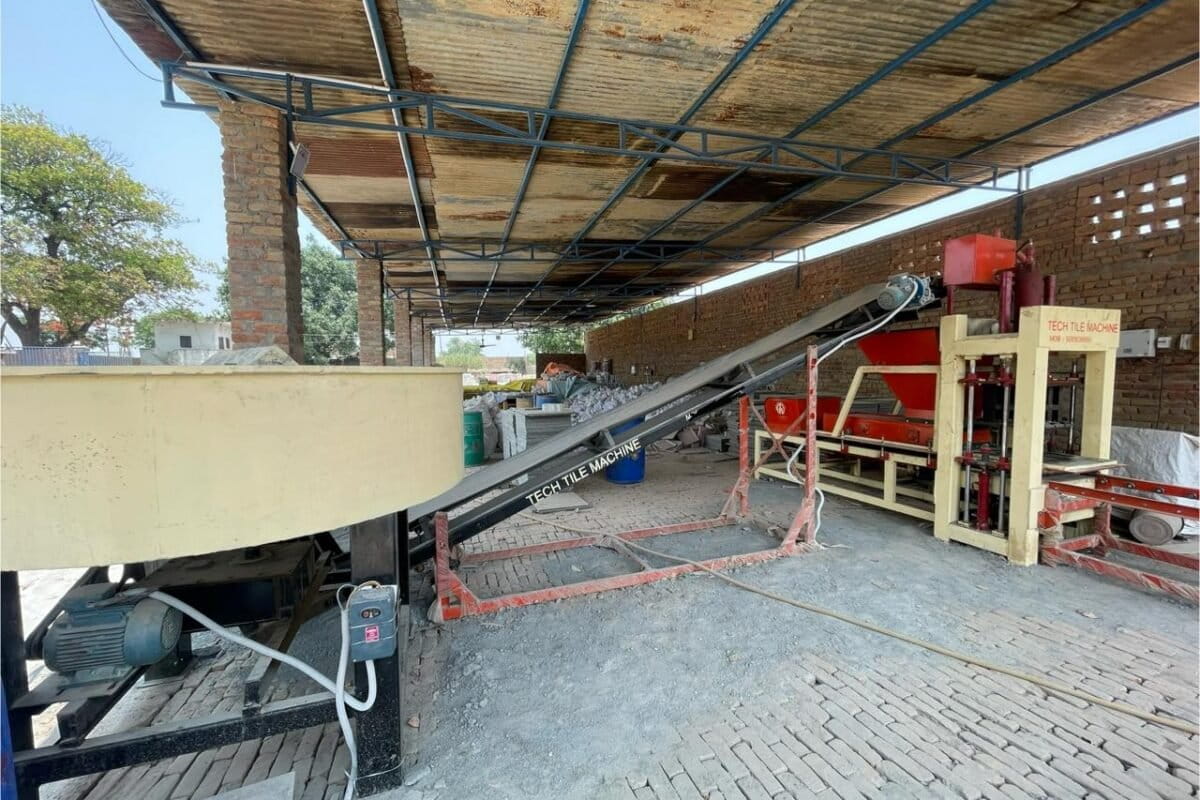
Fly-ash bricks have emerged as one of the most promising and scalable alternatives in India’s brick industry. Instead of using topsoil, these bricks harness fly ash, a by-product from coal-fired power plants, transforming industrial waste into construction material. The transition from clay to fly-ash bricks and CLC blocks also changed the workforce structure. While clay brick production previously required more than 100 labourers, the new mechanised process, which uses machines to mix, mold, and cure the bricks, now operates with just 10-12 labourers and operators.
Another low-carbon alternative in Kanpur’s Sachendi area is Autoclaved Aerated Concrete (AAC). AAC is a lightweight building material cured under high-pressure steam, producing blocks that are easier to handle and significantly lighter than traditional bricks. Field observation in Sachendi shows that AAC sites operate with formal safety protocols and mechanised production lines, contrasting sharply with the informal, labour-intensive nature of traditional kilns. The blocks are easier to handle, reduce building weight, and improve insulation, lowering energy use in buildings.
Amid these shifts, a third alternative, Compressed Stabilised Earth Blocks (CSEBs), is quietly making inroads. These blocks are not kiln-fired; they are shaped using mechanical presses, eliminating high-temperature combustion and saving energy. These blocks are made by mixing soil with a small amount of cement or lime and compressing them using mechanical presses, eliminating the need for kiln firing.
“CSEBs are faster to make and easier to transport than clay bricks,” said Ravi Kumar, a local vendor in Kanpur. “They save energy, and we can produce consistent quality without burning coal.”
The challenges of adoption are consistent across all these low-carbon alternatives. “People don’t want to change; they want things to continue as they are, so their mindset stays the same,” Mahana observed.
Kanpur’s evolving brick sector reflects gradual change and experimentation, as enterprises navigate technical innovation, labour shifts, and market perceptions to produce cleaner building materials. Together, these alternatives illustrate the city’s ongoing journey toward more sustainable construction practices.
Toward a just material transition
These changes are about people as much as they are about technology. Mahana reflected, “Innovation is important, but we also have to make sure the people who built this industry for generations can adapt and benefit from the changes.”
Workers and vendors face a learning curve. “People are cautious,” Ravi Kumar said. “They know clay bricks, but new materials like CSEBs or AAC are unfamiliar. We have to show them why it works and train them in the process.”
For workers like Sonkar, cleaner kilns have not translated into steadier incomes or greater security, highlighting the gap between environmental progress and labour justice.
Kanpur’s transition shows that cleaner materials alone are not enough. As India rethinks how it builds its cities, a just brick sector transition will require bringing along the enterprises and workers whose livelihoods have long depended on brickmaking, ensuring the benefits of innovation and sustainability are shared equitably across society.