LS Showdown: Rahul vs Rajnath On Former Army Chief’s Unpublished Memoir
This event underscores the challenges of discussing sensitive topics like the China border issue in Parliament, where rules on sourcing information can limit opposition narratives
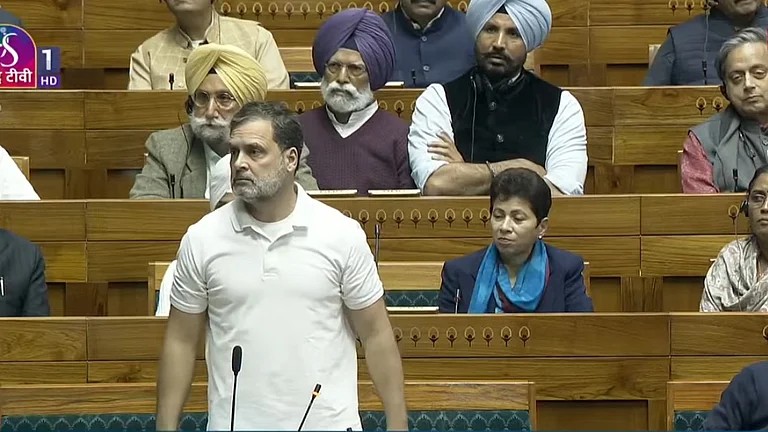
On Monday, Lok Sabha Opposition Leader Rahul Gandhi was prevented from continuing his speech during the Motion of Thanks to the President’s address, after attempting to quote from an article based on the unpublished memoirs of former Army Chief General M.M. Naravane, concerning the 2020 India-China conflict in Ladakh.
As Gandhi began speaking, he addressed allegations of anti-nationalism leveled by BJP MP Tejasvi Surya against the Congress, then proceeded to cite what he described as excerpts from Naravane’s memoir about the border tensions.
Treasury benches interrupted repeatedly, leading Speaker Om Birla to disallow the reference, citing parliamentary rules that prohibit quoting unpublished books or unrelated magazine articles.
Defence Minister Rajnath Singh objected strongly, demanding Gandhi produce the source, stating, “I want the leader of the Opposition to present the book he is quoting from, because the book has not been published yet.”
Gandhi questioned the objections, asking, “What does it contain that is scaring them so much? If they are not scared, I should be allowed to read it,” and later requested permission to paraphrase the article’s contents without direct quotes, which was also denied.
He clarified his source as a magazine article with excerpts from Naravane’s memoirs, insisting it was authentic, but Singh maintained it violated rules.
Speaker Birla upheld the objection, ruling, “No magazine or newspaper article that is unrelated to the proceedings of the House can be quoted in Parliament. Debate should be conducted according to the rules.”
Home Minister Amit Shah intervened, questioning how an unpublished book could be cited, while Parliamentary Affairs Minister Kiren Rijiju emphasized adherence to conventions prohibiting such citations.
Samajwadi Party leader Akhilesh Yadav supported Gandhi, urging the Chair to allow discussion on China-related issues, describing it as a sensitive national security matter warranting uninterrupted debate.
Following the standoff, the Lok Sabha was adjourned first until 3 pm, then 4 pm, and finally for the day.
This incident highlights tensions in Parliament over permissible sources in debates, with Gandhi’s attempt to reference the memoirs sparking controversy, as the government insisted on strict adherence to rules, while opposition members argued for open discussion on critical foreign policy matters.
The unpublished memoirs, detailing the 2020 Ladakh standoff, have been a point of contention, with Gandhi aiming to critique the government’s handling, but procedural objections curtailed his speech.
Parliamentary rules, designed to maintain decorum and relevance, were invoked to prevent potential misinformation from unverified sources, underscoring the balance between free speech and regulated discourse in the House.
Gandhi’s persistence and the ministers’ firm stance reflect broader political divides, with the opposition viewing it as censorship, while the ruling party sees it as upholding protocol.
The adjournment ended the day’s proceedings abruptly, leaving unresolved debates on nationalism, foreign policy, and the President’s address.
This event underscores the challenges of discussing sensitive topics like the China border issue in Parliament, where rules on sourcing information can limit opposition narratives.
Experts note that such incidents erode trust in democratic processes, as members feel constrained in raising accountability on national security matters.
Moving forward, calls for clearer guidelines on citing unpublished works may emerge, to allow informed debates without compromising parliamentary integrity.