LPG Shortage Disrupts Households And Restaurants Amid Supply Concerns

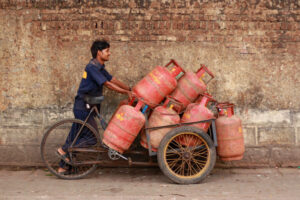
In recent days, reports from multiple cities indicate disruptions in LPG supply. Hotels, eateries, and street vendors are among the worst affected because their operations depend heavily on daily LPG consumption (Image by Meena Kadri via Flickr)
India is currently facing a significant shortage of Liquefied Petroleum Gas (LPG), affecting both domestic households and commercial users such as restaurants, street vendors, and institutional kitchens. The shortage has triggered concern across several states, as delays in cylinder deliveries, rising prices, and supply restrictions disrupt everyday cooking and food service operations. While authorities maintain that the situation is temporary, the crisis highlights India’s heavy dependence on imported LPG and the vulnerability of its energy supply chain.
Growing shortage across cities
In recent days, reports from multiple cities indicate disruptions in LPG supply. In parts of Haryana, commercial LPG supply has been temporarily halted, leaving restaurants and small businesses struggling to operate. At the same time, the waiting period for domestic LPG cylinder refills has increased from about 15 days to nearly 25 days in some areas, creating anxiety among households.
Hotels, eateries, and street vendors are among the worst affected because their operations depend heavily on daily LPG consumption. In several states, including Andhra Pradesh, restaurant owners have reported a sharp fall in the availability of commercial cylinders, sometimes receiving only half of their usual supply. Some small eateries are left with barely enough gas for a day’s operations, forcing them to consider temporary closures.
The crisis has also affected large-scale institutional cooking. For example, shortages have disrupted the supply chain for railway catering services, prompting authorities to consider alternative cooking methods such as microwaves and induction stoves. If the shortage worsens, catering services on trains could be suspended temporarily.
Dependence on imports
One of the key reasons behind the LPG shortage is India’s strong dependence on imports. India imports roughly 80–85% of its LPG requirement, most of which comes from Gulf countries in the Middle East.
A large portion of these imports travels through the Strait of Hormuz, a strategic shipping route that handles a significant share of global oil and gas trade. Any disruption in this route can have immediate consequences for LPG supply to India.
Recent geopolitical tensions in West Asia have slowed tanker movement and increased shipping risks, reducing the flow of LPG shipments to India. As a result, the country has had to rely more on domestic production and alternate import sources to maintain supply.
Government response and emergency measures
To prevent a major supply crisis, the government and energy companies have taken several steps. Refiners have been asked to maximize LPG production and redirect supplies to priority sectors such as households.
Authorities are also exploring alternative import routes and suppliers to reduce dependence on a limited number of countries. According to government officials, India is sourcing energy supplies from a wider network of nations to ensure uninterrupted availability of cooking gas.
Another measure being implemented is prioritizing domestic consumers over commercial users. Under this approach, LPG cylinders for households are given preference, while supply to restaurants, industries, and other commercial establishments may be restricted temporarily.
However, this strategy has intensified difficulties for the hospitality and food service sectors, which rely heavily on commercial LPG cylinders.
Impact on households
For domestic consumers, the shortage has translated into longer waiting times and concerns about future price increases. LPG is the primary cooking fuel for millions of Indian households, especially after the government expanded access through schemes such as the Pradhan Mantri Ujjwala Yojana.
In urban areas, many families depend entirely on LPG for cooking. Delays in cylinder delivery force households to ration gas usage or rely on alternative cooking methods such as electric stoves or induction cooktops. For larger families, a single cylinder may not last long enough to cover the extended waiting period between refills.
Another concern is the possibility of panic booking and hoarding. In some regions, authorities have limited the frequency of cylinder bookings to prevent consumers from stockpiling supplies, which could worsen shortages.
Impact on restaurants and small businesses
The commercial sector has been hit even harder by the LPG shortage. Restaurants, dhabas, tea stalls, and street vendors depend on commercial LPG cylinders for daily cooking. Unlike households, these businesses cannot easily reduce consumption because their operations rely directly on cooking fuel.
Many small eateries operate with narrow profit margins, and disruptions in LPG supply can quickly threaten their viability. Some vendors have already reported rising costs as they struggle to secure cylinders from dealers or the black market. The shortage also raises the possibility of food price inflation, as businesses pass on higher operating costs to consumers.
Industry associations warn that prolonged supply disruptions could lead to temporary closures of restaurants and job losses in the hospitality sector, which employs millions of workers.
Structural challenges in India’s LPG supply
Beyond immediate geopolitical factors, the current crisis exposes deeper structural challenges in India’s energy system. The country’s growing demand for LPG has been driven by population growth, urbanization, and government programs promoting cleaner cooking fuels.
However, domestic production has not kept pace with rising consumption, increasing dependence on imports. Limited storage capacity also restricts India’s ability to maintain large strategic reserves of LPG, making the country more vulnerable to sudden supply disruptions.
Infrastructure constraints, such as bottling plants, transportation logistics, and distribution networks, can also slow the delivery of cylinders to consumers during periods of high demand.
A reminder of India’s energy vulnerabilities
Although authorities have assured citizens that there is no need for panic, the LPG shortage serves as a reminder of India’s energy vulnerabilities. In the short term, diversifying import sources and increasing domestic production may help stabilize supplies.
In the long term, experts suggest that India must strengthen energy security by expanding storage capacity, improving supply infrastructure, and investing in alternative cooking fuels such as piped natural gas and electricity-based cooking technologies.
For now, households, restaurants, and businesses across the country continue to navigate the challenges of an uncertain LPG supply, hoping that geopolitical tensions and logistical disruptions will ease in the coming weeks.