JNU Students Protest Denial Of Bail To Umar Khalid, Chant Slogans Against Modi and Shah
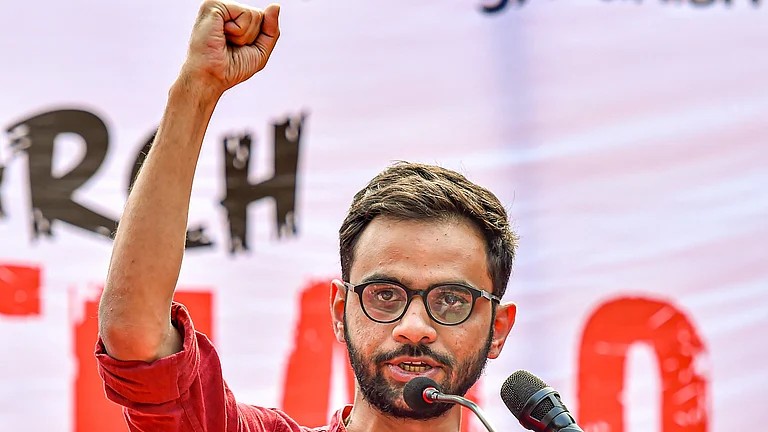
FILE PHOTO: The immediate trigger for the protest by students was the Supreme Court’s recent decision to deny bail to Umar Khalid and Sharjeel Imam, both accused in the high-profile 2020 Delhi riots conspiracy case
On Monday night, Jawaharlal Nehru University (JNU) witnessed a powerful wave of student activism as hundreds gathered across the sprawling campus to express their outrage. The immediate trigger was the Supreme Court’s recent decision to deny bail to Umar Khalid and Sharjeel Imam, both accused in the high-profile 2020 Delhi riots conspiracy case.
Yet the gathering quickly evolved into a broader commemoration of a darker moment in the university’s history. Amid the open grounds and hostel blocks, fiery slogans targeting Prime Minister Narendra Modi and Union Home Minister Amit Shah echoed through the night air. The chants, captured in widely circulated social media videos, reflected the raw intensity of youthful dissent and deeply held ideological convictions.
JNU Students’ Union president Aditi Mishra described the event as an annual observance rather than a spontaneous outburst. “Every year, students come together to condemn the brutal violence that took place on campus on 5 January 2020,” she stated. Mishra emphasized that the slogans were driven by principle and ideology, not personal animosity.
According to her, the protest aimed to draw attention to larger systemic issues of justice, accountability, and institutional violence, rather than merely targeting individuals. The night of 5 January 2020 remains seared into JNU’s collective memory. That evening, a large group of masked outsiders stormed the campus, unleashing nearly two hours of unchecked mayhem. Armed with sticks, stones, and iron rods, the assailants attacked students, smashed windows, destroyed furniture, and vandalized personal belongings across at least three hostels.
The violence left more than 28 people injured, including then-JNUSU president Aishe Ghosh, who sustained serious head injuries. In the aftermath, the Delhi Police drew widespread criticism for their apparent inaction during the attack. Paradoxically, several student leaders — including Ghosh — were later named in FIRs related to the very vandalism that occurred on campus.
Many students and faculty viewed this as an attempt to shift blame from the attackers to the victims. Despite the charged atmosphere and provocative slogans during Monday’s protest, a senior police officer confirmed that no formal complaints had been lodged regarding the gathering. The event passed without reported clashes or arrests. JNU has long stood as one of India’s most prominent spaces where academic freedom and political expression intersect.
From the 1970s Emergency era to contemporary struggles over citizenship and dissent, the campus has repeatedly served as a microcosm of national ideological battles. Monday night’s demonstration was a poignant reminder of this legacy: a place where painful memories, fierce convictions, and the defiant spirit of youth continue to converge in a chorus that is at once resonant and deeply contentious.
JNU seeks FIR over protest slogans
Jawaharlal Nehru University (JNU) has escalated its ongoing tensions with the predominantly Left-leaning students’ union by formally seeking the registration of a police FIR against several students. The administration described slogans raised against Prime Minister Narendra Modi and Union Home Minister Amit Shah during a late-night campus event as “highly objectionable, provocative, and inflammatory.”
In a letter sent to the Station House Officer of Vasant Kunj (North) police station, the university’s Chief Security Officer detailed that the incident occurred around 10:00 pm on January 5, 2026. The programme, titled “A Night of Resistance with Guerrilla Dhaba”, was organized outside Sabarmati Hostel by students associated with the Jawaharlal Nehru University Students’ Union (JNUSU).
The administration stated that the gathering initially appeared limited — with around 30-35 participants — and focused on remembrance. However, following the Supreme Court’s decision earlier that day to deny bail to former JNU students Umar Khalid and Sharjeel Imam in the 2020 Delhi riots conspiracy case, the tone reportedly shifted. Students allegedly began chanting slogans targeting Modi and Shah, which the university claimed were deliberate, repeated, and amounted to direct contempt of the Supreme Court.
The letter named several individuals, including current JNUSU president Aditi Mishra, along with others reportedly identified during the event. It argued that such sloganeering was “wholly inconsistent with democratic dissent,” violated the JNU Code of Conduct, and posed a serious risk to public order, campus harmony, and the institution’s overall security environment. The university has urged Delhi Police to register an FIR under relevant provisions of the Bharatiya Nyaya Sanhita (BNS). In a separate statement, the JNU administration emphasized it had taken “very serious cognizance” of videos circulating on social media showing the slogans.
It indicated that an internal inquiry would proceed, with disciplinary action against any found guilty, and an advisory would be issued to prevent future occurrences. This development marks a sharp intensification in the long-standing conflict between the JNU administration and student groups, who often accuse authorities of suppressing dissent. The episode echoes past controversies, including the 2016 sedition case involving similar allegations of provocative slogans on campus. As investigations loom, the incident has reignited debates over the boundaries of free speech, political expression, and institutional authority in one of India’s most politically active university spaces.