How Frequent Forest Fires Can Lead To Deleterious Ecosystem Changes
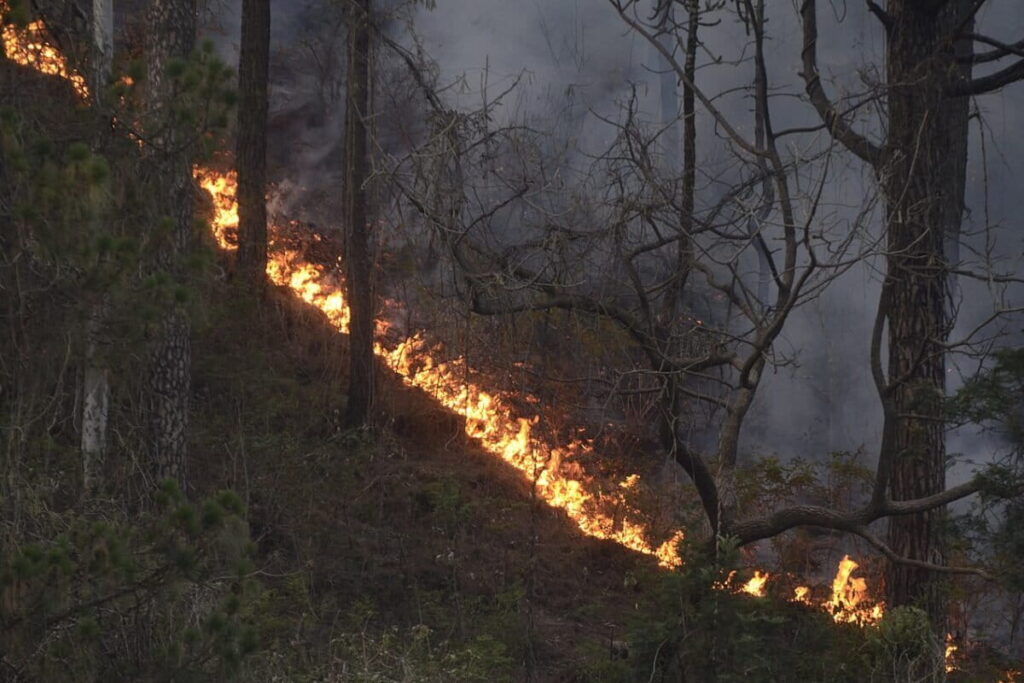
A forest fire in Uttarkashi in 2016 (Image by PJeganathan via Wikimedia Commons)
- Forest fires can alter and even harm ecosystems, scientists warn.
- Fires can cause loss of soil nutrients, which alters vegetation.
- Even low- to moderate-intensity fires, when repeated, can gradually weaken ecosystems and reduce their resilience.
Concerns about rising forest fires in India, with reports of Himalayan forests catching fires outside their typical season, are supported by recent research from India’s biodiversity hotspots, the Himalayas and Western Ghats, which warn of their ecosystem-level impacts.
Scientists in India are increasingly reporting about the potential risk to ecosystems caused by more frequent forest fires. These include two recent studies, one in the western Himalayan state of Uttarakhand, in the journal Trees, Forests and People, and research on the impacts on a savannah system, using the example of Satyamangala Tiger Reserve in the Western Ghats, published in the journal Next Sustainability.
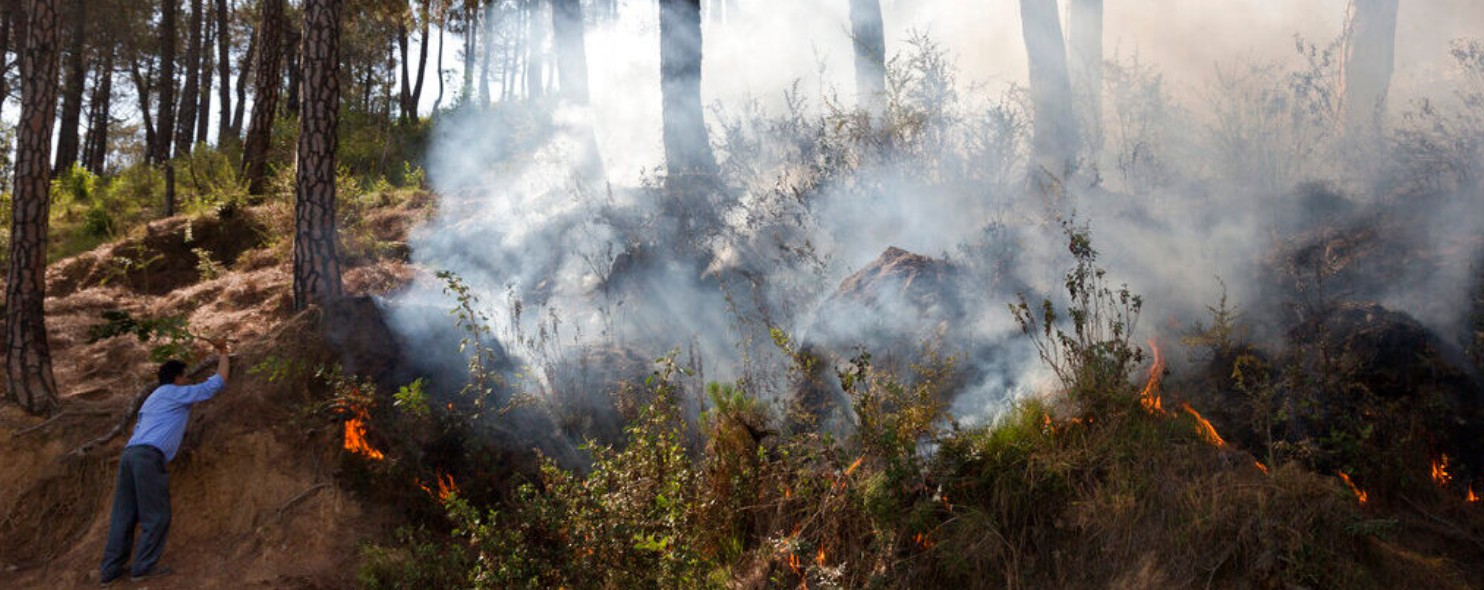
A separate September 2025 study in Environmental Sciences Europe says the forest fire season has expanded in India, with events occurring during the dry pre-monsoon period from February to June, peaking in March and April. Spatial patterns indicate an increased vulnerability to forest fires due to dense forest cover and increasing climatic variability, in central India, the Himalayan foothills, the Western Ghats, and the Eastern Ghats, it says.
Another 2024 report in Frontiers in Forests and Global Change describes loss of carbon stocks due to forest fires in Uttarakhand.
The recent Uttarakhand study in Trees Forests and People, “moves beyond general observations by providing precise, depth-wise quantification of nutrient loss across different forest types,” says Himanshu Bargali, a scientist studying the economics of ecosystems and biodiversity under a UNEP-funded project at the Indian Institute of Farming Systems Research, Meerut and one of the authors.
Bargali and colleagues found that forest fires cause an average decrease of 35% in soil organic carbon, 25% in nitrogen, and 15% in phosphorus. “Crucially, while previous research focused primarily on commercial timber loss, we have introduced a field-based methodology to value non-marketed forest ecosystem goods i.e., fuelwood, fodder, and wild edibles on a per-hectare basis,” Bargali told Mongabay-India. This indicates that the actual monetary damage from forest fires may be 65 to 90 times higher than figures traditionally reported by the forest department, he adds.
Meanwhile, the Western Ghats study provides “one of the first long-term, fire-frequency–based ecological assessments of a tropical savannah ecosystem in India,” says Shanmuganathan Jayakumar, professor at the department of ecology and environmental sciences at the Pondicherry University and a co-author of the study.
Jayakumar and colleagues used a 33-year fire history derived from satellite data and detailed field sampling to show that savannah tree communities respond differently to fires compared to adjacent dry forest ecosystems. “…we demonstrate that neither complete fire exclusion nor very frequent fires are ecologically optimal,” he says.
“Moderate fire frequencies help maintain tree–grass balance, support better regeneration, and sustain biodiversity. This challenges the prevailing assumption in India that fire is always detrimental and must be completely suppressed, especially in landscapes that are naturally fire-adapted such as savannahs.”
The study in Environmental Sciences Europe looks at forest fires not just as isolated events but as a long-term ecological issue, says Amit Kumar, post-doctoral fellow at the Center for Climate Studies, Indian Institute of Technology, Bombay. Earlier studies mainly focused on how often fires occur or how much forest area gets burned, but Kumar and colleagues, including Mohanasundari Thangavel, associate professor at IIT, Indore, attempted to understand how repeated fires affect forests over time, especially their impact on vegetation health, biodiversity, and recovery capacity. The study highlights that even low- to moderate-intensity fires, when repeated, can gradually weaken ecosystems and reduce their resilience, says Kumar. This adds a cumulative perspective to existing forest fire research, he adds.
Ecosystems singed
Forest fires initiate a cycle of degradation that impacts both the physical and biological integrity of the ecosystem, Bargali says. Fires deplete biodiversity, severely reducing species richness, particularly in the herb layer. “Our research recorded a drop in herb diversity from 37 species in unburnt zones to just 12 species in high fire frequency areas.”
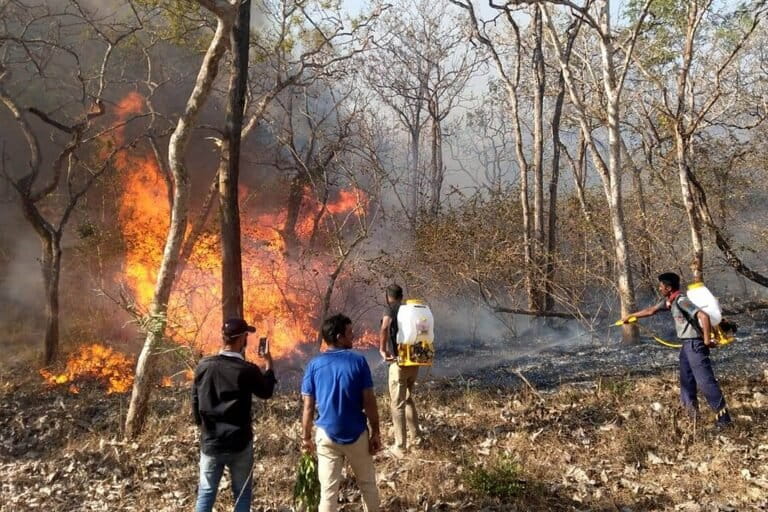
Frequent fires disrupt natural regeneration, allowing fire-adapted species like chir-pine (Pinus roxburghii) to expand into and replace socio-ecologically valuable oak (Quercus leucotrichophora) forests, which significantly downgrades overall ecosystem services, says Bargali.
Forest fires can cause multi-layer damage to ecosystems, agrees Kumar. Repeated fires reduce plant species density and affect seedling germination, slowing forest regeneration. Fires also create favourable conditions for invasive species, leading to changes in species composition and ecosystem structure. Over time, this affects the balance of biodiversity, he says.
Another effect is at the soil fertility level, with high-intensity fires leading to the sudden mineralisation of organic compounds into volatile forms, causing a significant reduction in soil moisture and organic matter, says Kumar. While potassium content may increase by roughly 30% due to ash deposition, this is often a temporary redistribution that does not offset the loss of other vital macronutrients, he says. Reduced nutrient levels and weaker soil health affect vegetation growth and ecosystem productivity, says Kumar.
The ecosystem-level impacts depend mostly on fire frequency and timing, says Jayakumar. More frequent fires can reduce tree density, simplify stand structure, and prevent seedlings from reaching sapling and adult stages, ultimately leading to biodiversity loss. On the other hand, long-term fire exclusion can promote woody thickening or bush encroachment, which suppresses grasses, reduces habitat quality for herbivores, alters nutrient cycling, and disrupts the grass–fire feedback loop, he says. Both extremes can therefore degrade ecosystem functioning, carbon dynamics, and wildlife habitat, says Jayakumar.
Changes occurring across India
Scientists have started observing and documenting large-scale changes due to forest fires in Uttarakhand. “We have observed a consistent reduction in “no-fire” zones, with over 0.6 million hectares of forest burning annually in Uttarakhand,” says Bargali. There is a recorded decline in tree diversity in high-frequency fire zones, where only a few fire-tolerant species manage to survive. Also, the expansion of early successional fire-adapted species into stable temperate forests is a clear indicator of a landscape in distress, he adds.
There is increasing evidence from the Western Ghats and adjoining landscapes that altered fire regimes are driving structural and compositional changes in vegetation, says Jayakumar.
Several studies have reported woody encroachment in open ecosystems due to prolonged fire suppression, while other areas experience repeated fires linked to human activity. “However, most research has focused on forests; savannahs have been largely overlooked or misclassified,” says Jayakumar. “Our study adds strong empirical evidence that savannahs in the Western Ghats are distinct, fire-adapted ecosystems that require tailored management approaches.”
Across India, several scientific studies have observed these changes, says Kumar. Research shows that repeated fires reduce natural regeneration and increase the dominance of fire-tolerant species in fire-prone regions. For example, teak (Tectona grandis), a fire-tolerant species, has expanded significantly in the Vindhyan landscapes of central India. This shows how recurring fires can gradually reshape forest composition and long-term ecological structure.
Climate change to add fuel to the fire
Climate change is likely to increase the vulnerability of ecosystems to fire by extending dry seasons, raising temperatures, and increasing fuel dryness, says Jayakumar. While most fires in southern India, according to literature, are still human-ignited, climate change can make fires more intense, harder to control, and occasionally unseasonal, he says. In savannah systems within protected forests, this interaction between climate variability and natural fuel accumulation is a growing concern. It can push fire regimes beyond the historical range to which species are adapted.
“Our data confirms that fire frequency and intensity are increasing,” says Bargali. While the traditional fire season runs from March to June, rising temperatures and global warming are expected to lengthen this window and increase fire severity.
Climate change creates a feedback loop: increased heat reduces fuel moisture, making resin-rich chir-pine needles on the forest floor highly flammable for longer periods, he says. “We anticipate the pre-monsoon fire season will become more intense over 55% of India’s forests by 2100.”
Climate change is playing an increasing role, agrees Kumar. Longer dry seasons, rising temperatures, and reduced moisture in leaf litter make forests more vulnerable to fires. However, in India, most fires are still triggered by human activities. Climate change is acting more as a risk promoter; it increases fire intensity and spread once ignition occurs. As a result, fires are becoming more challenging to control and manage.
Beyond firefighting
One important takeaway from the Western Ghats savannahs study is that treating all fires as uniformly destructive can be ecologically counterproductive, says Jayakumar. In fire-adapted ecosystems like savannahs, scientifically informed fire management—rather than blanket suppression—can help maintain biodiversity, regulate woody encroachment, sustain grass productivity, and support herbivore populations. Recognising savannahs as a distinct ecosystem type in India is essential for guiding effective management practices and maintaining key ecosystem functions, says Jayakumar.
To rehabilitate these damaged ecosystems, management strategies must prioritise the regeneration of specific fire-adapted native species like Myrica esculenta (kafal), Pyrus pashia (mehal), and Lyonia ovalifolia (anyar), says Bargali. His team’s economic valuation shows that timber accounts for only 59% of the total loss; the remaining 41% is goods vital to local livelihoods, such as tree regeneration (15%), fuelwood (8%), and wild edibles (7%). Policymakers must adopt these comprehensive valuation methods to accurately reflect the contribution of forests to the national wealth (gross domestic product or GDP) and ensure fair compensation for forest-dependent communities.
An important additional point is that forest fires in India are closely linked to livelihood practices, land-use change, and governance gaps, says Kumar. Activities such as grazing, biomass collection, and shifting cultivation often contribute to fire ignition, he points out.
Therefore, effective fire management must go beyond firefighting, says Kumar. Solutions should integrate community engagement, livelihood-sensitive planning, and technology-enabled monitoring systems for early detection and prevention.