How Can We Preserve Trees on Private Lands?
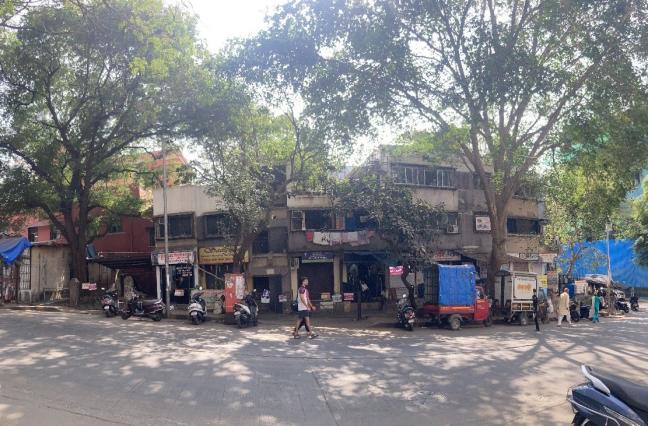
Old tamarind tree besides the author’s ancestral plot (Photo by Deepti Talpade/WRI India)
A tamarind tree has been living on our ancestral plot for more than 150 years. It has been a member of our family for generations. Its branches arch over the terrace of our house. I grew up playing under this tree – eating both its ripened and still-raw, sweet and sour fruit, and sampling its flowers and tart leaves for good measure. The crown of the tree is wide enough to provide shade to the adjoining municipal school and offers respite to innumerable heat-afflicted pedestrians, including schoolchildren and hawkers. In a recent discussion on redeveloping our plot, the developer took it for granted that the tree would be cut to make the project viable. This was the furthest thought from our minds. We are now looking for ways in which we can protect our tamarind tree and still undertake the needed redevelopment.
This is a common story across cities, where the fate of trees residing in plots and natural pockets near our homes is largely decided by private owners. Conservation of trees in cities faces several challenges, from road widening or redevelopment activities to reckless pruning that disrupts ecosystems and enables infestations.
What are the policies to protect them?
The Maharashtra (Urban Areas) Protection and Preservation of Trees Act, 1975 states that if trees older than 50 years are cut, an equivalent number of trees need to be planted, geo-tagged and monitored for at least seven years. The land needed for such ‘compensatory’ planting, in a space-crunched city like Mumbai, and nurturing them for better survival rates is untenable. In cases where this cannot be done, a monetary compensation based on the valuation of the tree is expected to be paid by the proponent to the local authority responsible for upkeep of the trees.
The Supreme Court of India appointed an expert committee to create a just valuation system based on the cost of oxygen, carbon sequestration, soil conservation, ecological integrity, etc. But the decision was not taken further, because it was feared that huge compensations would make governments go bankrupt.
The effectiveness of these policies in protecting trees on private plots needs attention and assessment. A larger conversation on enforcement and monitoring is also needed to ensure that these trees are protected. However, the private sector, local authorities, individuals and communities can also play a key role in protecting trees and green cover in our cities.
1. Individuals
In Mumbai and Pune, individuals can partner with ward-level tree officers to participate in decisions regarding nature in their surroundings. Across India, state level tree protection acts have regulations and city municipal bodies either have a tree authority, or a garden, environment, landscape or sometimes engineering department to protect trees or maintain open spaces in the city.
Every citizen has a right to object and raise concerns against any tree felling on private or public property. If permission has been granted for cutting, pruning or transplanting, you can ask for the permission letter and cross-check whether the actions on site match the instructions. A detailed citizen action guide, drafted for Pune but applicable to all cities in India, is shared here. By being in contact with your local ward office, reaching out to or participating in a local NGO or building awareness in your community, you can get more involved in protecting your environment.
2. Community
Seasonal shedding of leaves, mosquitoes or restricted parking space are some of the reasons why residential societies want to cut down trees. This fails to recognize the life-affirming role trees play, particularly in times of extreme air pollution and heat. The leaves in question can be mulched or composted in the society to create manure for existing vegetation. The source of mosquitoes is the stagnant water and open drains in which they breed. In fact, mosquito-repellent native plants like citronella varieties, hairy basil, vetiver and clove can help remedy this if planted around existing vegetation.

Residential societies can opt for scientific pruning with arborists to make sure that the act does not cause excessive shedding, disconnect biodiversity corridors, destroy habitats or cause the tree to become off-balance. Tree infestation by white ants or fungus is extremely common in our cities, weakening trees. Measures such as applying geru (silicate of alumina and oxide of iron) and choona (lime) around the bark of the trunks can be adopted as advised by an arborist.
3. Construction Companies and Developers
Some critical measures can be adopted as standard operating procedure for any construction around trees to protect roots from physical damage. Various protective measures can be undertaken, including creating tree protection zones, utilizing advanced equipment for soil removal around roots instead of using damaging powered equipment, protecting trunks with protective material, etc.
Having a one-meter planter around tree trunks is mandated by the Tree Act, but in most housing societies, pavers are constructed right up to the edge of the tree, leaving no space for water percolation to the roots. De-paving the area around the tree trunks can increase the breathing space necessary for the aeration of roots, making space for further growth and hence increasing the age of the tree.
4. Local Authorities
Maintenance of existing trees on public lands is regulated by the local authorities but mostly carried out by vendors from construction companies who may lack the required expertise. Government authorities can include a certified arborist as a requirement while floating the tender for maintaining trees in public spaces.
Besides raising awareness, local authorities can conduct a participatory tree census, to count, identify, classify and monitor trees in each ward. This can be a very effective way of bringing innovation, accountability and transparency to tree conservation along with offering information regarding the health of trees, the number of native species in specific areas, canopy cover, etc. This information can then be used to calculate the carbon sequestration potential of the ward and inform actions towards restoring green cover and creating connected, shaded and walkable areas.
This knowledge can further inform the development plans of the city and an additional layer of city-level landscape planning can then be integrated into these plans to protect biodiversity hotspots, critical ecological corridors and heritage tree clusters, irrespective of public or private ownership.

Trees are no less essential to our lives than infrastructure, homes and buildings. Conservation of nature must be viewed as part of the development process and not as stultifying development. To strike a balance between the two, we need to do our best to measure both efficiently and ensure we do not lose out on our natural assets at the cost of development.
It is crucial to find a balance between human development and environmental conservation to ensure a sustainable and healthy future. A future where the old tamarind tree and its sisters, which together form an irreplaceable ecosystem around my ancestral home, continue to provide shade, fruits and good health to the new residents of the redeveloped building.
(Published under Creative Commons from WRI-India. Read the original article here)