“Govt Looks ‘Timid, Fearful’ After A US Submarine Sinks An Iranian Warship”
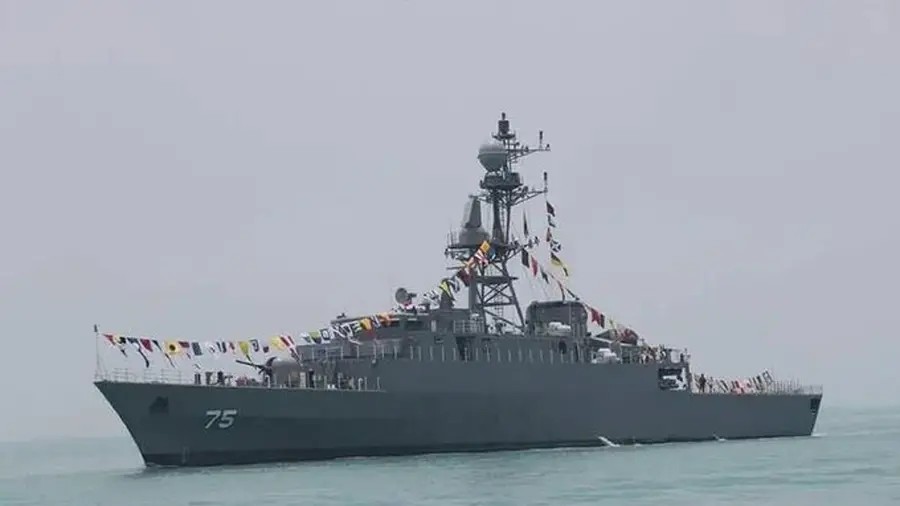
The United States has confirmed that Iranian warship IRIS Dena was sunk in the Indian Ocean off the southern coast of Sri Lanka, resulting in heavy casualties. According to official statements, 87 personnel on board were killed in the attack, which reportedly took place at around 5.30 am on Wednesday
A day after a United States submarine torpedoed and sank the Iranian warship IRIS Dena in international waters off the coast of Sri Lanka, the opposition Indian National Congress sharply criticised the Government of India for what it described as an “alarming silence” on a major geopolitical development. The party said the lack of an official reaction raised serious questions about India’s diplomatic posture at a time of growing instability in West Asia and the Indian Ocean region.
Senior Congress leader Jairam Ramesh, who serves as the party’s general secretary in charge of communications, took to social media platform X to criticise the government’s response. In his statement, Ramesh described the incident as “extraordinary” and argued that it carried profound strategic implications for India, particularly because the Iranian vessel had recently participated in a naval exercise hosted by India.
“The sinking of the Iranian warship, which was returning home after participating in MILAN, about 40 nautical miles south of Galle in Sri Lanka, is extraordinary,” Ramesh said. “This US action has enormous implications for India, yet there has been no official response.”
He further alleged that the silence reflected a broader pattern in the government’s approach to recent events involving Iran. “Perhaps it should not surprise us, as the government has still not broken its silence over the targeted assassinations in Iran,” he said. “Never before has the Indian government looked so timid and fearful.”
The incident he referred to involved the Iranian frigate IRIS Dena, which was torpedoed by a US submarine while sailing in the Indian Ocean near Sri Lanka. According to reports from Sri Lankan authorities, the attack occurred in international waters roughly 40 nautical miles south of the port city of Galle, while the vessel was returning to Iran after participating in multinational naval exercises hosted by India.
The warship had recently taken part in the 13th edition of the multinational naval exercise MILAN 2026, which was held in Visakhapatnam from February 19 to 25. The exercise, inaugurated by India’s defence minister Rajnath Singh, brought together naval forces from numerous countries and featured around 18 warships participating in a series of cooperative drills and maritime engagements.
The fact that both the United States and Iran had taken part in the same exercise only days earlier has drawn particular attention from analysts and political observers. Critics argue that the sinking of a warship that had just attended an India-hosted exercise raises questions about maritime security and diplomatic sensitivities in the region.
US defence secretary Pete Hegseth confirmed the strike during a briefing at the Pentagon. He stated that the vessel was targeted by a torpedo fired from a US submarine. “An American submarine sank an Iranian warship that thought it was safe in international waters,” Hegseth said. “Instead, it was sunk by a torpedo — a quiet death.” He added that the operation marked the first time since World War II that an enemy warship had been sunk by a torpedo in combat.
The attack resulted in heavy casualties among the Iranian crew. Sri Lankan naval authorities reported recovering 87 bodies from the sea while rescuing 32 survivors during search and rescue operations conducted off the island’s southern coast. Some of the survivors were transported to hospitals in Galle for medical treatment as the rescue effort continued.
The sinking of the frigate has also intensified an already volatile regional crisis. In recent weeks, the conflict between Iran and its adversaries has escalated dramatically following joint military strikes by the United States and Israel on Iranian targets. Those strikes reportedly killed Iran’s supreme leader Ali Khamenei along with several senior officials, triggering a wave of retaliatory missile and drone attacks by Tehran against Israeli and American-linked military facilities across the Gulf region.
Iran’s retaliation has reportedly targeted locations in countries including the United Arab Emirates, Bahrain, Kuwait, Jordan, and Saudi Arabia, widening the geographical scope of the confrontation beyond the Persian Gulf. Analysts say the sinking of the IRIS Dena in waters near Sri Lanka represents a significant expansion of the conflict into the Indian Ocean, an area traditionally regarded as India’s strategic sphere of influence.
For India, the development carries important strategic and diplomatic implications. The Indian Ocean has long been considered central to India’s maritime security doctrine, and any escalation involving major powers in these waters is likely to attract close scrutiny from policymakers in New Delhi.
Security experts warn that the targeting of a warship returning from a multinational naval exercise could set a troubling precedent for maritime operations. Such actions, they argue, could complicate future international naval cooperation and potentially undermine confidence in multilateral military exercises hosted in the region.
Despite the criticism from the opposition, India has so far maintained a cautious diplomatic tone regarding the broader crisis. Officials have reiterated calls for restraint and dialogue, emphasising the need for a peaceful resolution to the escalating conflict.
In its official statements, India has stressed the importance of diplomacy and stability, urging all parties involved in the conflict to avoid further escalation. The government has also underscored that maintaining peace and security in the wider region remains a priority, especially as tensions continue to intensify across multiple fronts.
As the situation evolves, analysts believe India may face increasing pressure to clarify its position on the unfolding crisis, particularly given its growing role as a major maritime power and host of multinational naval cooperation initiatives in the Indian Ocean.