On MGNREGA, An Open Letter From Global Experts
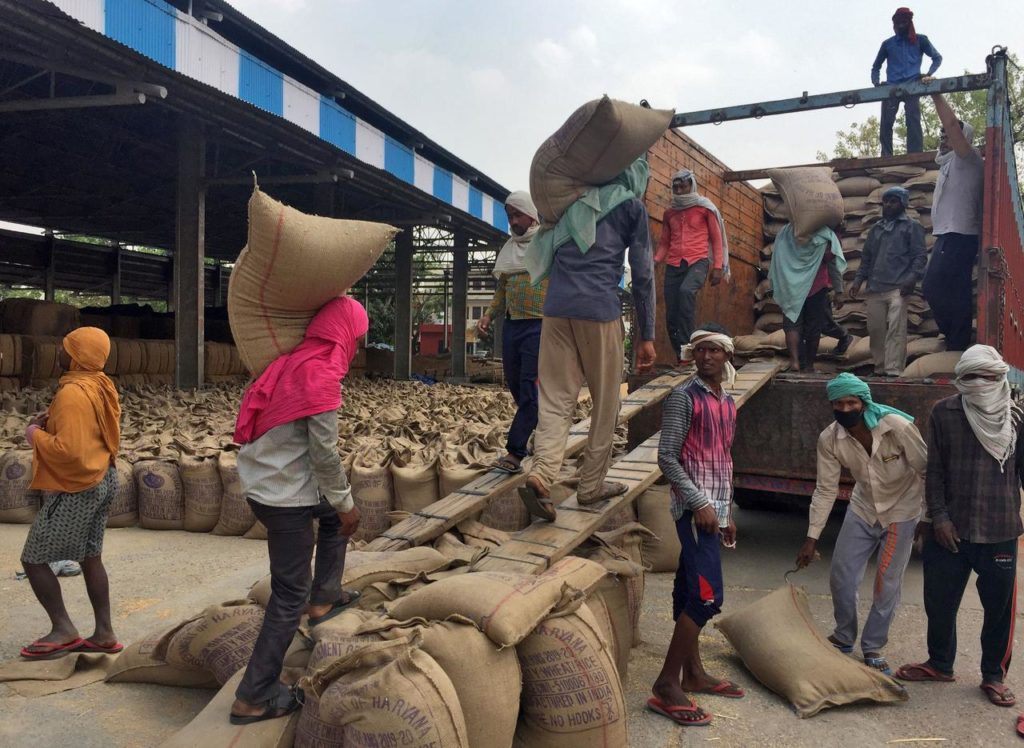
FILE PHOTO: The signatories of the open letter, including Nobel laureate Joseph E. Stiglitz and economist Thomas Piketty, argue that dismantling of MGNREGA threatens a cornerstone of India's social welfare framework, which guarantees employment as a fundamental right
In a powerful open letter, leading world economists, policymakers, lawyers, and civil society members have voiced strong opposition to the Indian government’s decision to dismantle the Mahatma Gandhi National Rural Employment Guarantee Act (MGNREGA) and replace it with the Viksit Bharat Guarantee for Rozgar and Ajeevika Mission (Gramin) (VB-G RAM G) Bill, 2025, passed by Parliament on December 18. The signatories, including Nobel laureate Joseph E. Stiglitz and economist Thomas Piketty, argue that this move threatens a cornerstone of India’s social welfare framework, which guarantees employment as a fundamental right.
“We urge the government to not dismantle the programme, which implements a demand-driven legal right to employment,” the letter states, emphasizing the need to preserve MGNREGA’s core principles.
MGNREGA, enacted unanimously by Parliament across political lines, has been hailed as a transformative initiative. “The fundamental principle of MGNREGA was that the central government should guarantee employment security—as it ensures economic dignity as a fundamental right,” the letter explains. Since its inception, the program has delivered tangible benefits, generating “over two billion person-days of work for approximately 50 million families every year.”
This has made a profound difference in rural India, where more than half of the workers are women, and about 40% belong to Scheduled Castes or Scheduled Tribes. Economists point to its success in boosting village wages and economic output. “In the initial years of MGNREGA, there was a tremendous increase in wages in villages,” the letter notes, backed by studies that confirm its positive impact on efficiency and dispel myths about inefficiency.
Despite these achievements, the letter highlights longstanding challenges, including funding shortages and payment delays, which have hindered implementation. However, the proposed replacement exacerbates these issues by shifting responsibility to states without adequate financial backing.
“The move to hand it over to the states without the necessary financial support has become a threat to its very existence,” the signatories warn. Under the new Bill, states that previously contributed only 25% of material costs will now bear 40% to 100% of the total cost. This unfunded mandate could force poorer states to reduce project approvals, leading to a decline in work demand. “States that previously contributed only 25 per cent of the material costs will now have to bear 40 per cent to 100 per cent of the total cost, which will lead financially weaker or poorer states to reduce project approvals, directly resulting in a decrease in the demand for work,” the letter asserts.
The Bill’s “arbitrary ‘switch-off’ powers” are another major concern, allowing for the suspension of the scheme and elimination of the employment guarantee. The letter cites the example of West Bengal, where funding was halted without reason for three years, as evidence of potential political misuse.
“Citing the example of West Bengal, where funding was stopped without reason for the past three years, the letter states that this is an example of political misuse, and the new framework of the Bill institutionalizes this risk, imposing unfunded mandates on states without consultation.” This structural sabotage undermines MGNREGA’s demand-driven design, which not only provides livelihoods but also creates vital rural assets like wells, roads, and ponds, fostering local economies.
“The demand-driven design of MGNREGA not only provides work and livelihoods to those in need but also creates essential rural assets such as wells, roads, and ponds, boosting the local economy,” the experts argue.
Signatories like Mariana Mazzucato and Pavlina R. Tcherneva stress that dismantling MGNREGA would be a historic mistake. “Ending it now would be a historic mistake. It would eliminate a proven instrument for poverty reduction, social justice, and environmental stewardship,” the letter concludes.
MGNREGA has garnered global attention for its innovative approach, and its loss could reverse progress in reducing inequality. The experts urge reinstatement with guaranteed funding, timely payments, and restoration of the right to work. “We urge the central government to reinstate it by ensuring guaranteed funding, timely wage payments, and unequivocally restoring the fundamental guarantee of the right to work,” they plead.
The letter was prepared by the Levy Economics Institute and signed by prominent figures such as:
• Olivier De Schutter, United Nations Special Rapporteur on extreme poverty and human rights
• Isabel Ferreras, Research Director FNRS, Professor University of Louvain, Senior Research Associate Center for Labor and a Just Economy, Harvard Law School
• James Galbraith, Lloyd M. Bentsen Jr. Chair in Government/Business Relations, Lyndon B. Johnson School of Public Affairs, The University of Texas at Austin, USA
• Darrick Hamilton, Henry Cohen Professor of Economics and Urban Policy, New School for Social Research, USA
• Mariana Mazzucato, Professor and Founding Director, University College London, Institute for Innovation and Public Purpose
• Thomas Piketty, Professor, EHESS and Paris School of Economics, Co-Director, World Inequality Lab and World Inequality Database
• Joseph E. Stiglitz, University Professor and Nobel Laureate, Columbia University, USA
• Pavlina R. Tcherneva, President and Professor of Economics, The Levy Economics Institute of Bard College, USA
• Imraan Valodia, Professor of Economics, University of Witwatersrand, South Africa
• Randall Wray, Professor and Senior Scholar, Levy Economics Institute of Bard College, USA
Their collective voice underscores the urgency of protecting MGNREGA amid India’s push for development, warning that the VB-G RAM G Bill risks deepening rural poverty and inequality. As India aims for “Viksit Bharat” (Developed India), these experts remind policymakers that true progress requires safeguarding rights-based programs that empower the most vulnerable.
In essence, the letter serves as a clarion call for accountability, highlighting how MGNREGA’s erosion could undermine India’s democratic commitments. By shifting burdens to states and introducing arbitrary controls, the new Bill threatens to undo decades of progress. The signatories’ plea is clear: reinstate and strengthen MGNREGA to ensure it continues to serve as a bulwark against poverty, fostering dignity and sustainability in rural communities. Without it, the dream of equitable development remains elusive, potentially leaving millions without a safety net in an increasingly uncertain world.