Educated But Unemployed: The Paradox Of India’s Workforce Crisis
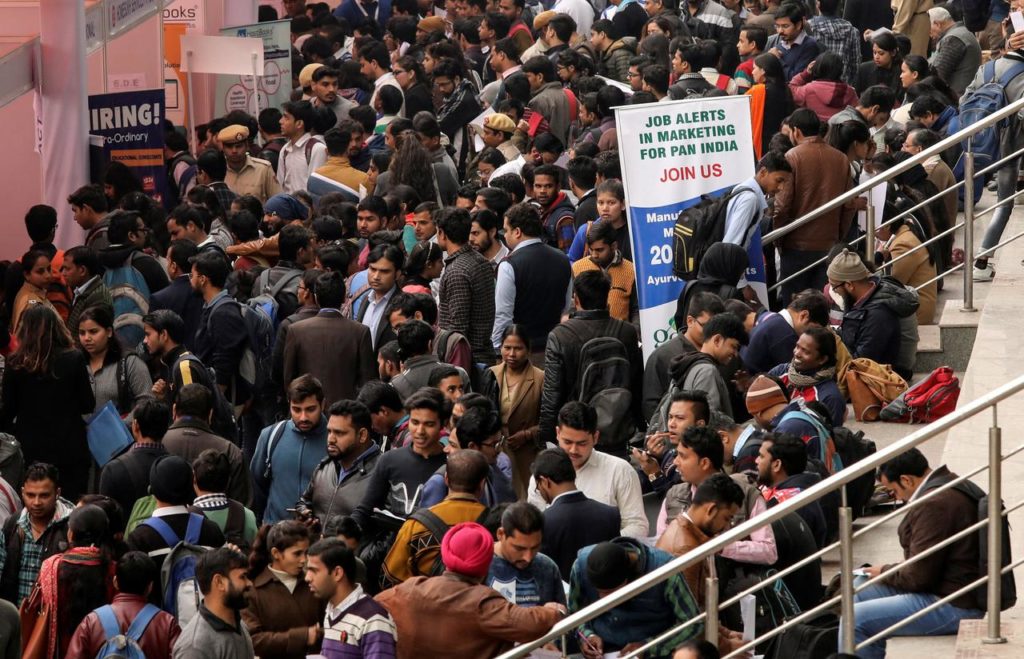
The persistence of educated unemployment in India is not merely an economic issue but a reflection of deeper systemic and governance failures (Representational Image)
India today stands at a peculiar crossroads. On the one hand, it boasts one of the largest pools of educated youth in the world, with millions graduating annually from universities, technical institutes, and professional colleges. On the other hand, unemployment—especially among the educated—continues to rise, creating a troubling disconnect between academic achievement and economic opportunity. This paradox not only raises questions about the structure of India’s education system but also exposes deeper shortcomings in governance, policy planning, and implementation.
Structural Mismatch Between Education and Employment
A key factor behind educated unemployment in India is the persistent mismatch between what the education system produces and what the labor market demands. Over the past few decades, there has been a rapid expansion of higher education institutions, particularly in engineering, management, and general degree programs. However, this quantitative growth has not been matched by improvements in quality or relevance.
Many graduates lack practical skills, critical thinking abilities, and industry exposure. Employers frequently report that a significant proportion of degree holders are “unemployable” in their current form. This indicates a systemic failure: education has become more about credential acquisition than capability development. Government oversight in regulating educational standards has been inconsistent, allowing substandard institutions to proliferate while failing to enforce accountability.
Furthermore, vocational education—crucial for a balanced workforce—remains undervalued and underdeveloped. Despite repeated policy announcements promoting skill development, implementation has been fragmented and poorly coordinated. Programs aimed at skilling youth often suffer from inadequate infrastructure, outdated curricula, and weak industry linkages. As a result, they fail to translate training into actual employment.
Another dimension of this mismatch is geographic and sectoral imbalance. While certain urban sectors like information technology and finance continue to grow, large parts of the country lack industrial development. Graduates from smaller towns and rural areas face limited local opportunities and often lack the resources to migrate to cities. Government initiatives to promote regional industrialization have been slow and uneven, further exacerbating disparities.
The public sector, traditionally seen as a stable source of employment, has also not kept pace with the growing workforce. Recruitment processes are often delayed, opaque, and limited in scale. At the same time, there has been a gradual contraction in government hiring due to fiscal constraints and a shift toward privatization. This leaves millions of aspirants competing for a shrinking pool of secure jobs.
Policy Gaps and Governance Failures
While structural issues in education and the labor market are significant, the role of government policy cannot be overlooked. Successive governments have acknowledged the problem of unemployment, yet their responses have often been reactive rather than strategic. Announcements of large-scale job creation programs are frequently made, but the outcomes rarely align with the promises.
One major concern is the lack of reliable and transparent data on employment. Periodic controversies over labor statistics have undermined public trust and hindered evidence-based policymaking. Without accurate data, it becomes difficult to assess the true scale of unemployment or to design targeted interventions. This opacity allows governments to deflect accountability rather than confront the issue directly.
Economic policy decisions have also played a role in limiting job creation. Growth in India has not been sufficiently labor-intensive. Sectors that contribute significantly to GDP, such as capital-intensive industries, do not generate employment at the scale required. Meanwhile, small and medium enterprises (SMEs), which are typically more labor-absorbing, face regulatory hurdles, limited access to credit, and policy uncertainty. Government efforts to support these enterprises have often been inadequate or inconsistently implemented.
Additionally, flagship initiatives aimed at boosting employment have shown mixed results. Programs intended to encourage entrepreneurship, for example, have struggled with bureaucratic complexity and limited follow-through. Many aspiring entrepreneurs face challenges in accessing funding, navigating regulations, and sustaining their ventures in a competitive environment. Without robust support systems, such initiatives risk becoming symbolic rather than transformative.
The government’s approach to labor reforms also warrants scrutiny. While there have been attempts to simplify labor laws and attract investment, these reforms have not necessarily translated into increased job security or quality employment. In some cases, they have raised concerns about weakening worker protections without guaranteeing substantial job creation. This imbalance reflects a broader policy dilemma: prioritizing ease of doing business without adequately addressing the needs of the workforce.
Another critical issue is the limited focus on long-term planning. Employment generation requires coordinated efforts across education, industry, infrastructure, and social policy. However, government actions often appear fragmented, driven by short-term political considerations rather than a coherent vision. For instance, investments in infrastructure, while important, are not always aligned with strategies to create sustainable employment opportunities.
Moreover, the digital and automation-driven transformation of the global economy presents both opportunities and challenges. While India has the potential to benefit from emerging sectors, there has been insufficient investment in preparing the workforce for these changes. Policies related to digital skills, research and development, and innovation ecosystems remain underdeveloped, leaving many educated individuals ill-equipped for future job markets.
The persistence of educated unemployment in India is not merely an economic issue but a reflection of deeper systemic and governance failures. While individuals continue to invest time and resources in acquiring education, the returns on that investment remain uncertain. Addressing this paradox requires more than incremental reforms; it demands a fundamental rethinking of how education, economic policy, and governance intersect.
The government must move beyond rhetoric and adopt a more transparent, accountable, and coordinated approach. Strengthening educational quality, fostering industry-academia collaboration, supporting labor-intensive sectors, and ensuring data-driven policymaking are essential steps. Without such measures, the gap between education and employment is likely to widen, undermining both individual aspirations and the country’s broader development goals.