Climate Change & Disasters On The Third Pole
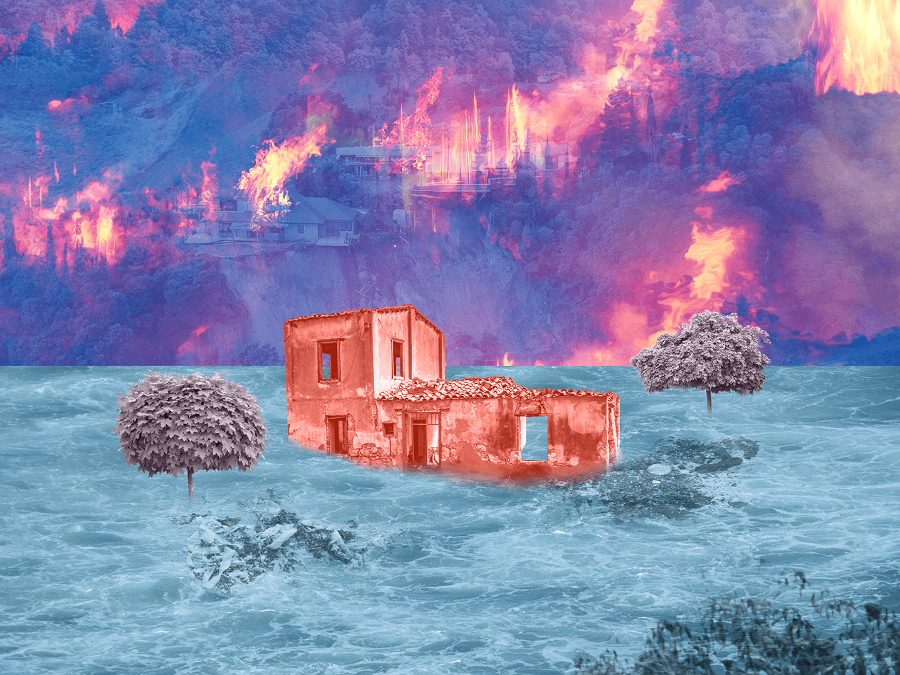
Climate change is leading to more frequent and more severe disasters across the world, including in the Himalayan region (Image: Gautier Rebetez/The Third Pole)
In many ways, 2021 marked a new threshold for climate change-related disasters. Global headlines were monopolised by incidents of extreme heat, flooding and wildfires in high-income countries such as the US, Canada, Germany and Greece – disasters these countries were poorly prepared for. But many developing countries, with limited infrastructure and state capacity to respond, had been facing higher costs for years in terms of lives uprooted and ended.
As these disasters rolled across developed countries, extreme weather was taking a toll in South, Central and Southeast Asia, and this was the continuation of a long-term trend. The World Meteorological Organization’s provisional State of the Global Climate 2021 report stated that at the beginning of 2021, at least 7 million people had been internally displaced following disasters “related to natural hazard events”. The highest numbers of these displaced people were in Afghanistan, India and Pakistan, followed by Ethiopia, Sudan, Bangladesh, Niger and Yemen.
In 2021, parts of Central Asia experienced their worst drought in 13 years, and Vietnam too suffered through another dry season drought. Fires ravaged forests and livelihoods in the Himalayas, while in India, around 1,200 people died due to flooding. In Afghanistan in the first half of the year, disasters linked to floods displaced about 22,500 people.
2021 also saw an active cyclone season in the North Indian Ocean. In Bangladesh, flooding in the aftermath of Cyclone Yaas in May displaced millions of people. In the Rohingya refugee sites in Cox’s Bazar, people feared for their lives – although thankfully a humanitarian catastrophe was avoided through disaster preparedness.
With such disasters likely to increase in frequency and intensity as climate change escalates, The Third Pole created a hub page explaining the connection between climate change and disasters. Here are four of the most important climate change-related disasters we covered in 2021.
Uttarakhand Before Climate Tragedy: A Mountaineer Remembers
On 7 February, disaster struck in the Indian Himalayas. In the northern state of Uttarakhand, a chunk of ice, rock and soil broke off from the Ronti glacier and crashed into the river below. This caused a huge and devastating flash flood in which more than 70 people were killed, with over 130 reported missing. Later analysis by scientists and researchers concluded that climate change played a clear role in the disaster.
In response to the tragedy, we published a poignant article written by Sudipta Sengupta, a professor of geology and mountaineer. Sengupta recalls her first expedition to climb the Ronti glacier 50 years ago, and her fondness for the villages and landscape she and her team passed through. She describes battling through extreme cold, landslides and avalanches. Even 50 years ago, the area was unstable, she writes, but development and deforestation have amplified the risks.
Climate Change Is Leading To More Lightning Strikes In India
In September 2021, The Third Pole shone light on an underreported element of climate change-related disasters: lightning strikes. Sanjay Srivastava of the National Panel of Experts on Lightning in India’s National Disaster Management Authority revealed that lightning is the most lethal natural hazard in India. The phenomenon kills twice as many people as floods, yet far less attention is paid to it.
Srivastava noted that “there has been a significant rise in the frequency, intensity and geographical spread of lightning strikes in India”, linked to changes in the climate system. Yet lightning is not included on the official list of disasters, which means the risks are not incorporated into development and disaster-management plans.
Threat Of Receding Glaciers Gives Pakistan Communities Sleepless Nights
Sudden floods from glacial lakes are an ever-present, and increasing, risk for Himalayan communities. In late May in northern Pakistan, families’ constant fears seemed about to be realised. A lake at the base of the Shishper glacier in Gilgit-Baltistan flooded, displacing at least 20 families and damaging a half-built power station.
The Shishper glacier lake is one of 36 lakes identified as dangerous in Gilgit-Baltistan, which scientists say are becoming more perilous as the climate warms. Fortunately, damage from the May flood was limited thanks to preventative measures by the local government, such as evacuations.
Six Months After Melamchi Floods In Nepal, No Respite For Displaced People
Changing rainfall patterns are also triggering more frequent and deadly landslides in the Himalayas. One such disaster befell Nepal’s Sindhupalchok district this summer. Following record-breaking monsoon rainfall, a huge landslide triggered floods along the banks of the Melamchi River, killing 25 people. Six months after the disaster, The Third Pole published a field report by Ramesh Bhushal on the situation on the ground. He found that – despite the cold – people were still living in tents, having received little relief from the authorities.
A similar story can be seen across the Himalayas: Bhutan is also reporting more landslides, with 10 people killed in an incident on 16 June. Prior to the tragedy, the area recorded rainfall that was much higher than normal. (TheThirdPole)