Artists Trace The Journey Of Food, Environment And Livelihoods
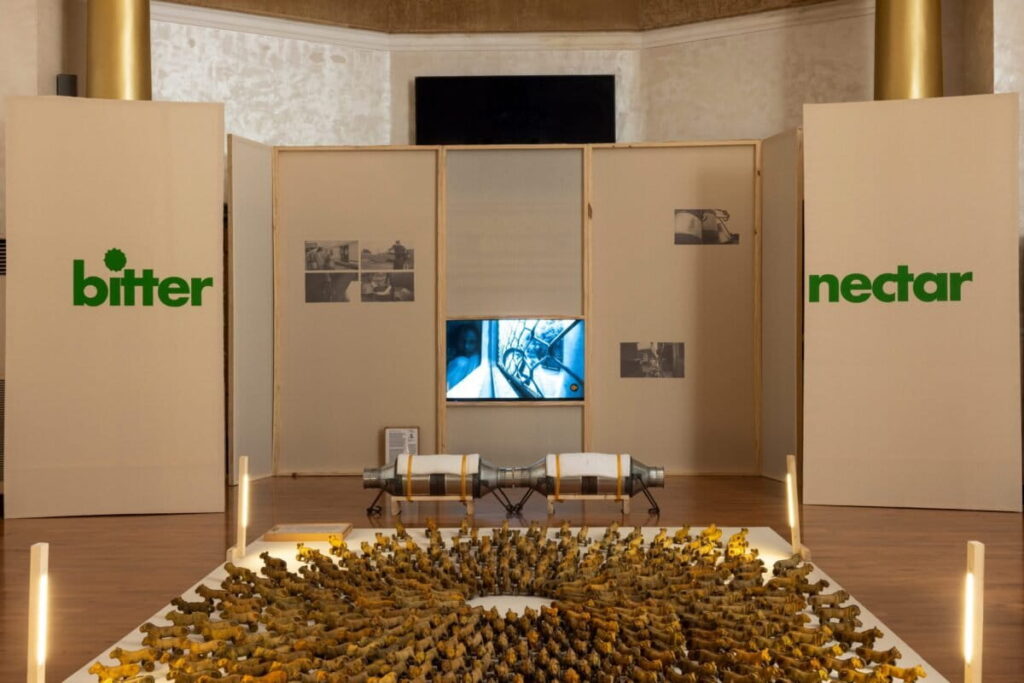
Artist-educator Mrugen Rathod’s installation from Gir, Gujarat, reflects on the booming Kesari mango economy and its ecological cost. The art exhibition ‘Bitter Nectar’ featured art inspired by food systems and environmental change in Uttar Pradesh, Ladakh, and Gujarat. It was organised by Sustaina India, an initiative by Council on Energy, Environment and Water (Image courtesy of Sustaina India)
- Food is shaped by environmental and landscape change.
- In a recent art exhibit, the artists traced informal dairy economies in Uttar Pradesh, shifting horticultural seasons in Ladakh, and changing land use patterns in Gujarat’s Gir.
- They used various media to spark deeper conversations about the journey of food in a changing environment and landscapes.
Food that reaches our plates undertakes a journey increasingly shaped by environmental change. As populations grow, forests are converted into farmland, cities expand, land-use patterns shift, and accelerated human activity contributes to climate change, which leads to intensifying extreme weather events. These ecological transformations have been reshaping food systems across India, as they impact the cycles of production, distribution and the livelihoods they sustain.
These shifts form the basis of the exhibition Bitter Nectar, which placed food at its centre while tracing informal dairy economies in Uttar Pradesh, shifting horticultural rhythms in Ladakh, and changing land use patterns in Gujarat’s Gir landscape. Organised by Sustaina India, a collaborative initiative by the think-tank Council on Energy, Environment and Water (CEEW), with artist-duo Thukral and Tagra as curatorial leads, the showcase held last month in New Delhi, featured videos, a board-game puzzle and art installations to foreground the ecological and livelihood stress embedded in food production cycles.
Invisible changes in the informal milk economy
Central to dietary practices and known for its nutritional value and cultural significance, milk has a ubiquitous presence in Indian households. A robust network of corporations and informal milk traders ensure an abundant stream of supply to homes. However, those who rear the cattle are increasingly vulnerable to climate stress.
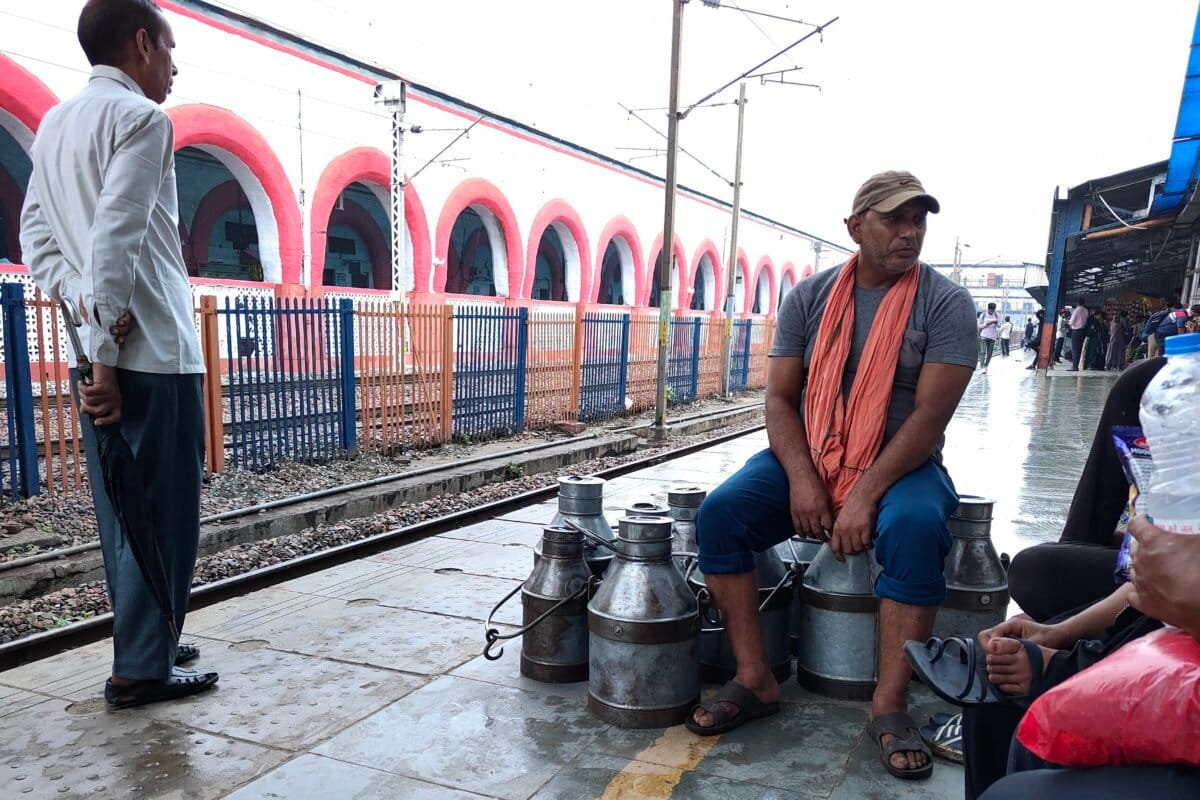
Vedant Patil, a Ph.D. student in Sociology, documents the journey of the informal milk trade in Western Uttar Pradesh in his video presentation Spillage to Spoilage. The short film follows milk traders on their train journeys from Aligarh to Delhi, carrying aluminium milk cans on their heads and shoulders to cater to the NCR’s growing demand. Their candid conversations with Patil reveal how milk yield drops significantly during summer, a season now lengthened by a few months. Rising fodder prices and shrinking grazing lands have further dwindled their financial security.
“In my field work and my interactions with these doodhiyas (men delivering milk) since my first encounter with them in 2017, I have observed that the production of milk has significantly reduced due to climate change impacts and shifting land-use patterns,” Patil told Mongabay-India in a video interaction.
He argues that the changing ecology of land patterns is central to understanding the dairy economy. Earlier, agricultural and grazing lands, which Patil describes as village commons, were core food providers for the cattle. As development projects transformed the landscapes, Patil says the commons land has significantly shrunk. “Unlike agricultural land that is revived and regrown to ensure soil fertility, commons don’t get the same care. With extreme heat and no water, the natural sources of nourishment for the cattle have also declined,” he adds, highlighting that irreversible change has forced milk traders to invest in expensive fodder.
Research also identifies rising cattle costs, declining herd health and limited access to fertile grazing pastures as looming threats to small-scale dairy farmers. Additionally, CEEW’s 2026 report on sustainable pathways for India’s dairy sector highlights that climate-related impacts have affected over half of buffalo and crossbred rearers, with the cattle showing higher disease incidence and mortality, and heat-induced stress and restlessness.
“Presenting the film (Spillage to Spoilage) to a broader audience helped put into perspective what the journey of milk around the margins of Delhi really means for the milk traders. But issues like this need wider discussion, especially for these people who live with growing anxiety about environmental change,” Patil explains.
Similar disruptions, though shaped by different ecological conditions, are visible in other regions too, which featured in Bitter Nectar.
Seasonal variation disrupts apricot production cycle
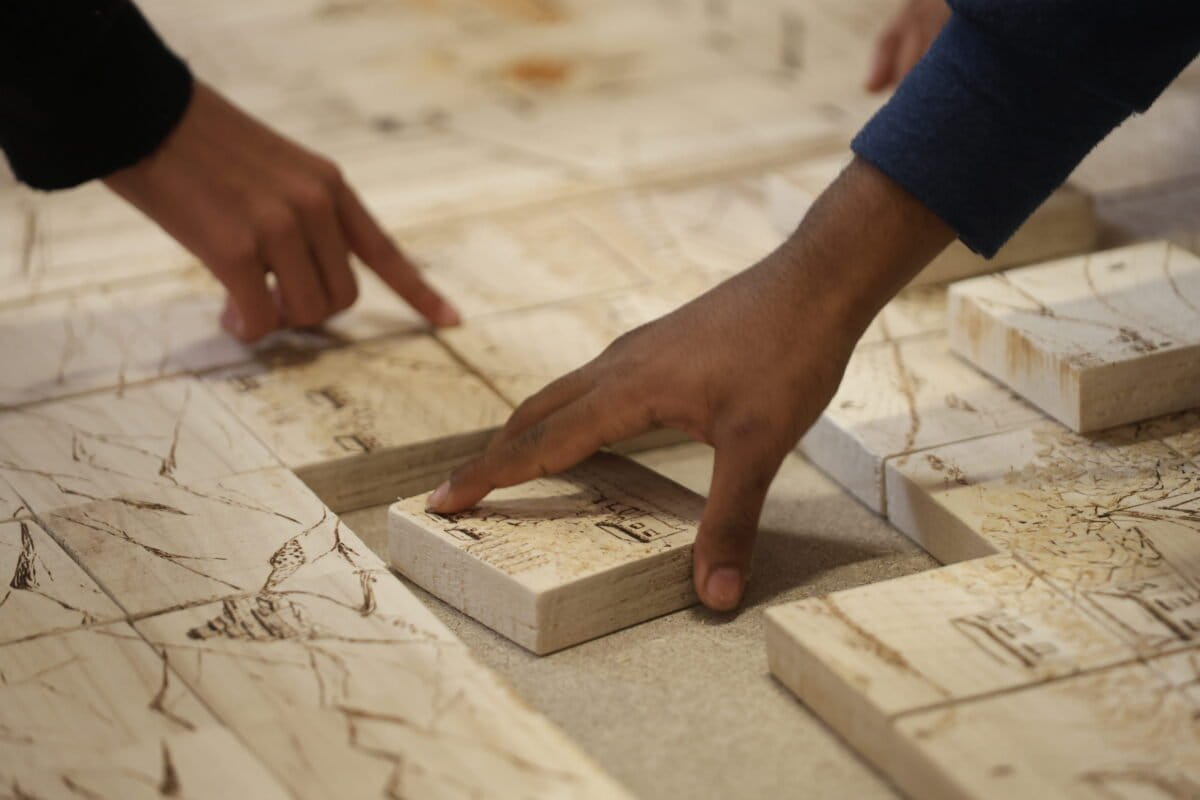
Multidisciplinary artist Anuja Dasgupta’s work ‘རི་ (Rē)Frame’ charted the production cycle of apricot in Sham Valley, Ladakh through a puzzle board game crafted from repurposed poplar wood.
Dasgupta’s artistic engagement challenges the perception of Ladakh being viewed as a cold and barren desert, by highlighting the floral beauty of the region. For this exhibition, she chose apricot because it represents endurance and remains present in the landscape year-round in different forms.
However, last year, unseasonal snowfall in the region in April followed by torrential rains in August disrupted the apricot production cycle during the peak flowering and harvesting periods, burdening farmers with financial losses. Reports described it as Ladakh’s wettest August on record, with rainfall nearly 930%above seasonal averages.
“That was heartbreaking,” recalled Dasgupta. Since Ladakh’s architecture isn’t designed for heavy rainfall, residents were forced to cover their rooftops to prevent water seepage. “When the tree blossoms, it needs a certain kind of microclimate. And unpredictable weather patterns disrupt that cycle,” she said.
Dasgupta moved to Ladakh in 2018 and, after working with the farming community in Sham Valley, she co-founded the social enterprise Ladakh Orchards in 2023. Having witnessed firsthand how climate variability disrupts production cycles, she says, “These warnings aren’t pronounced, but announce themselves sporadically in the form of erratic snowfall or incessant rainfall.”
However, agricultural scientist Tsering Stobdan cautions that all unseasonal natural events cannot be directly attributed to climate change without scientific evidence.
In a chapter titled ‘Climate Change: Perceptions and Facts’ from Stobdan’s forthcoming book Julley: Answers to Frequently Asked Questions in Ladakh, he mentions that Ladakh had first reported the highest rainfall (51.3 mm) in 24 hours in 1933. He writes, “Such unusual events need to be studied before concluding they are due to climate change in the region….”
Talking about how her board game helped people understand the issue, Dasgupta shares, “The most immediate response (from the attendees) was the excitement of being able to touch and interact with the work. But the realisation came toward the end, when they saw they were piecing together a shifting landscape next to a static Ladakhi home. That pause and uncertainty sparked deeper conversations about environmental change.”
Meanwhile in western India, agricultural priorities are transforming forest landscapes.
Where lions roam through mango orchards
Every time artist-educator Mrugen Rathod visits the Gir, farmers invite him to their farms with the promise of sighting the Asiatic lions. Such invitations aren’t rare but part of everyday life in Gir, where lines between the farm and forest are slowly blurring.
After repeatedly hearing, ‘humari vaadi mein aa jaoo’ (“Come, visit our farm.”), he asked himself a question — What are lions doing in the farms? This inquiry became the foundation of his sculptural installation Mari Vaadi Ma, where around 500 lions mounted on wheels form a concentric circle as they move through a landscape evoking their shift from forest to farms. Crafted from cow dung and forest mud, these sculptures also carry a tinge of orange, representing Kesar mangoes.
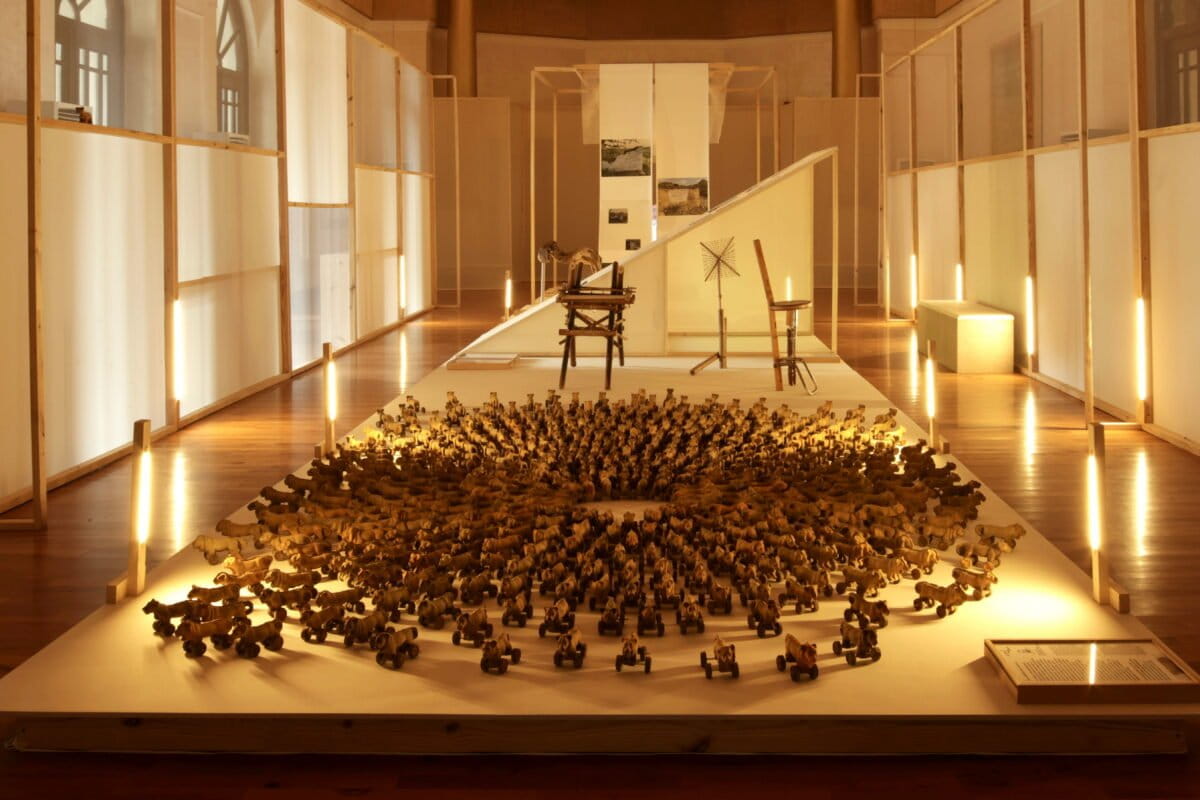
With an increase in the Asiatic lion population in Gujarat, tourism to the Gir Protected Areas — comprising the Gir National Park, Gir Wildlife Sanctuary — has also seen an upward trend.
However, there are also reports of an increasing number of incidents of lions killing domestic animals, peaking at 4,385 in 2023-24.
“The conservation of Asiatic lions is a great story. But my installation raises the question of the lion habitat loss and the changing landscape of the Gir. Earlier, farmers cultivated crops like jowar, bajra and vegetables. But once they realised that mango farming offered higher returns with less labour, many converted their fields into orchards,” said Rathod, who has firsthand witnessed these changes since his first visit to Gir in 2013.
Gir has a diverse range of habitats, including grasslands, dry deciduous forest and coastal ecosystems. The forest soil is nutrient-rich and well-suited to mango cultivation. In 2024-25, Gujarat exported 856 metric tonnes of mangoes, driven by expanded kesar mango cultivation.
“Forest ecosystems are inherently rich and fertile. They store high levels of nutrients and carbon, and support immense microbial diversity, all of which contribute to soil productivity. With growing population pressure, forest lands are gradually declared agricultural lands,” Jitendra Gavali, botanist and former director of the Regional Community Science Centre Vadodara, told Mongabay-India.
“Over time, and with increasing urbanisation, these agricultural lands are converted into cash crops that promise higher returns. Ironically, with a great push on supporting agriculture, forestry is somewhere forgotten in our country,” he added.
“What stood out was the installation’s strong visual impact that prompted people to think more closely about how the lions and their habitats are shifting,” Rathod adds.