How Homestead Farming Is Empowering Indigenous Women In Central India
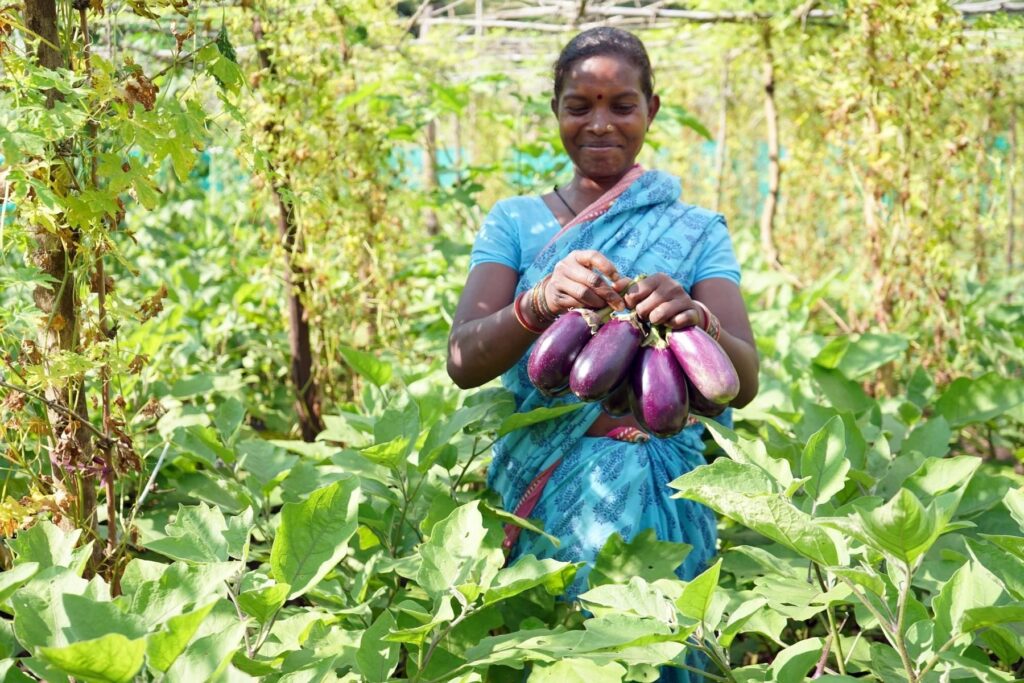
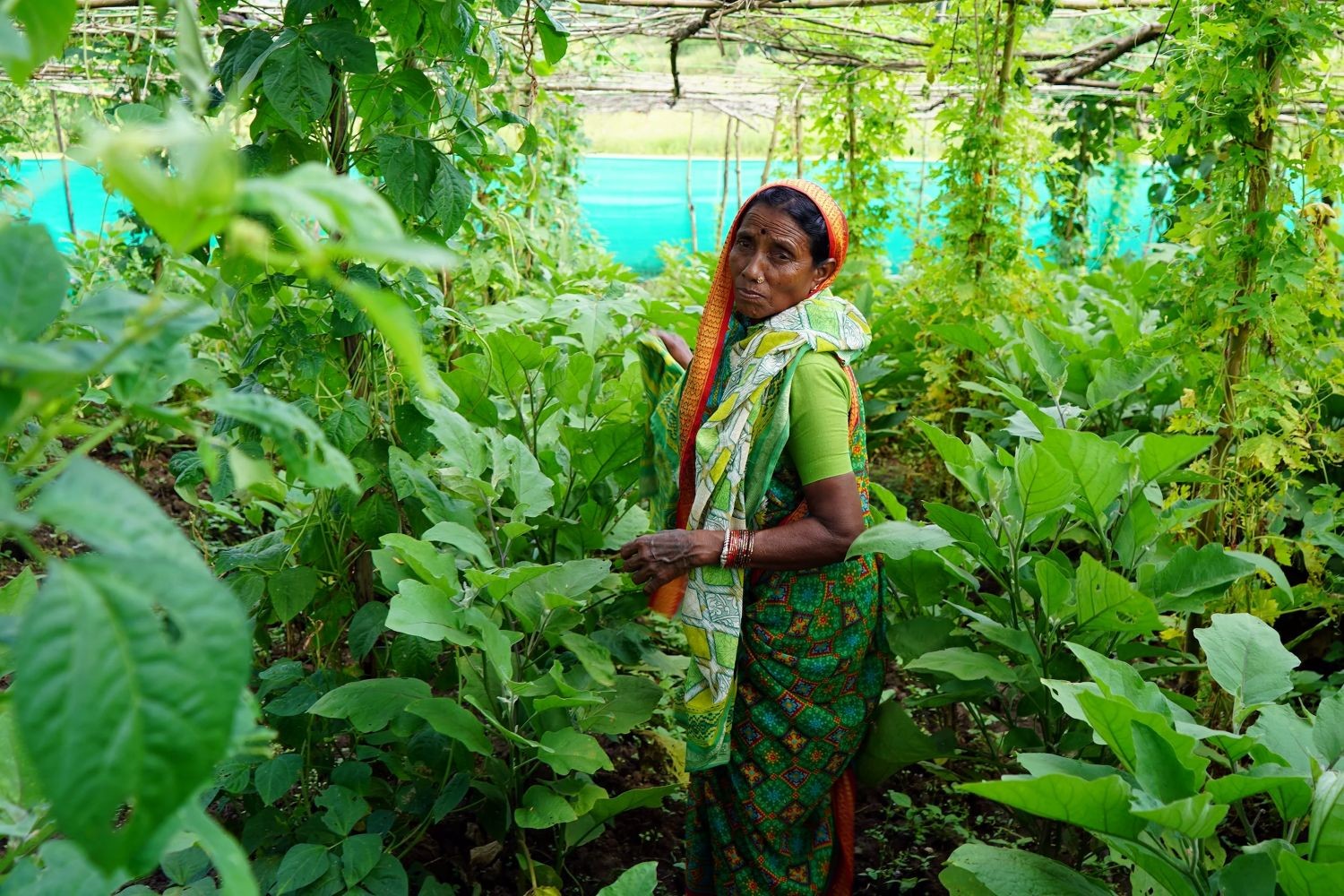
Soghi Devi harvests brinjals from her homestead farm in Chimkatola, Madhya Pradesh (Image: Tanmoy Bhaduri / IWMI)
Rows of brinjals, chillies, cowpeas, tomatoes and leafy greens shimmer in the morning sun in Kusum Devi’s lush backyard garden.
She lives in the small village of Chimkatola, perched in the hilly terrain of Mandla district, Madhya Pradesh, central India.
Kusum sprinkles a concoction made of cow dung, neem leaves and fermented jaggery (an unrefined cane sugar) over the rows of vegetables. She applies this natural pest repellent as well as bio-fertilisers on the crops every 15 days. “Earlier, we bought [these] from the market, but now, we make it all at home,” she tells Dialogue Earth.
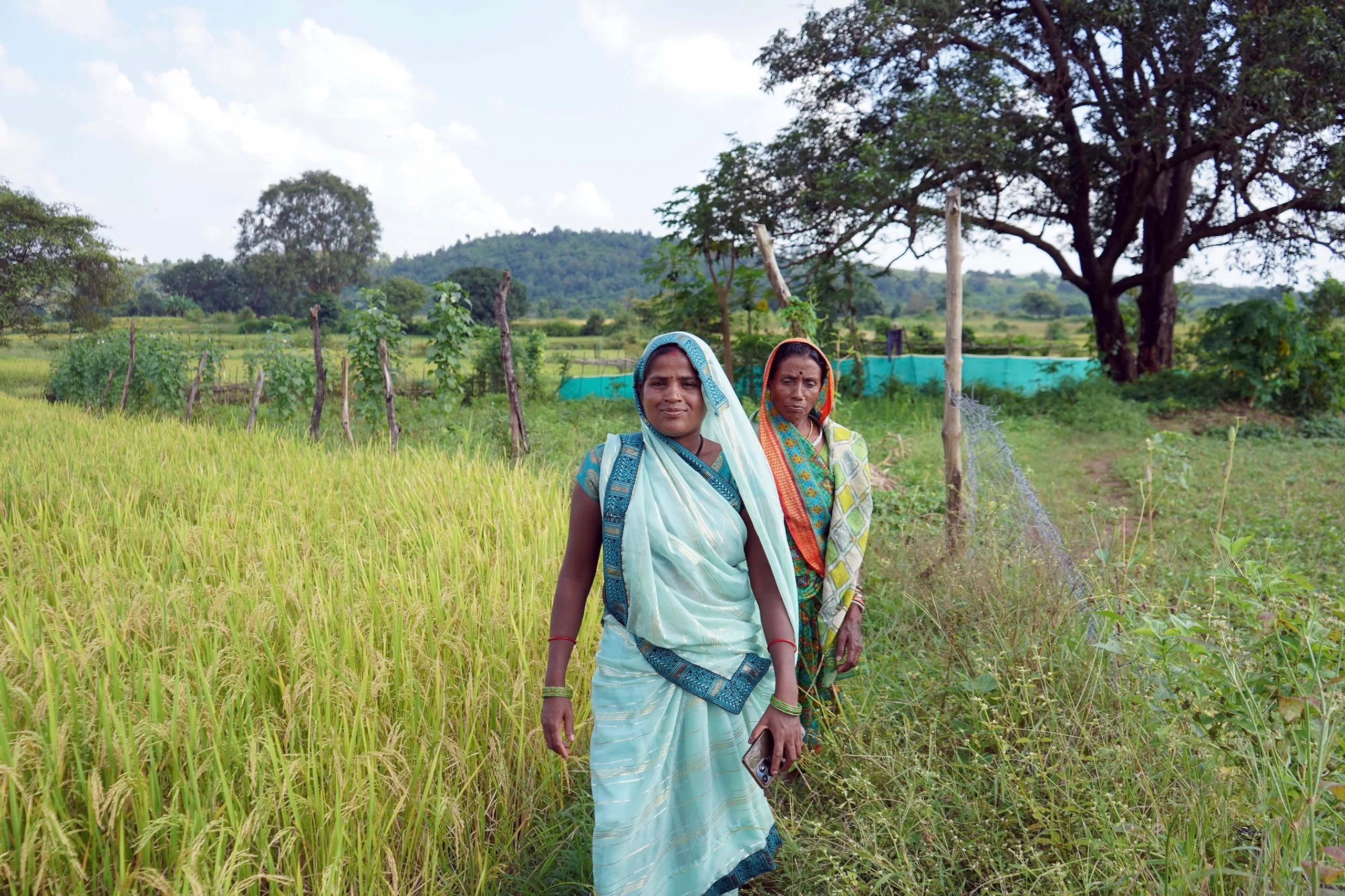
Not long ago, this 10-decimal (400-square-metre) plot yielded little more than maize due to the region’s water stress, and offered meagre returns. Now, 35-year-old Kusum earns up to INR 1,200 (USD 14) per month selling her produce in the weekly market in Mandla town, after keeping some for her family’s consumption.
Kusum has also introduced 10 chickens into her garden. Their eggs provide additional income and nutrition for her family.
Along with those from several neighbouring villages, Kusum is part of a growing network of women farmers transforming Mandla’s uplands through the agroecological homestead model.
This model seeks to address key challenges – including malnutrition, irregular income and resource degradation – faced by Mandla’s tribal communities, such as in Chimkatola and neighbouring Kevlari. These villages are inhabited by the Gond and Baiga communities, recognised as Scheduled Tribes in Madhya Pradesh.
As Kusum’s backyard plot demonstrates, a key part of the model involves cultivating different kinds of vegetables at different heights, maximising use of space. This is alongside crop rotation, bio-composting, rainwater harvesting and livestock integration. The latter involves using organic manure for crop farming and crop residue or surplus for animal feed.
With this model, women farmers have been taking charge of production and decision-making on their families’ homestead farms, challenging traditional norms.
From monocropping to multilayer farms
The agroecological homestead model is an initiative of the CGIAR Multifunctional Landscapes Program and a grassroots organisation, the Professional Assistance for Development Action. Pradan, as it is known, works with the region’s adivasis, or Indigenous inhabitants.
Before the project began, most farmers in Chimkatola and Kevlari practised monocropping – of mainly maize in upland areas and rice in low-lying fields near rivers, notes Gopal Kumar.
Kumar is a researcher at the International Water Management Institute (IWMI), which is monitoring the project along with Pradan.
These crops were vulnerable to erratic rainfall, land degradation due to improper farming on steep slopes, and fluctuating market prices due to unstable fuel prices and other factors. Backyard plots were largely left fallow, with maize occasionally cultivated.
Gopal explains that to diversify income and ensure nutrition, in 2024 the institute introduced the agroecological homestead model to four villages in the Narayanganj block (rural administrative subdivision) of Mandla district. Women from Chimkatola and Kevlari visited these pilots, were encouraged by their success, and adopted the model, he notes.
Via the model, some farmers in Chimkatola and Kevlari have also adopted drip irrigation and portable water tanks (known as Jal Kunds) that can store up to 12,000 litres of rainwater. These small interventions have enabled year-round farming. “Earlier, we had to depend [solely] on rain,” says Yashoda Devi, a farmer in Kevlari. “Now, with the Jal Kund and drip irrigation, we can plan our crops and earn throughout the year.”
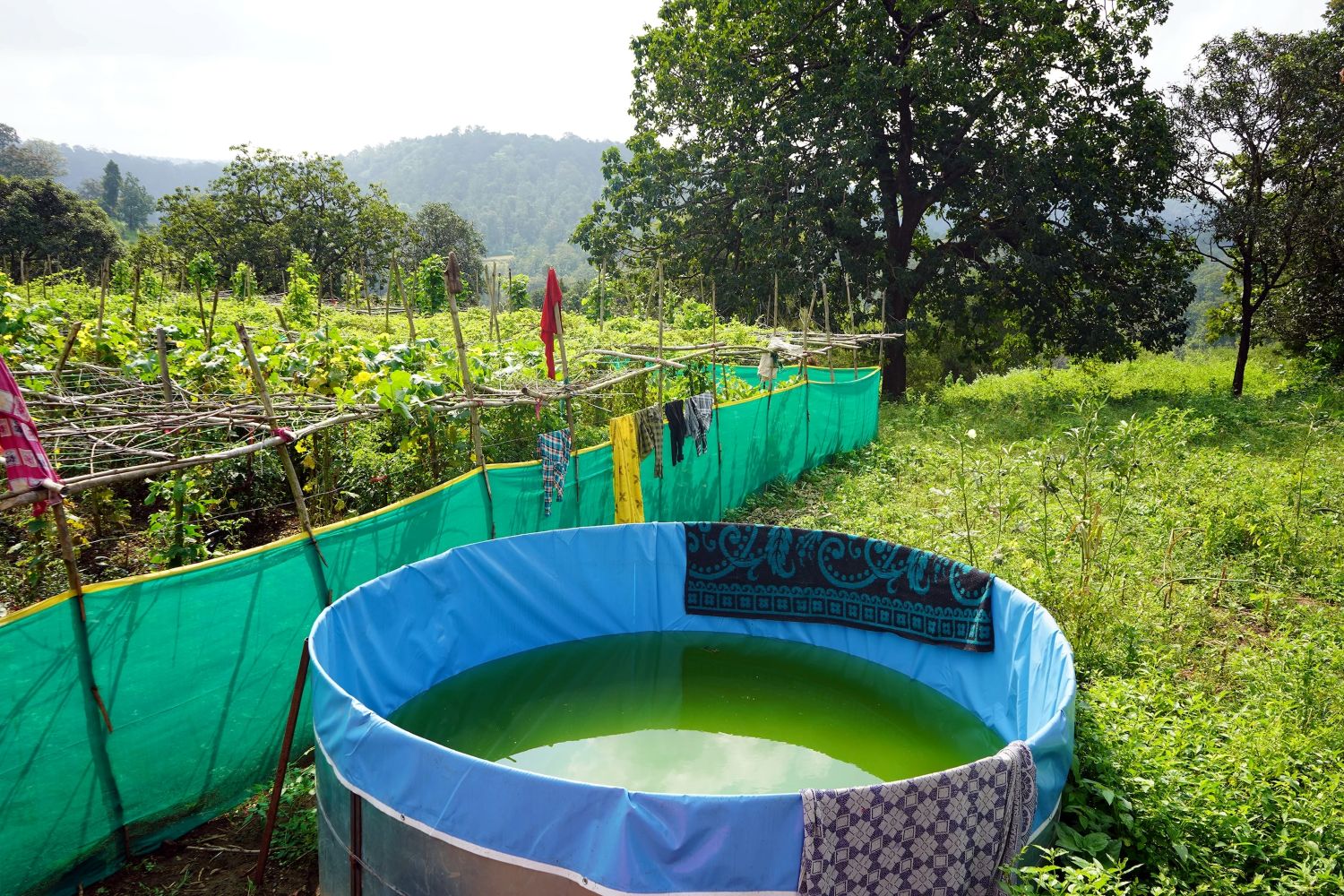
Each woman farmer participating in the agricultural homestead project cultivates around 400-500 square meters of land, using bio-fertilisers like jeevamrut and panchagavya, both made from cow dung and urine mixed with other organic matter.
According to IWMI’s findings, production diversity has increased by 350%, dietary diversity has doubled, and consumption of nutrient-rich foods such as leafy greens has gone up by 70%. Protein intake and household savings have also improved through backyard poultry, and families’ dependence on external markets for produce and fertiliser has fallen.
“Initially, farmers were hesitant to adopt natural inputs,” says Gopal. During the first attempt, heavy rainfall washed away everything, including bio-fertilisers, bio-pests, and seedlings. “But once they saw better yields and healthier crops, confidence grew. Today, more women are preparing and applying bio-formulations on their own.”
With men migrating, women lead
In the villages of Mandla’s Narayanganj block, men often migrate seasonally to nearby towns for work, leaving women to manage farms and households. Traditionally, their roles are confined to supportive labour such as sowing, weeding or harvesting. Under homestead model, however, they have taken charge of production and decision-making.
“Before, women waited for men to decide what to grow,” says Saurav Kumar, team coordinator for Pradan. “Now, they decide when to sow, what to sell, and how to reinvest [the proceeds]. The [model] has built confidence as much as capacity.”
He notes that the model has been co-created with women’s self-help groups, and that this participatory design aims to make the transition to leadership roles in farming as smooth as possible for the women.
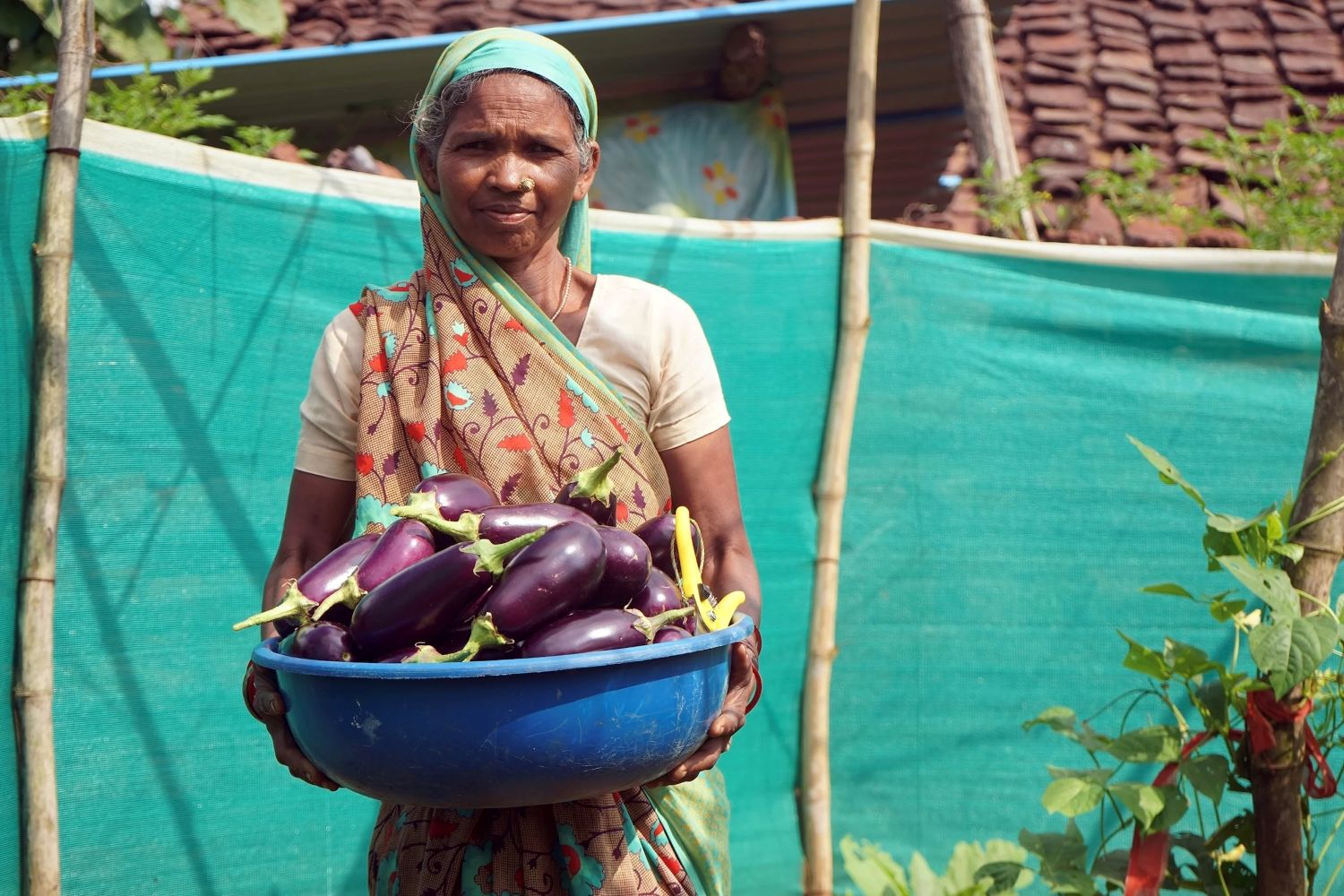
Farmers told Dialogue Earth that income from their homestead farms supplements the remittances sent by their husbands, who usually work in construction or transport. “When my husband is away [working] in Jabalpur [a city in Madhya Pradesh], I manage everything here,” says Pushpa Devi as she harvests brinjal from her farm. “With [just] off-season prices, we earn enough to support children’s tuition fees and pay small household expenses.”
Yashoda Devi regularly supplies vegetables to a hostel in the nearby town of Bichhiya. “Last month alone, I harvested 33 kilograms of brinjal and earned about INR 1,200 [USD 14] profit from selling vegetables. It may seem small, but for us, it makes a big difference.”
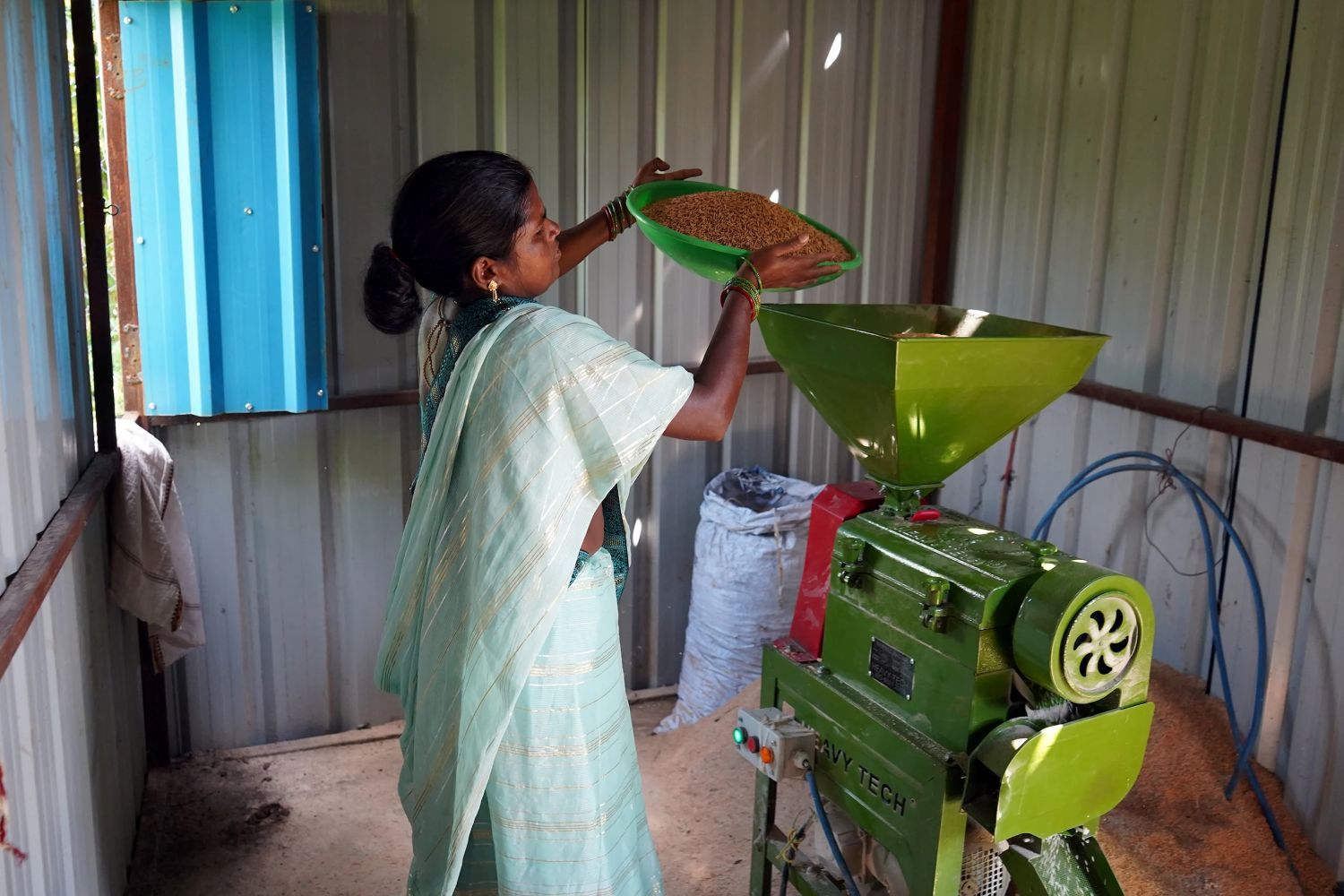
In Chimkatola and Kevlari, two women-led associations of water users have been set up for farmers involved in the homestead model. This has been done through a connected scheme to bring solar-powered irrigation pumps to 13 women farmers, supported by the CGIAR program and the Swiss Agency for Development and Cooperation. The associations manage the shared pumps and generate income by providing irrigation. Excess power from the pumps is used to turn a rice mill, allowing farmers to process paddy locally.
The scheme sits under IWMI’s Solar Energy for Agricultural Resilience (SoLAR) project, with the pumps and the mill funded by IWMI, through government loans and farmers’ capital.
Each association maintains a bank account to manage revenue, with profits used to repay loans. Members have been trained in governance, financial record-keeping and maintaining solar infrastructure. “For the first time, women here are running a water system and handling finances,” Kusum Devi said.
Overcoming challenges and cultivating hope
Despite the visible progress, implementing agroecological practices in resource-constrained tribal regions has not been without hurdles. Limited capital, pest attacks, erratic weather and knowledge gaps continue to challenge homesteaders.
“The first few months were difficult,” admits Balwanti Devi from Kevlari. “Some crops were damaged by heavy rain, and we didn’t have money to buy organic inputs again.”
The project team has been exploring how participants can be supported by existing government programmes, Kumar of IWMI says. One way has been to encourage water-user associations to apply for subsidised loans for a new wheat mill and renewable-energy equipment through Madhya Pradesh’s state rural livelihood mission, which they are eligible for as self-help groups.
Self-help groups are being encouraged to access subsidised loans for initial investment, and labour costs are covered through public works – creation of waterbodies and irrigation canals – under the Rural Employment Guaranteed Scheme.
To ensure their farming is sustainable, women are provided training by Pradan staff in bio-composting, water management and crop scheduling. Farmers are learning to adjust sowing times and improve canopy management – to optimise light and air circulation in crops – and boost productivity using climate-resilient seed varieties, notes Saurav Kumar.
Looking to the future, the project team plans to establish wholesale centres where farmers’ produce can be transported to larger markets, he adds, to help farmers get more stable prices for their produce.
With the homestead project, women who once saw farming as mere subsistence now view it as enterprise. The transformation is visible not only in the fields of Chimkatola and Kevlari, but also in the confidence of the women who till them. “Earlier, we were invisible in farming,” says Kusum Devi, standing next to her farm. “Now, we are the decision-makers.”
(Published under Creative Commons from Dialogue Earth)