Congress Accuses Modi Govt Of U-Turn On Women’s Reservation Law
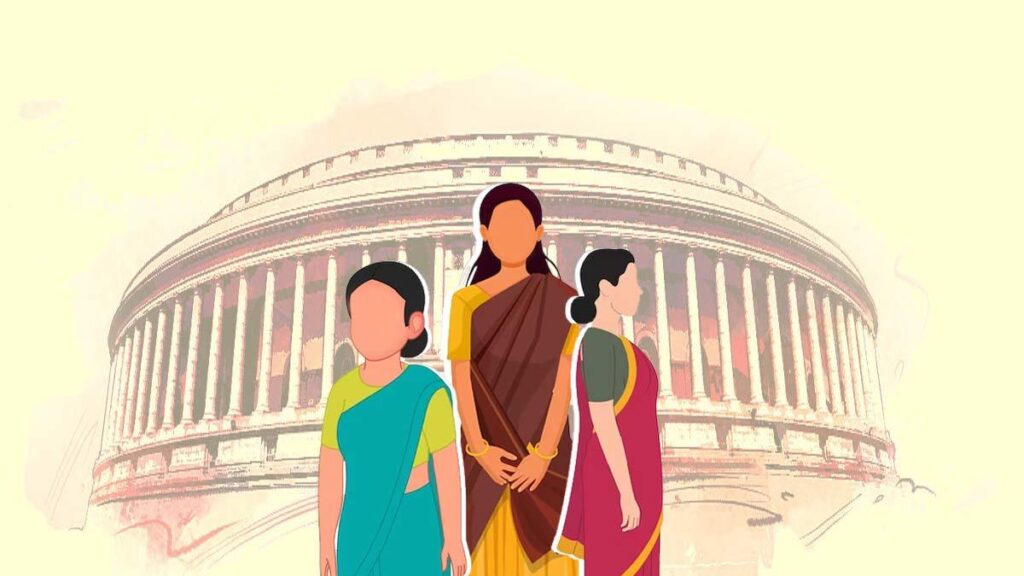
The question is not whether women’s representation should be enhanced—there is near-universal agreement on that front. The real issue is how and when it is done. A reform of this magnitude demands clarity, consistency, and credibility (Image: TwoCircles.net)
The debate over the implementation of the women’s reservation law has taken a sharp political turn, with the Congress accusing the government led by Narendra Modi of backtracking on its earlier position for electoral convenience. At the heart of the controversy lies the Nari Shakti Vandan Adhiniyam, a constitutional amendment passed unanimously in 2023 that promises 33 per cent reservation for women in the Lok Sabha and state legislative assemblies.
When the law was passed, it was hailed as a historic step toward gender equity in Indian politics. However, the government had then made its implementation contingent upon the completion of two major exercises: the national Census and a subsequent delimitation of constituencies. Since both processes remain pending, the timeline for enforcement was widely understood to stretch well into the next decade—potentially as late as 2034.
Now, the Centre appears to be signalling a shift. It has convened a special session of Parliament from April 16 to 18 to consider amendments that could enable earlier implementation of the law, possibly ahead of the 2029 general elections. The proposed workaround involves using data from the 2011 Census to redraw constituencies, bypassing the need to wait for fresh population data.
For the opposition, this sudden change in approach raises more questions than it answers. Congress leader Jairam Ramesh has been particularly vocal, accusing the government of inconsistency and opportunism. “The government now wants people to ignore the Census and delimitation requirements, despite earlier insisting on them,” he said, pointing to what he described as a lack of coherent planning.
Ramesh further argued that when the bill was originally passed, the opposition had pushed for immediate implementation, only to be rebuffed by the government on procedural grounds. “At that time, the Centre insisted that delimitation and Census were non-negotiable prerequisites. Now, suddenly, those conditions seem flexible,” he noted.
This apparent reversal, according to the Congress, undermines the credibility of the legislative process. If the prerequisites were indeed essential, why dilute them now? And if they were not, why delay implementation in the first place? These are questions the government has yet to answer convincingly.
Political Timing and Questions of Intent
The timing of the government’s renewed push has also drawn scrutiny. With assembly elections approaching in several key states, the Congress has alleged that the move is less about empowering women and more about shaping electoral narratives. Ramesh went so far as to say that the Prime Minister “owes an apology to the women of India” for delaying the law’s implementation when it could have been rolled out earlier.
He also accused the government of attempting to “claim credit for a shift that it had previously resisted,” framing the move as a calculated effort to deflect attention from broader governance and foreign policy challenges. While such claims are politically charged, they tap into a larger concern: whether major policy decisions are being guided by long-term vision or short-term electoral considerations.
The government, for its part, has defended its intentions. In a recent signed article, Modi emphasised the importance of women’s political representation, calling it central to India’s development. He urged lawmakers across party lines to support the proposed amendments, stating that the initiative reflects “the aspirations of millions of women.”
Yet, critics argue that the rhetoric does not align with the record. If empowering women was indeed a priority, they ask, why was the law tied to processes that were themselves delayed? The Census, originally due in 2021, has yet to be conducted, and there is little clarity on when it will take place. Delimitation, too, remains a complex and politically sensitive exercise with no fixed timeline.
The proposed alternative—using 2011 Census data—introduces its own set of challenges. Population patterns have shifted significantly over the past decade, and relying on outdated data could lead to imbalances in representation. Moreover, the plan to expand the Lok Sabha from 543 to a projected 816 seats, with 273 reserved for women, raises logistical and constitutional questions that require careful deliberation.
There is also the issue of precedent. Altering the foundational conditions of a constitutional amendment so soon after its passage risks setting a troubling example. Laws, particularly those with far-reaching implications, are expected to be stable and predictable. Frequent changes, especially when driven by political expediency, can erode public trust.
The inclusion of provisions for Scheduled Castes and Scheduled Tribes within the reservation framework is another critical aspect that must be handled with precision. Any misstep could have ripple effects across the broader social justice landscape.
As the special parliamentary session approaches, the debate is likely to intensify. Both the government and the opposition are positioning themselves carefully, aware that the issue carries significant political and symbolic weight.
Ultimately, the question is not whether women’s representation should be enhanced—there is near-universal agreement on that front. The real issue is how and when it is done. A reform of this magnitude demands clarity, consistency, and credibility. Without these, even the most well-intentioned initiatives risk being seen as instruments of political convenience rather than genuine progress.
In attempting to accelerate the implementation of the women’s reservation law, the government may well achieve a legislative breakthrough. But unless it addresses the concerns surrounding its shifting stance, the move could just as easily reinforce the perception that policy is being shaped not by principle, but by politics.