Over 2,100 Dead Or Injured: Devastating Toll Of Iran Conflict On Children
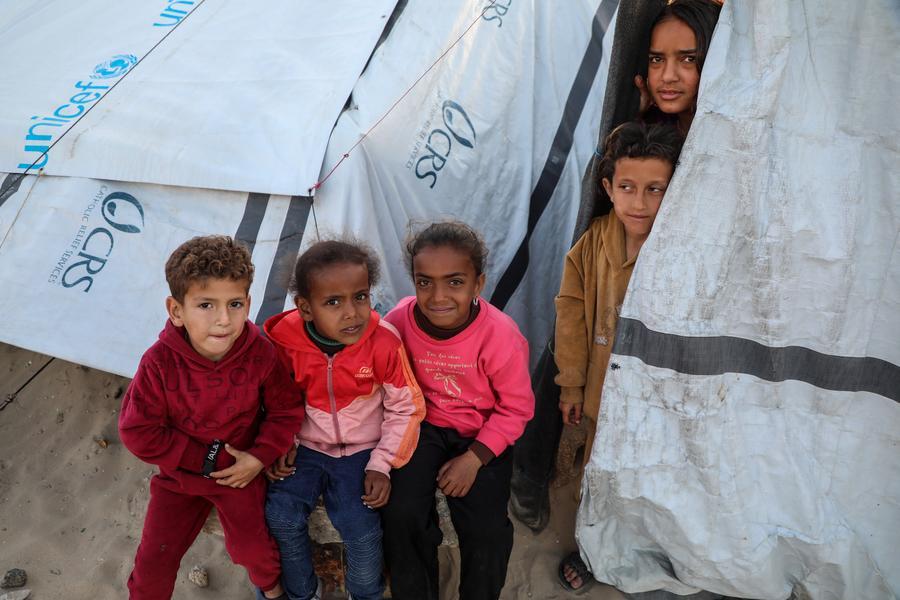
FILE PHOTO: Displaced Palestinian children are pictured among temporary tents in the west of Gaza City on March 3, 2026 (Image: Rizek Abdeljawad/Xinhua)
The ongoing conflict involving the United States, Israel, and Iran has inflicted a devastating toll on children across the Middle East. According to senior officials from UNICEF, hundreds of children have been killed and thousands more injured since hostilities escalated on 28 February. Speaking in New York, UNICEF Deputy Executive Director Ted Chaiban confirmed that at least 324 children have died in Iran and Lebanon alone.
Of these, 206 deaths were reported in Iran and 118 in Lebanon. Additional casualties have occurred beyond these areas, with five children killed in retaliatory strikes launched by Iran—four in Israel and one in Kuwait. Altogether, more than 2,100 children have been killed or injured since the conflict intensified, underscoring the scale of the humanitarian crisis.
Chaiban emphasized the human reality behind the statistics, noting that entire families and communities are reeling from loss, trauma, and uncertainty. The figures, he stressed, represent not just numbers but shattered lives and futures.
Deadly Strikes and Civilian Impact
One of the most harrowing incidents occurred on the very first day of the escalation, when a missile struck a girls’ school in Iran. According to Amnesty International, the attack killed at least 168 people, including more than 100 children. The scale of the tragedy drew widespread condemnation and renewed scrutiny of military targeting practices.
Although no party has officially accepted responsibility, reports citing a U.S. military investigation suggest the strike may have resulted from a targeting error during an operation aimed at a nearby military facility. This incident highlights the grave risks posed to civilians, particularly children, when military actions occur in densely populated areas.
Beyond this single incident, repeated airstrikes and missile attacks have damaged homes, schools, and hospitals, further endangering children and disrupting access to education and healthcare.
Mass Displacement and Growing Humanitarian Crisis
The conflict has triggered widespread displacement on an unprecedented scale. The United Nations estimates that up to 3.2 million people in Iran have been forced to flee their homes, including approximately 864,000 children. Many families are escaping major urban centers such as Tehran, seeking refuge in rural or northern regions perceived as safer.
In Lebanon, the situation is similarly dire. More than one million people have been displaced, including around 370,000 children. Families are increasingly sheltering in public buildings such as schools, raising serious concerns about overcrowding, sanitation, and access to basic services.
The displacement crisis is compounding existing vulnerabilities in a region already struggling with instability. Prior to the latest escalation, nearly 45 million children across the Middle East were living in conflict-affected conditions. The current crisis is pushing already fragile systems closer to collapse.
Strain on Infrastructure and Essential Services
The destruction of infrastructure has placed immense pressure on essential services. Hospitals are overwhelmed, schools have been damaged or repurposed as shelters, and supply chains for food, water, and medical supplies have been severely disrupted.
Humanitarian agencies warn that children are particularly vulnerable in such conditions. Limited access to clean water and healthcare increases the risk of disease outbreaks, while prolonged displacement can have lasting psychological effects. Education has also been severely disrupted, with countless children unable to attend school due to safety concerns or lack of facilities.
According to Chaiban, the long-term consequences of these disruptions could be profound, potentially affecting an entire generation’s development and well-being.
Allegations of Forced Displacement Tactics
Concerns have also been raised regarding the tactics employed during the conflict. A researcher from Human Rights Watch alleged that Israel may be using strategies similar to those previously observed in Gaza and the West Bank to displace civilian populations in Lebanon, particularly within Shiite communities.
These allegations, published in Al Jazeera, suggest that evacuation orders and sustained bombardment may be contributing to forced displacement. The report calls on international actors to take urgent steps to protect civilians and uphold their rights, including the right to return to their homes.
Such claims, if substantiated, could have significant legal and humanitarian implications, further intensifying international scrutiny of the conflict.
Mixed Diplomatic Signals and Uncertain Outlook
Diplomatic efforts to de-escalate the situation remain uncertain. U.S. President Donald Trump recently announced a temporary five-day halt to strikes on Iranian energy infrastructure, citing “productive conversations” aimed at reducing tensions. The move was seen by some as a potential opening for broader negotiations.
However, Iran’s parliamentary speaker, Mohammad Bagher Ghalibaf, dismissed claims that negotiations are underway, calling them misinformation intended to influence global markets. This divergence highlights the fragile and complex nature of diplomatic engagement in the region.
As conflicting narratives persist, the prospects for a sustained ceasefire remain unclear, leaving civilians—especially children—at continued risk.
A Generation at Risk
Humanitarian organizations warn that the consequences of this conflict will extend far beyond immediate casualties and displacement. The psychological trauma, loss of education, and disruption of essential services threaten to shape the lives of millions of children for years to come.
With no clear resolution in sight, the international community faces mounting pressure to prioritize civilian protection and pursue meaningful pathways toward peace. Until then, the youngest and most vulnerable will continue to bear the heaviest burden of a conflict not of their making.