Decades Of Warming & Shifting Rains Are Reshaping India’s Central Forests
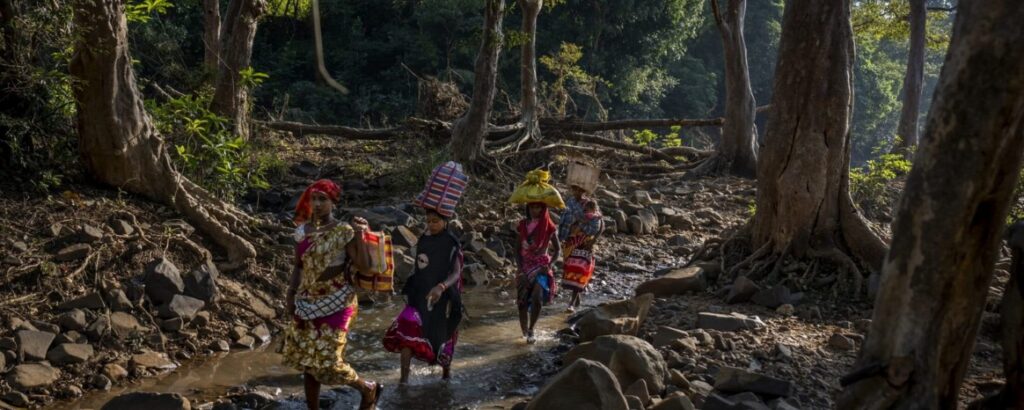
Tribal women walk in forests in Orchha, Madhya Pradesh (AP Photo/Altaf Qadri)
- A new study finds Pachmarhi Biosphere Reserve lost about 13% of its forest cover between 1972 and 2020, driven by both climate shifts and human pressures.
- Rising temperatures and shifting rainfall have increased forest fire risk and altered forest health, with dry teak forests seeing the steepest canopy loss.
- Researchers say conserving biodiversity and improving forest management will be key to strengthening the resilience of central India’s forests.
Over decades, the tropical deciduous forests of central India have weathered the impacts of a quietly changing climate. New research sheds light on the extent to which long-term changes in temperature and precipitation transformed a protected area in Madhya Pradesh, in addition to the anthropogenic pressures caused by tree felling, extraction, and grazing.
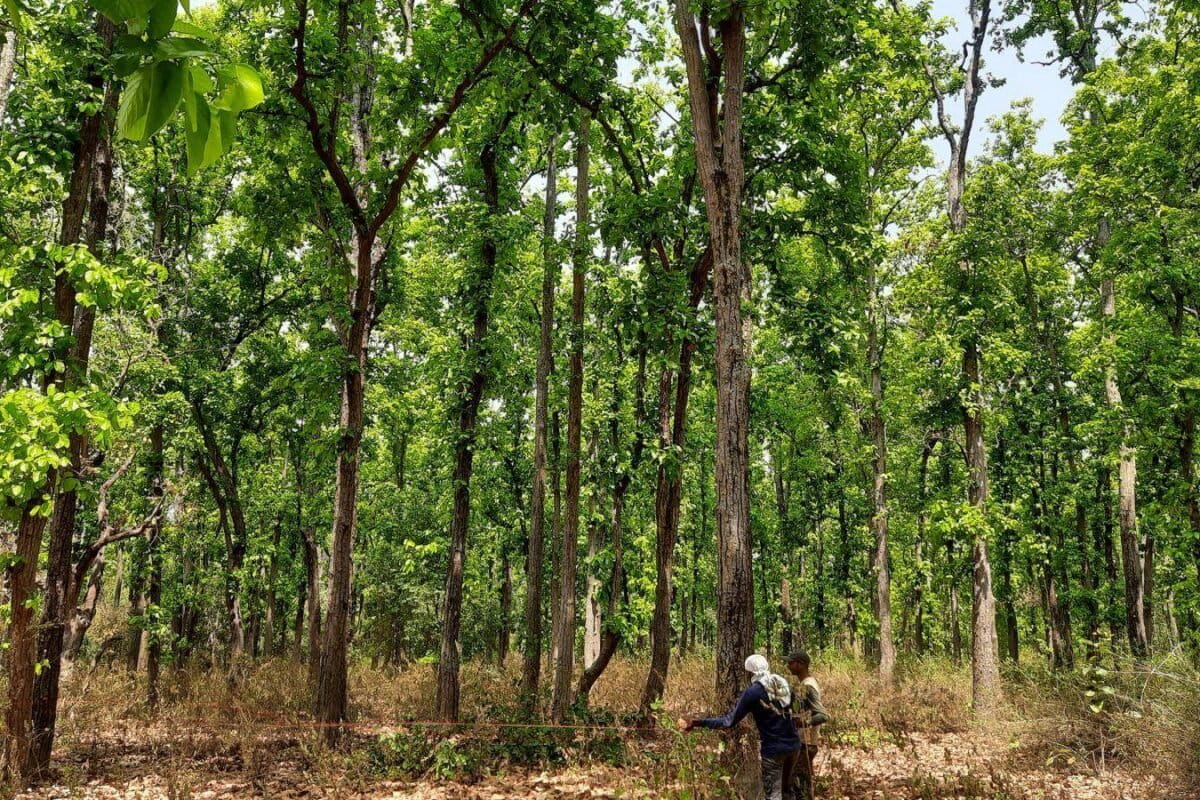
The forests of central India occupy a vast landscape, stretching over an area of more than 40,837 square kilometres across Madhya Pradesh, Maharashtra, and Chhattisgarh. Though famed for having a robust tiger population, this region is also home to some of the country’s largest contiguous forested tracts. The Pachmarhi Biosphere Reserve (PBR) sits at the heart of this landscape.
Researchers from the Central University of Jharkhand and Banaras Hindu University analysed 50 years of climate data and examined its relationship with the PBR, which is also facing pressures from encroachments and extraction. Between 1972 and 2020, the PBR lost approximately 13% of its forest cover, amounting to 391 sq km.
“We couldn’t find areas that had been recorded as forest patches in 1972, because by 2020, they had either turned into scrub forests or been converted into other types of land use,” said Amit Kumar, professor at Banaras Hindu University and a co-author of the study. “We also realised that it wasn’t just the impacts of anthropogenic pressures that caused this shift.”
The study on the Pachmarhi Biosphere Reserve is part of a larger project studying the diversity of 762 forest plots in the region, in an effort to generate an ecological baseline for the region.
Predictable monsoons and stable temperatures have helped this region’s forests sustain and regenerate for centuries. The lifecycles of tropical deciduous forests are deeply tied to seasons — typically shedding leaves in the dry seasons and greening in the wetter months, depending on the species.
Beependra Singh, a remote sensing expert and scientist with the Wildlife Institute of India, who was not involved with the study, called it sound, and found similar results in his own work. “This kind of research contributes to evidence-based forest management and climate adaptation measures,” he told Mongabay-India over email, adding, “Understanding how these ecosystems adapt to long-term climatic variability is critical for predicting future changes in vegetation shape, productivity, and forest health.”
Rise in forest fires
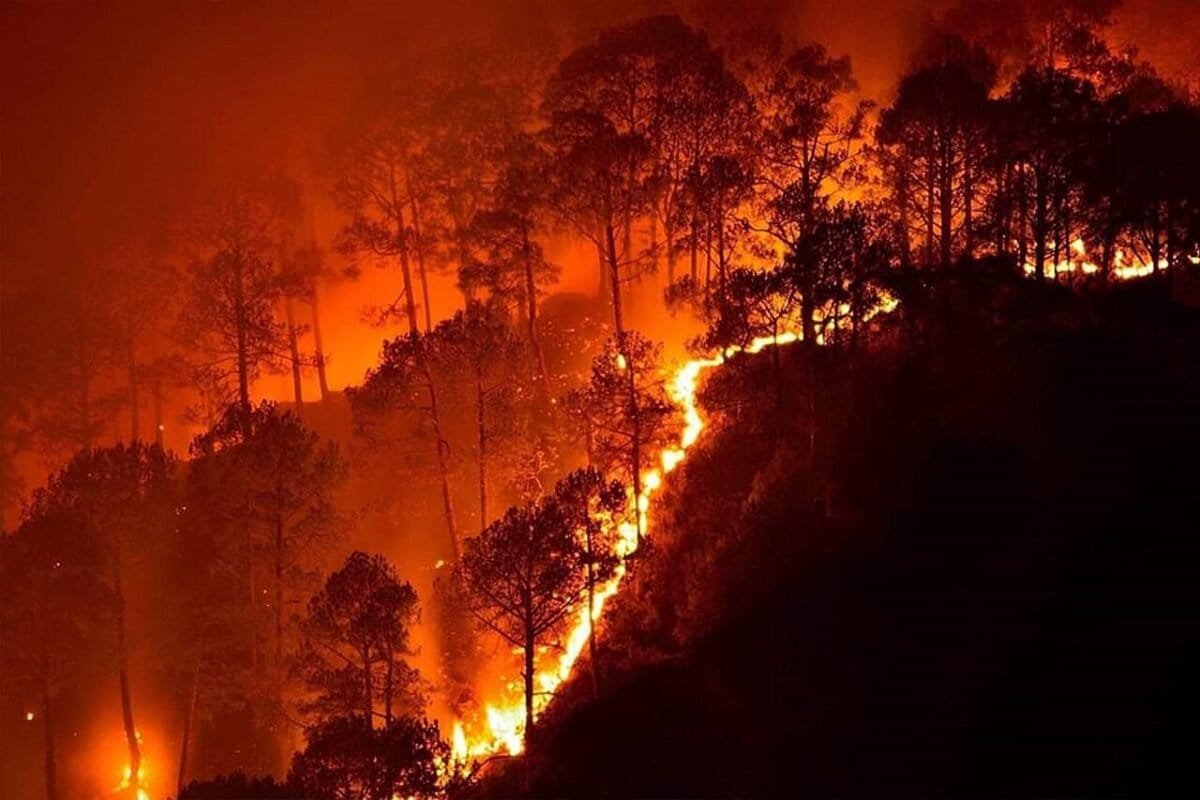
Among the most notable findings attributed to climate change is an increase in forest fires in the PBR, driven by consistently warming temperatures and lower levels of precipitation over the last five decades. Temperature and precipitation data were taken from the India Meteorology Department and Climate Research Unit. Observations from Landsat satellite datasets were also used to capture changes across time.
The research focused on temperature and rainfall data because they are two major drivers of forest health, although other factors such as soil moisture and topography also play a role. The study revealed that since 1971, the PBR has experienced statistically significant temperature increases both annually and across seasons, with the highest increase in mean temperature observed during the post-monsoon period.
When maximum temperatures soared above 32°C, it increased the risk of forest fire occurrence. Higher maximum temperatures “altered species niches, as well as the vitality and health, leading to decreasing forest cover and canopy density over the past five decades,” the study says, adding that higher temperatures were the dominant factor driving fires. The PBR is home to three major forest types — dry teak, moist teak, and dry mixed deciduous forest.
Changes in precipitation affected the forest’s health too. The analysis revealed a shift in precipitation away from the post-monsoon period to the pre-monsoon period. Combined with rising temperatures, changes in rainfall also caused disruptions to the forest’s phenology.
Scientists are still trying to understand how exactly climate induced seasonal shifts affect the phenology – or lifecycles – of forests. Singh’s year to year observation of trees in the Dalma Wildlife Sanctuary in Jharkhand found the Semal tree advanced in leaf development in 2023, compared to 2022, because of lack of moisture availability and a deficit in rainfall that year, as well rise in the winter and spring temperature in 2023.
“Moist deciduous forests often receive more rainfall and have a deeper canopy cover, making them somewhat more resilient to short-term climate instability. Dry deciduous forests, on the other hand, function closer to moisture stress thresholds, making them more vulnerable to extended droughts or rising temperatures,” said Singh.
In the PBR, dry teak forests saw the highest loss in canopy cover (by 41.26%), followed by dry mixed deciduous forest (by 19.95%).
Improving resilience
Changes in phenology have also been found to cause differences in the productivity of forests in the Western Ghats, putting into question their ability to act as long-term sinks.
“When the phenological window gets shorter, it affects the tree’s season for photosynthesis. In a forest, this shorter window can affect the forest’s productivity, and over the long term, cause their carbon sinks to weaken,” said Rajiv Chaturvedi, lead of the IUCN’s Forest Ecosystems Specialist Group and an associate professor at BITS, Pilani.
The PBR study observed an increase in “greening” in recent years, between 2006 and 2021, possibly due to government restoration programmes like the REDD+, indicating “favourable ecological transformation and potentially heightened vitality of the PBR forests,” in those years. However, gains in greening could be undone by high temperatures interfering with forest productivity.
According to Chaturvedi, biodiversity is the biggest driver of resilience in forest ecosystems facing the impacts of climate change. “When there’s more diversity in a contiguous forest patch, it’s more likely that there are species which are able to survive structural changes locally, which helps keep the ecosystem intact.”
“The destruction of these central Indian tropical deciduous forests may affect rainfall distributions in a country whose economy is still reliant on agricultural output,” said Singh.
Though stressed, the PBR is still very diverse. A study of 62 plots covering 0.5 hectares each revealed 190 different plant species, including 85 trees, 23 shrubs, and 82 herbs, within the PBR. Around 37% of species recorded are on the IUCN Red List, underscoring their conservation value.
Apart from restoration and preservation, the adaptation and long-term resilience of India’s central forests will also require the support of local communities who depend on its resources. The central Indian forests are significant sources of minor forest produce and non-timber forest produce in India.
“Strengthening conservation strategies, promoting sustainable land-use practices, and enhancing adaptive forest management are urgently needed to mitigate future risks and safeguard the ecological integrity of Central Indian tropical forests,” says the study.