Resettled, Not Rehabilitated: A Look Inside India’s ‘Climate Colony’
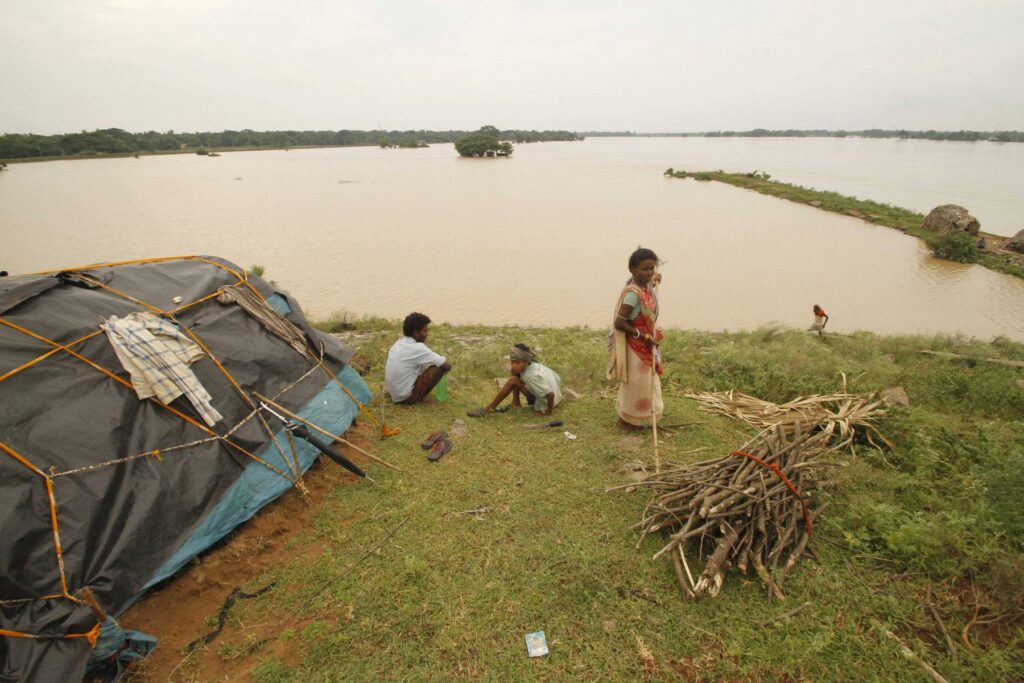
Villagers take shelter during Kendrapara district’s 2014 floods in Odisha, eastern India. According to the National Centre for Coastal Research, 36% of Kendrapara’s coastline experienced some form of erosion between 1990 and 2018 (Image: IMAGO / Xinhua / Alamy)
“A young girl has died. She gave birth, and the same day, she was dead,” laments Saraswati Mohanty.
The funeral procession snaked its way through the village streets, carrying the body of Kashmira (not her real name). She was 18 and pregnant. There was an emergency, and the closest hospital that could tend to her was two hours away. She died en route.
Bagapatia was meant to be a place of refuge. Instead, in this corner of Odisha, near India’s eastern coast, life tiptoes among the wreckage of loss.
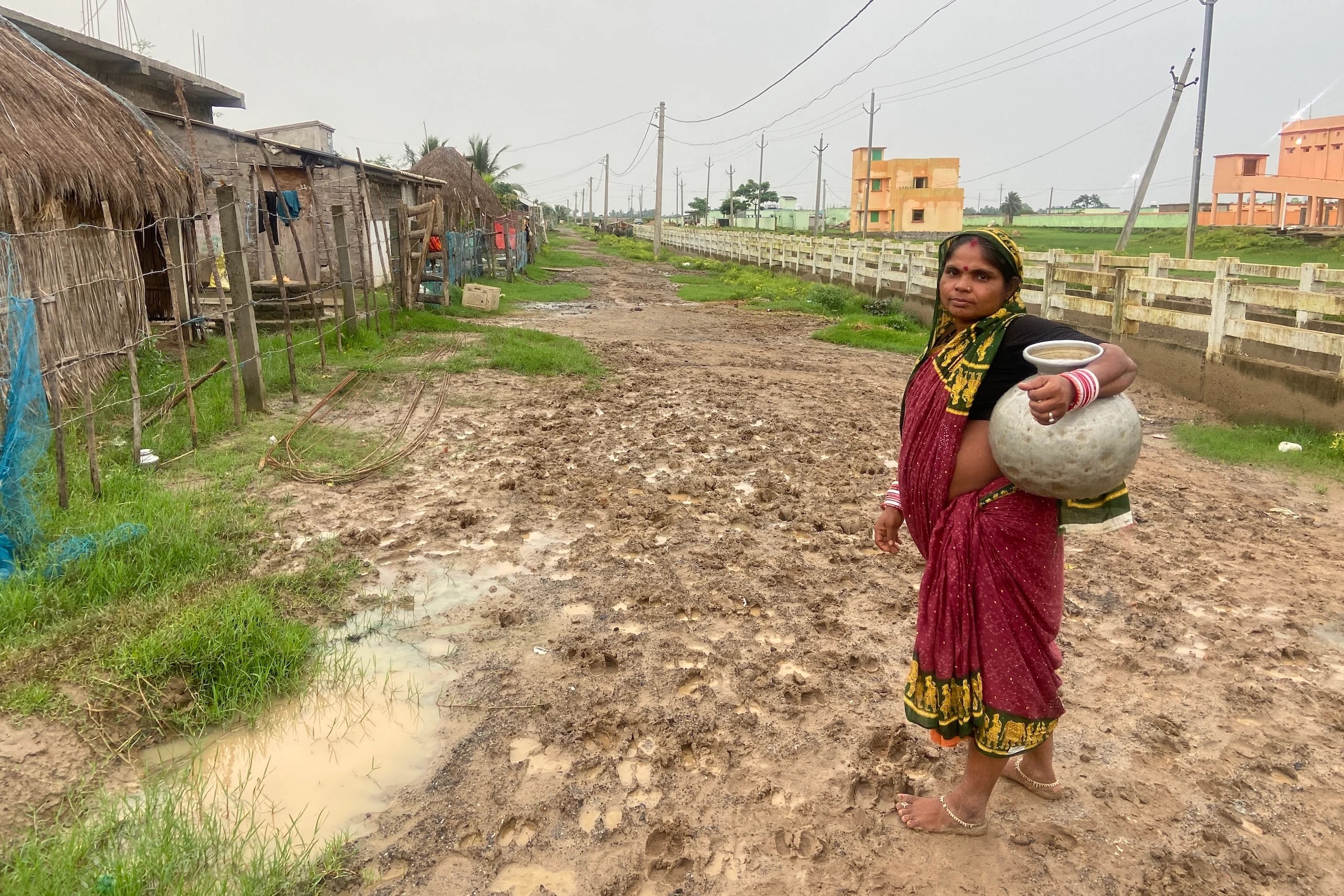
In 2023, the local government described it as India’s first “rehabilitation colony” for people displaced by climate change. It became home to families uprooted from Satabhaya, a cluster of seven coastal villages that have largely been rendered uninhabitable under the pressure of erosion and storms. By 2018, 571 Satabhaya families had been relocated here; by April 2024, officials said 17,049 displaced people had been resettled.
Government funds were set aside for infrastructure – roads, sewer systems and basic services. The move was framed as an example of the state anticipating climate displacement, rather than reacting to disaster. For families who consented to leave what had always been their home, it marked a moment of hope.
But resettlement has not meant rehabilitation.
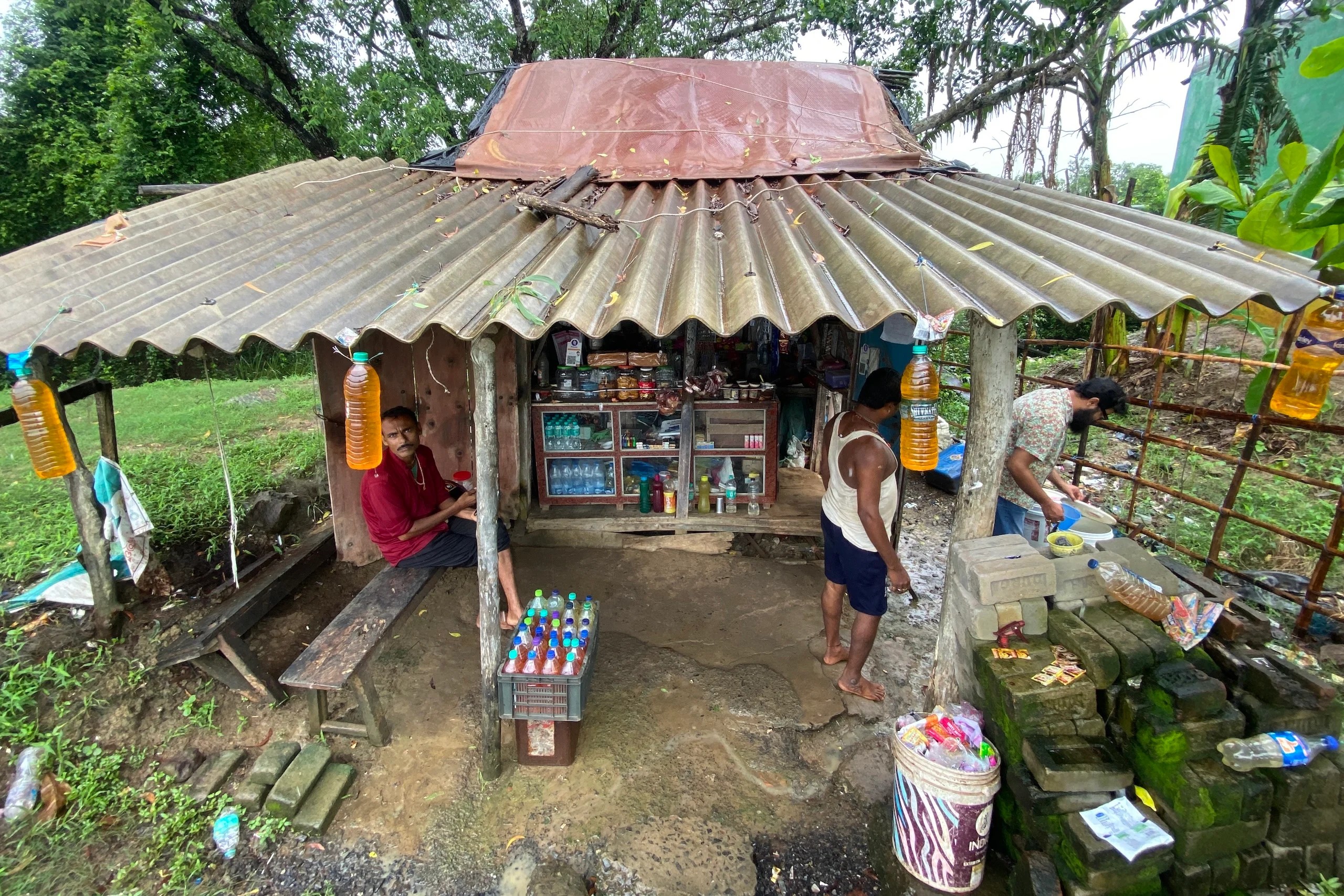
Bagapatia falls woefully short of necessities for a settlement of its size. It has a single community health centre, which offers medication, vaccinations and other basic primary care, but not enough to tend to urgent cases like Kashmira’s. There is no piped water supply and no drainage system. The people of Satabhaya once relied on farming and fishing, but the swampy soil in Bagapatia is unsuitable for agriculture.
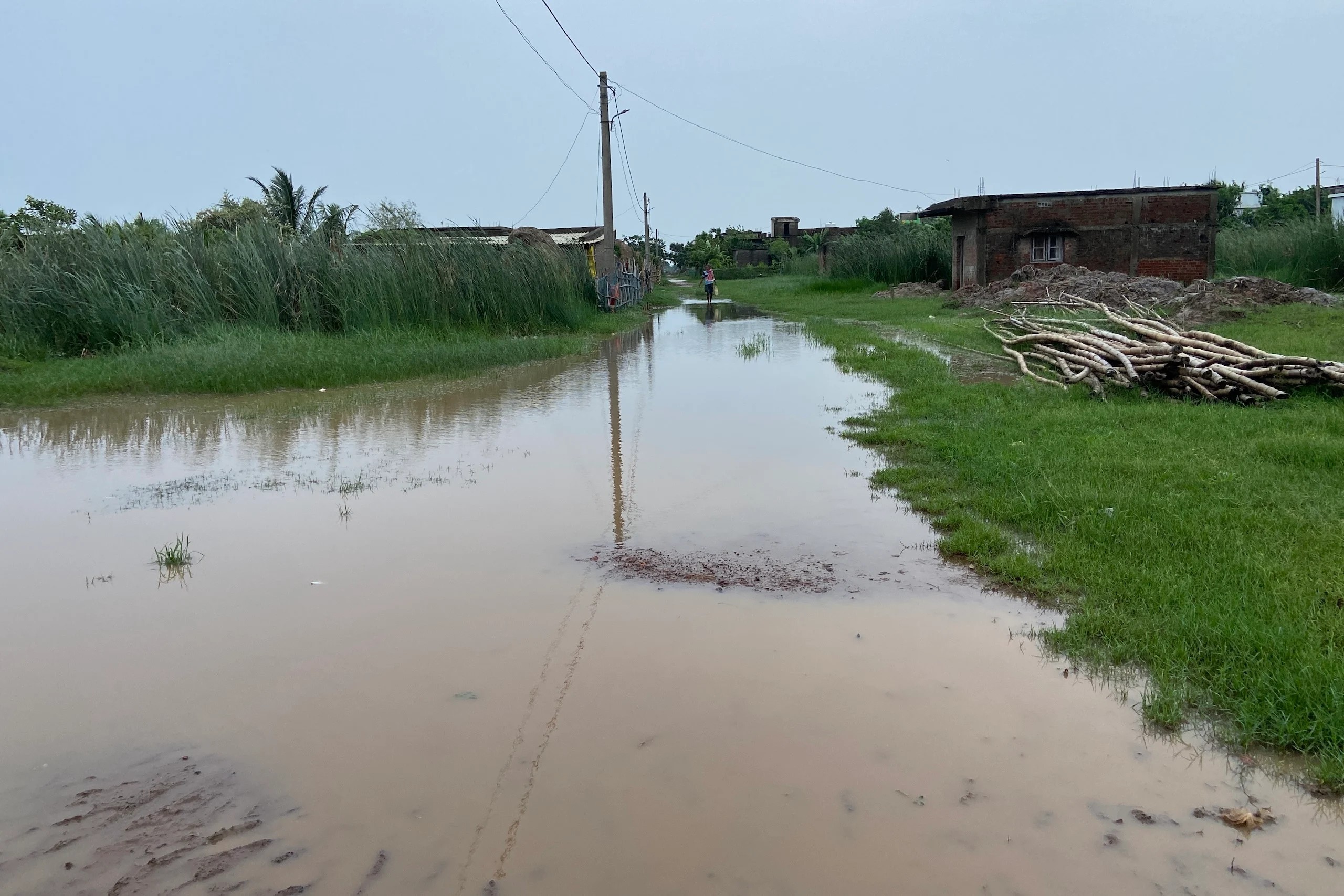
That means work is scarce. Kashmira’s husband had to move to Kerala, in south-west India, to find employment in the plywood industry. It is a journey many displaced from Satabhaya are making as their options narrow. Bagapatia sits close to a river that floods during the high tides and crocodile sightings are frequent; even the act of fetching water is laced with danger. The flooding means schools are routinely shut, disrupting education.
Niranjan Swain, a member of the Panchayat Samiti (the village government), says: “The sea took our land. Now the floods take our peace.”
Mass exodus
In coastal Satabhaya, people could rely on fresh fish for sustenance, and to earn a living. Bagapatia, on the other hand, lies around 12 kilometres inland. “We were given houses, not livelihoods,” says Swain.
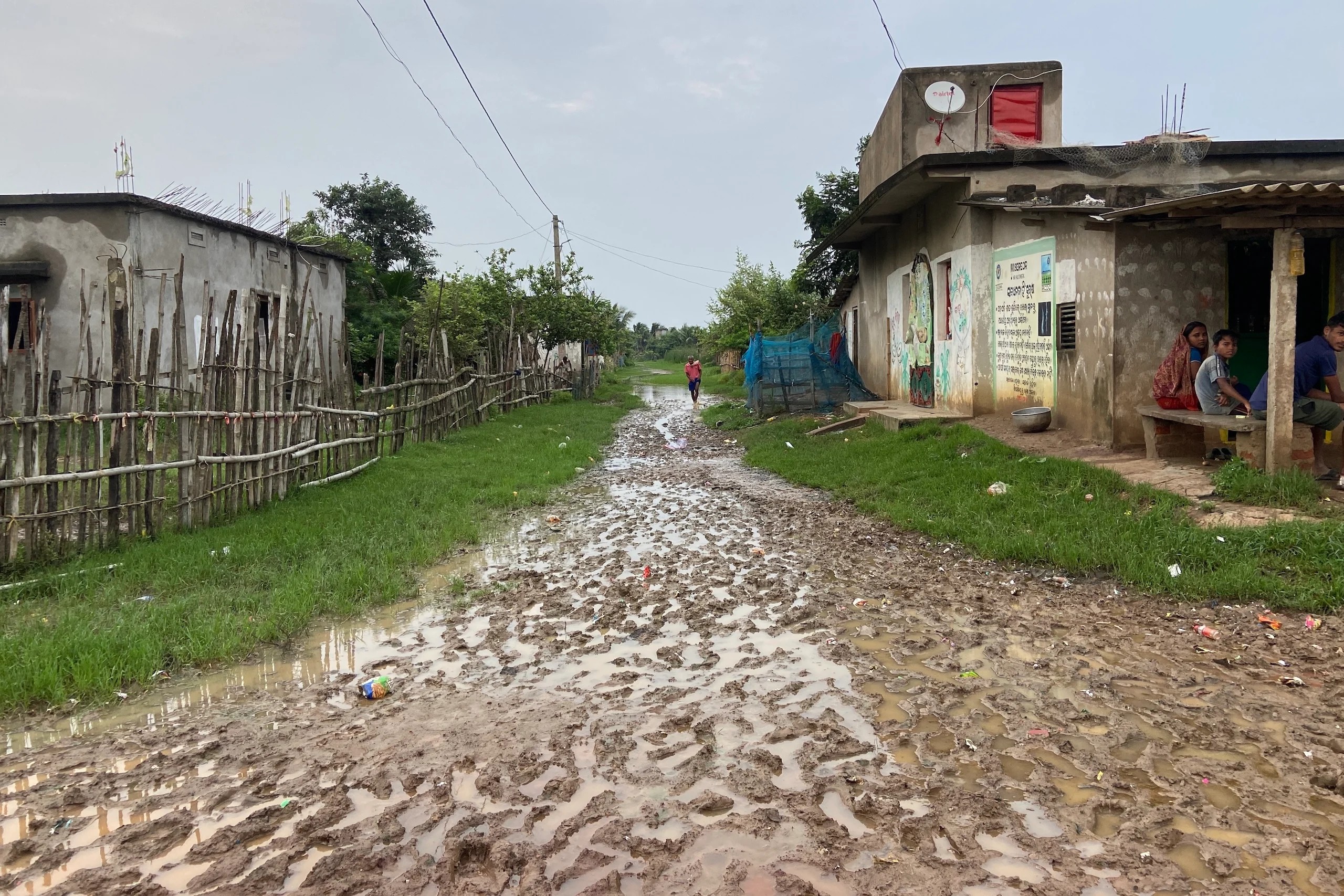
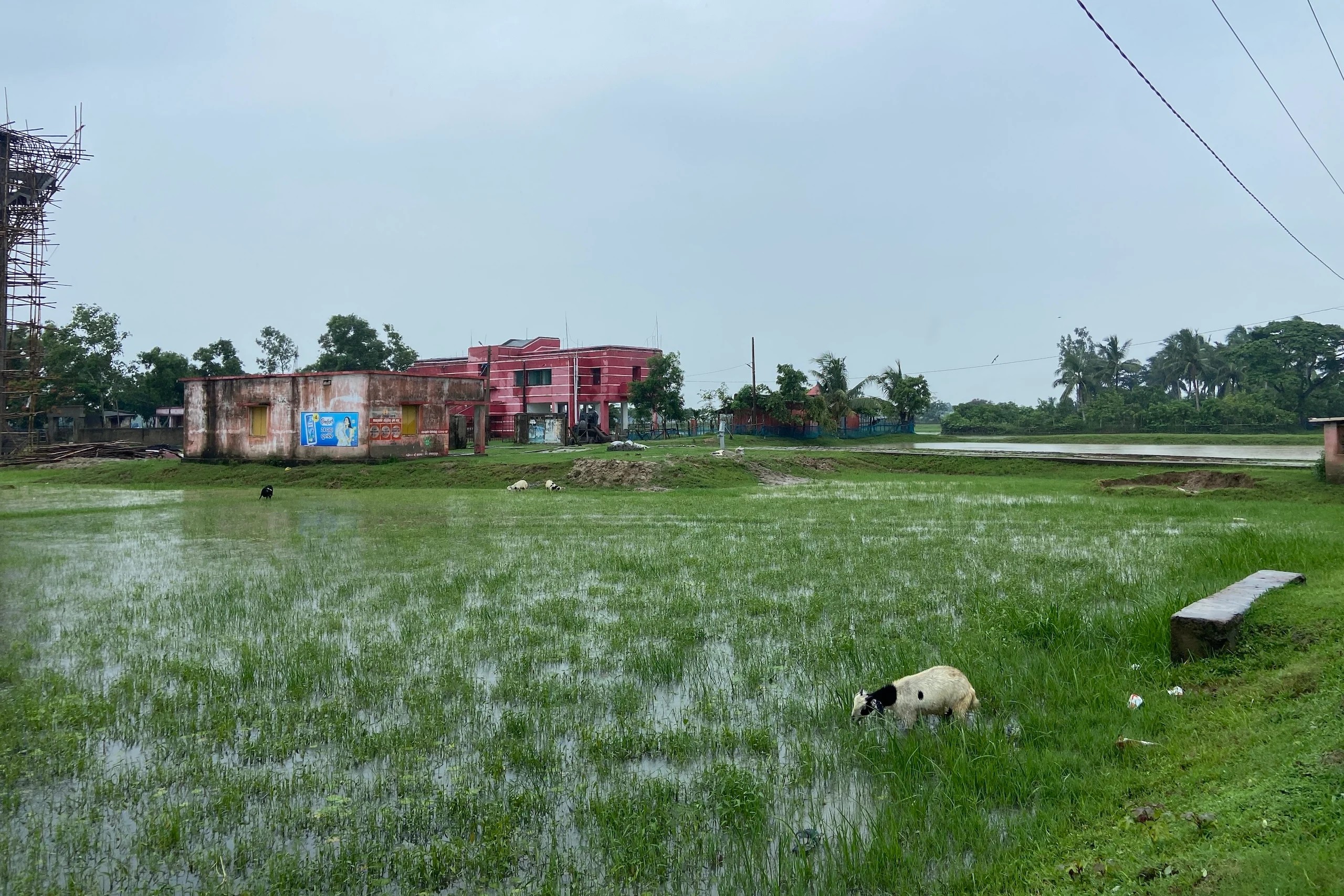
Before the move, families in Satabhaya had kitchen gardens and paddy fields. In Bagapatia, villagers tell Dialogue Earth the land is low-lying and unfavourable for any cultivation. What was grown must now be bought. “We are always dependent on money,” Swain says.
This dependence on food markets, the corresponding need for an income and the lack of local employment have created a vicious circle. A report by Climate Action Network South Asia noted that by 2021, around 2,000 residents had migrated in search of work, sending remittances home. In the words of Ranjan Panda, an Odisha-based climate and water activist, “it’s ecological poverty that fuels their economic poverty”.
Saraswati Mohanty’s two daughters, aged 18 and 21, are among those planning to leave for Kerala. When they arrive there, over 2,000 kilometres from home, they will likely find work in garment factories overwhelmingly staffed by young women. They will get paid as little as INR 10,000 (USD 110) a month.
“Earlier, only a few people used to go,” Swain says. “Now, half the village leaves every year.”
A village born out of the sea
According to the National Centre for Coastal Research, 36% of the 136-kilometre coastline of Kendrapara district – the administrative unit that encompasses both Satabhaya and Bagapatia – experienced some form of erosion between 1990 and 2018.
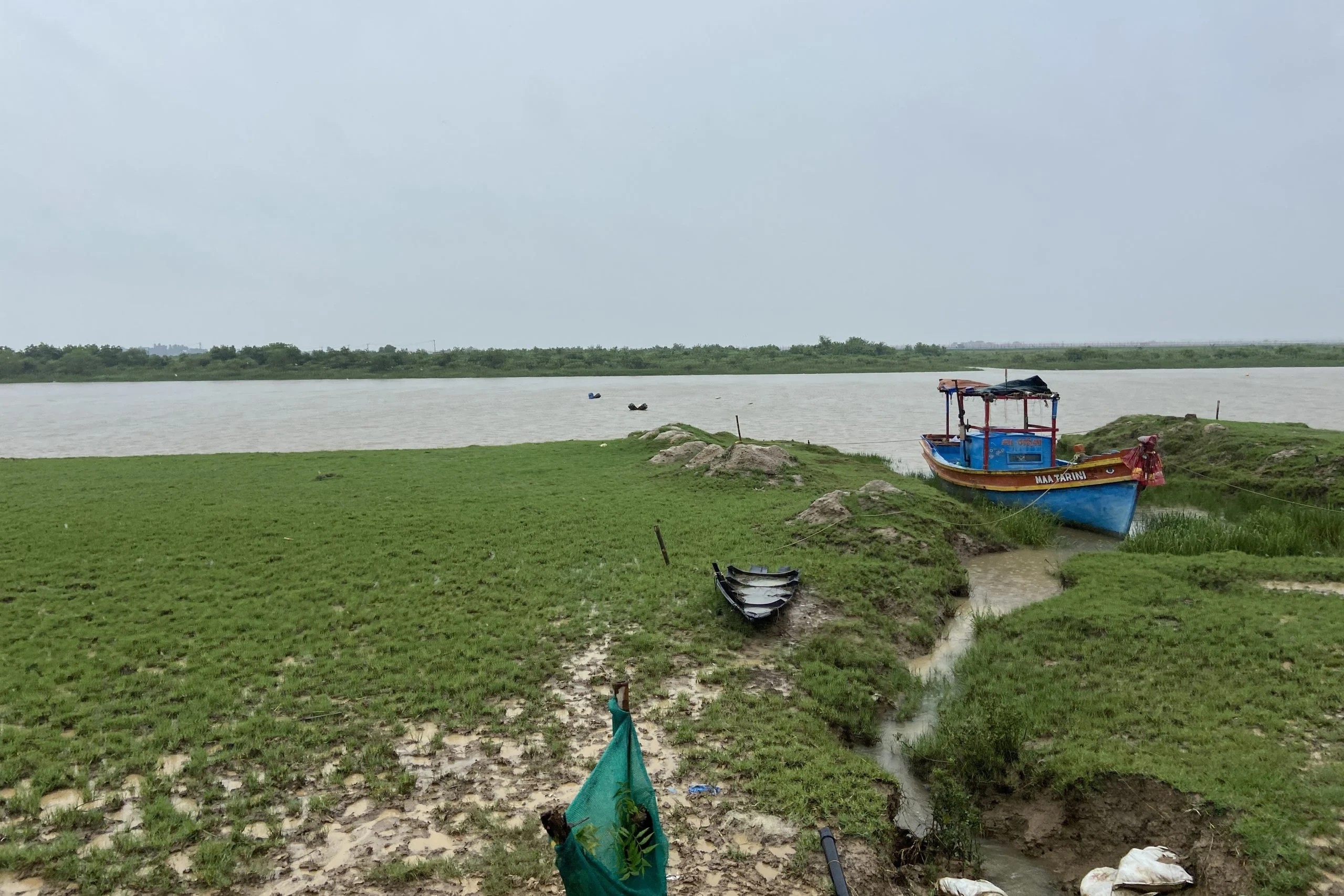
Satabhaya, the victim of many cyclones, has been eroding since at least the 1970s. With each storm, its shoreline recedes further. “During every cyclone, around 50 to 100 feet (15 to 30 metres) of the coastline would vanish,” says Swain, who has lived in the village for five decades. The sea began threatening their homes. “All we could do was pray to our goddess and hope to survive.”
The scale of that loss is stark. The village’s area shrank from 350 square kilometres in 1930 to 140 square kilometres by 2015, according to the journal Economic and Political Weekly.
With the threat growing, the decision to move came long before it happened. The Odisha government identified Bagapatia as Satabhaya’s resettlement site in 2008, though plans to relocate had reportedly been discussed as early as 1992. Resettlement finally began in the late 2010s, by which time much of Satabhaya had already been claimed by the sea.
Bagapatia lies just a few kilometres away from Bhitarkanika National Park, designated a wetland of national importance and part of India’s second-largest mangrove forest after the Sundarbans. It is richly biodiverse but poorly suited to dense human settlement.
During cyclones, the area is often inundated by water. Animals from the national park move into the village, including predators such as saltwater crocodiles, and snakes like the Indian python and king cobra. “It’s difficult to travel, and sometimes crocodiles threaten both people and livestock,” says Mohanty. When Cyclone Dana hit Bagapatia in late 2024, she recalls, floodwaters entered homes and fields, and the village’s roads were cut off for days. “This was never prepared as a human settlement,” she says. “It was just land, and we were told to make our homes on it.”
In 2017, the government provided households with plots of land and INR 150,000 (USD 1,660) to build new homes, according to an officer of the Satabhaya Rehabilitation Project speaking to the media that year. But as the site was low-lying, residents had to level the land by as much as nine metres, adding soil before construction to prevent flooding. “We carried soil from nearby areas to lay the foundation ourselves. The trenches we dug would fill with water when it rained or when the groundwater levels were high,” Mohanty recalls.
Today, housing conditions have improved for a small number of families, “but the settlement as a whole falls short of providing secure and equitable housing”, says Swain. Some households, often supported by remittances from relatives working outside the village, have gradually built cement homes over several years. Others continue to live in mud and thatch structures, similar to those they left behind in Satabhaya.
The same inequalities extend to basic services. A few households can afford water storage tanks; others remain dependent on handpumps.
Dialogue Earth contacted both Kendrapara’s district magistrate and its Housing and Urban Development Department for comment but did not receive a response.
The rainy season brings another set of problems. “Skin diseases and diarrhoea are very common, mainly because of the waterlogging,” says Swati Sucharita Rout, the community health officer at Bagapatia’s community health centre. Apart from her, the facility has one pharmacist on duty, she says, while a doctor travels from Rajnagar once a week to see patients and prescribe medicines.
Children are often the hardest hit. And when the storms come, their school – the only one in the village – doubles as a cyclone relief centre. It often fails at that purpose, too, being scarcely able to accommodate all 571 families. Most leave their children at the centre, and risk shelter somewhere else.
Relocation without rehabilitation
Bagapatia was a settlement meant to help villagers rebuild their lives and adapt to a changing climate. Instead, the village has exposed the gaps in the state’s response to climate-related displacement: it reflects relocation without the conditions that make life liveable.
In 2022, India’s parliament introduced two bills to address climate-related displacement: the Climate Migrants (Protection and Rehabilitation) Bill, and the Rehabilitation and Relocation of Persons Displaced due to Climate Change Bill.
The climate migrants bill, introduced by member of parliament Pradyut Bordoloi, seeks to “establish an appropriate policy framework for the protection and rehabilitation of internally displaced climate migrants”. It proposes periodic risk assessments in climate migration hotspots, alongside measures to support adaptive agriculture, land and water use, and the diversification of livelihoods.
The rehabilitation and relocation bill proposes the creation of a committee with dedicated state officers to oversee resettlement, the distribution of funds, and the issuance of identity cards, ensuring displaced people can access government benefits. It also envisages the construction of essential facilities, including hospitals, schools and drinking water wells.
Both bills have failed to pass.
Ranjan Panda believes this reflects a deeper failure to grasp what displacement actually means. “We still lack a comprehensive rehabilitation policy that can make the process of relocation and rehabilitation just and inclusive,” he says.
The same fear that stalked Satabhaya now stalks Bagapatia. Swain urges the government to invest in erosion mitigation measures, such as planting mangrove forests: “If the government plants mangroves along the coast, the erosion can slow down. Without the forests, nothing will protect us.”
He fears the same erosion that consumed Satabhaya will eventually reach Bagapatia.
How long before that happens?
“Maybe in 20 or 30 years.”
(Published under Creative Commons from Dialogue Earth)