India-AI Impact Summit: ‘Indian Data Up For Sale, Chinese Products Showcased’
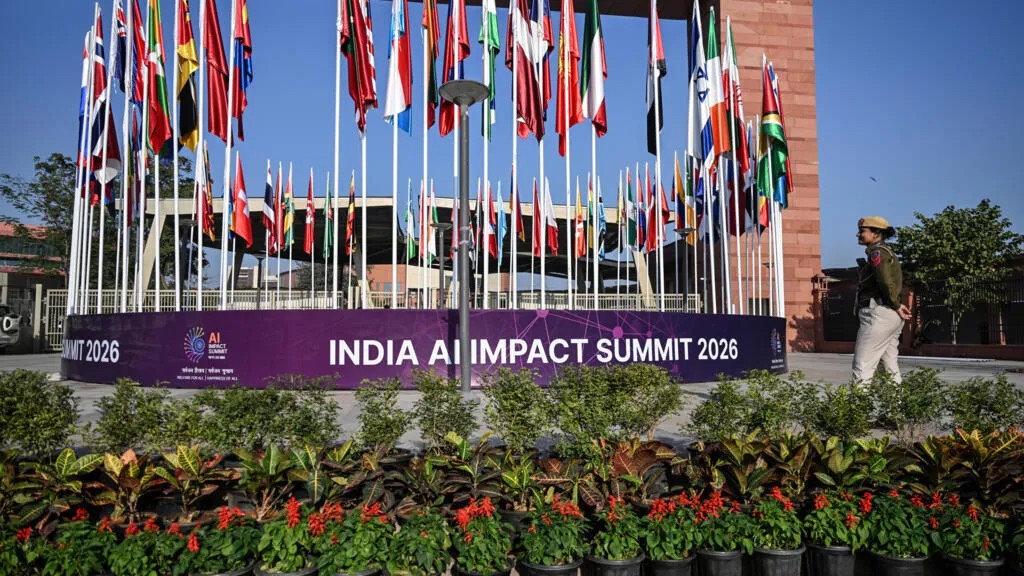
Congress leader Rahul Gandhi has branded the India-AI Impact Summit 2026 a "disorganised PR spectacle" and accused the government of promoting Chinese-made products as Indian innovations
Congress leader Rahul Gandhi on Wednesday launched a scathing attack on the India-AI Impact Summit 2026, branding it a “disorganised PR spectacle” and accusing the government of promoting Chinese-made products as Indian innovations. As the summit progressed into its third day in New Delhi, Gandhi took to X to criticize the event’s handling. “Indian data up for sale, Chinese products showcased,” he posted, alleging that instead of leveraging India’s talent and protecting its data, the summit had devolved into mere publicity.
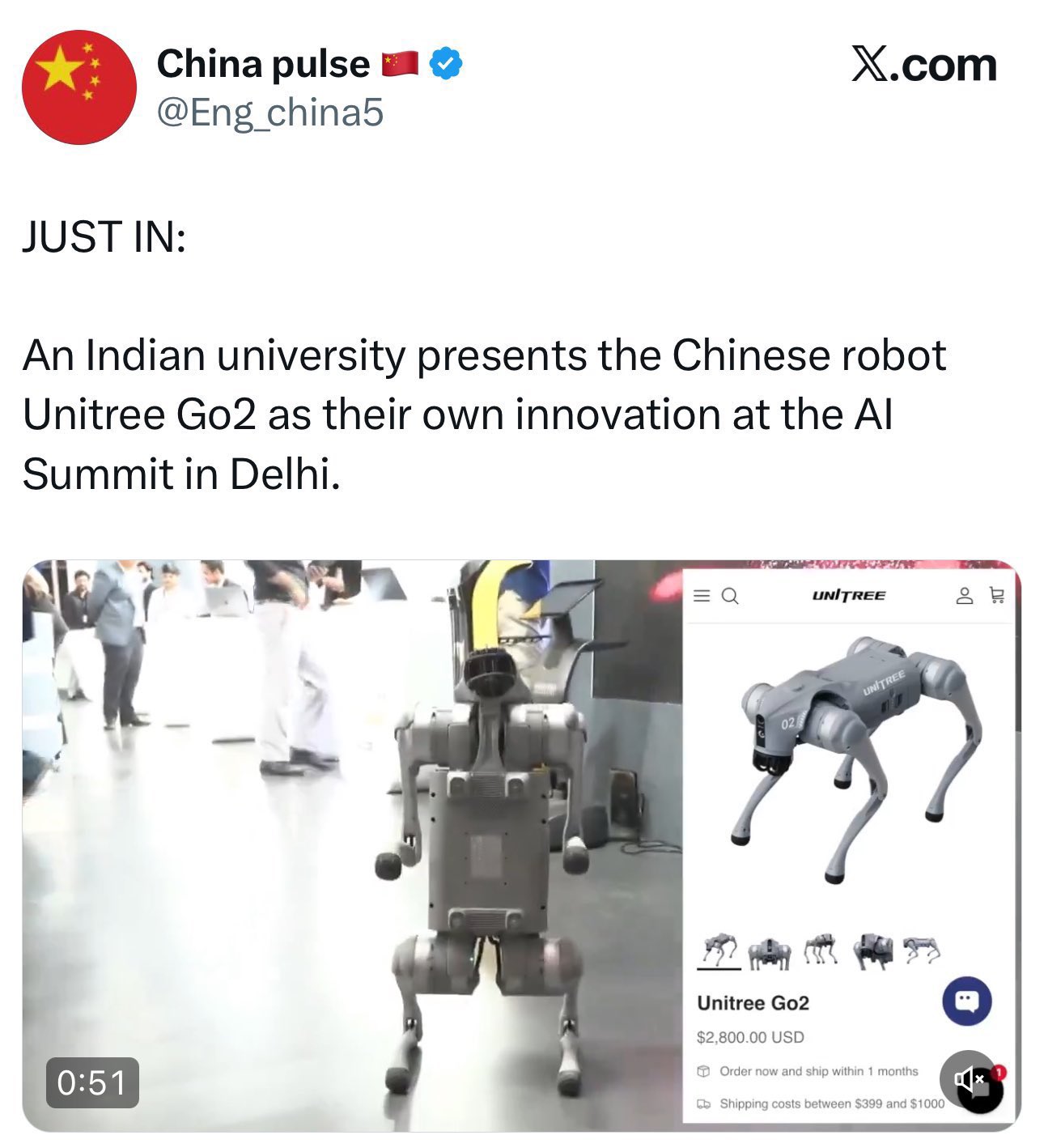
The Congress party amplified Gandhi’s critique, claiming the Narendra Modi-led government had tarnished India’s global reputation in artificial intelligence. In an online post, the party stated, “Chinese robots were being displayed at the summit as indigenous products, drawing mockery from Chinese media outlets.” They targeted Union Minister Ashwini Vaishnaw, accusing him of endorsing imported technology. “The government has reduced a strategically important and high-potential sector into an embarrassment,” the party alleged, despite India’s abundant data resources and skilled workforce positioning it for a leading role.
The backlash intensified amid a controversy involving Galgotias University, which was forced to vacate its stall at the AI Impact Summit Expo. Allegations surfaced that a robotic dog on display was manufactured by a Chinese company but presented as an in-house development, sparking widespread social media outrage.
In response, Galgotias University issued a clarification: “Our robotics programme is aimed at equipping students with practical skills by working with globally available technologies.” The university also expressed concern over what it called “propaganda” against the institution.
The five-day summit, themed around “People, Planet and Progress,” aims to showcase India’s AI ambitions. It was inaugurated by Prime Minister Modi, who emphasized that AI advances would drive domestic transformation and global development. However, political tensions and questions about the authenticity of showcased technologies have overshadowed the event, casting doubt on India’s AI aspirations.
Gandhi’s remarks highlight broader concerns about data sovereignty and innovation integrity. “Instead of harnessing India’s talent and safeguarding its data, the summit had become an exercise in publicity,” he argued. The Congress echoed this, warning that such misrepresentations could undermine India’s strategic interests in emerging technologies.
Observers note that while the summit seeks to position India as an AI leader, controversies like the Galgotias incident risk eroding trust. The university’s defense underscores the challenges of integrating global tech in educational settings, but critics argue it exposes vulnerabilities in India’s AI ecosystem.
As the event continues, the focus remains on whether India can truly innovate or if it remains reliant on foreign imports. Gandhi’s critique serves as a reminder that true progress requires genuine domestic development, not just international spectacle.
The summit, being held in New Delhi from February 16-20, is showcasing India’s ambitions in artificial intelligence (AI). Attracting over 20 heads of state, 60 ministers, and around 500 global AI leaders, the summit aims to position India as a frontrunner in AI innovation. The event focuses on leveraging AI for societal benefits, sustainable development, and economic growth.
The summit emphasizes AI’s role in driving domestic transformation and global development. India’s vast data resources and skilled workforce are key assets for AI advancement, urging collaboration to harness technology for inclusive progress. Sessions cover topics like AI ethics, climate action, and digital inclusion, with demonstrations of AI applications in healthcare, education, and agriculture.