India-U.S. Trade Deal Triggers Farmer Concern
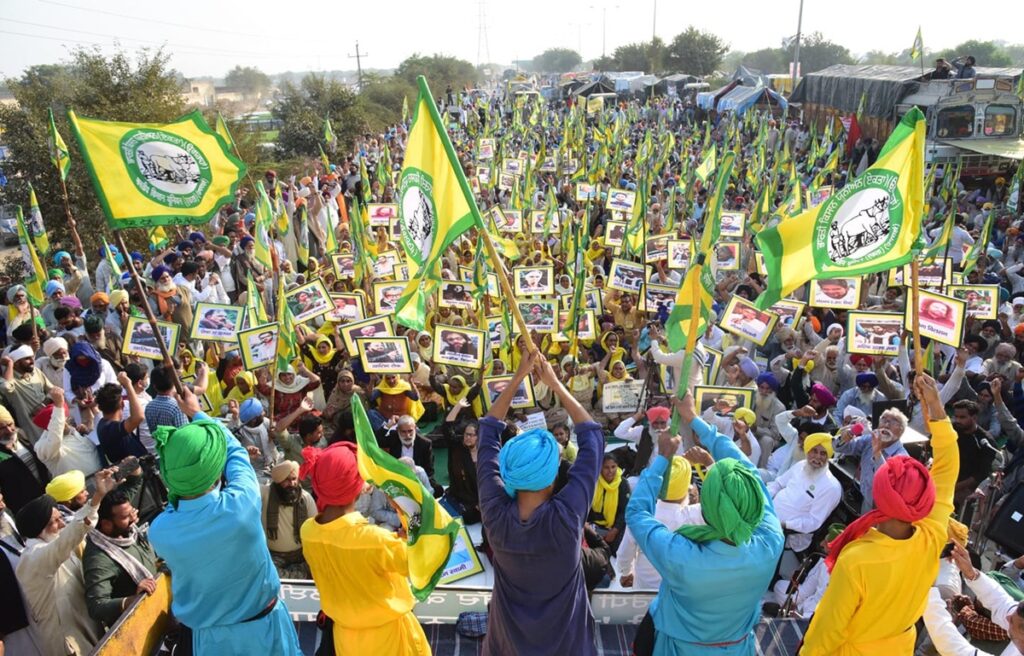
FILE PHOTO: Farmers protest at a Delhi border. The announcement of a trade deal between the U.S. and India has raised concern among farmer groups and food security activists over potential increases in agricultural imports, including genetically modified grain (Image by Randeep Maddoke via Wikimedia Commons)
On February 6, the United States and India unveiled a framework for an interim reciprocal trade agreement, marking a significant step toward deeper bilateral economic ties. The agreement outlines tariff reductions on a broad array of products traded between the two nations, aiming to boost commerce while addressing longstanding trade barriers.
According to the India-U.S. joint statement, “India will eliminate or reduce tariffs on all U.S. industrial goods and a wide range of U.S. food and agricultural products, including dried distillers’ grains (DDGs), red sorghum for animal feed, tree nuts, fresh and processed fruit, soybean oil, wine and spirits, and additional products.” India has also committed to tackling non-tariff barriers that have hindered U.S. food and agricultural exports. This interim pact serves as a precursor to a more comprehensive bilateral trade deal.
The announcement has sparked alarm among farmer groups and food security advocates, who fear that the concessions could flood Indian markets with imports, potentially harming domestic agriculture. ASHA-Kisan Swaraj, a prominent farmer network, issued a statement on February 7 calling for nationwide protests on February 12. They warned that “removal of tariffs on a wide range of agricultural imports could depress domestic prices, affect farmers and horticulturists, distort feed and livestock markets, and increase dependence on imports.”
Specific concerns center on products like DDGs and red sorghum, which could impact farmers cultivating maize, jowar, and soybean for fodder and animal feed. The group highlighted soybean oil imports, especially amid reports of distress among soybean farmers in states like Maharashtra, Telangana, Madhya Pradesh, and Rajasthan. “Imports of DDGs and red sorghum could affect farmers growing maize, jowar, and soybean used in fodder and animal feed,” the statement noted.
A major point of contention is the potential influx of genetically modified (GM) food and feed products. ASHA-Kisan Swaraj expressed worries about soybean oil and DDGs, primarily derived from GM maize. Under current Indian regulations, the Food Safety and Standards Authority of India (FSSAI) mandates that imported food products linked to 24 notified crops must carry a non-GM origin and GM-free certificate. This 2020 order covers crops such as maize, soybean, and wheat. Critics argue that the agreement might undermine these safeguards, allowing GM imports to enter without adequate labeling or restrictions.
On the U.S. side, the agreement imposes a reciprocal tariff of 18% on select Indian products, including textiles and apparel, leather and footwear, plastic and rubber, organic chemicals, home décor, artisanal items, and certain machinery. The U.S. has also agreed to eliminate tariffs on specific aircraft and aircraft parts. Both nations have established rules of origin to ensure that the benefits of the deal primarily benefit their respective economies.
Further bolstering the partnership, the joint statement reveals that “India intends to purchase $500 billion worth of U.S. energy products, aircraft and aircraft parts, precious metals, technology products, and coking coal over the next five years.” This commitment underscores the strategic economic alignment between the two countries.
Farmer organizations view these developments as a threat to India’s agricultural sovereignty. ASHA-Kisan Swaraj emphasized that such imports could exacerbate vulnerabilities in the livestock sector and increase reliance on foreign supplies. “It also raises concerns over soybean oil imports, particularly at a time when soybean farmers are reporting distress,” they added.
The protests planned for February 12 reflect broader anxieties about food security and the livelihoods of millions of smallholder farmers. Experts argue that while the agreement promises economic growth, it must balance these gains with protections for domestic producers. The FSSAI’s GM regulations are seen as a critical bulwark, but activists fear they may be weakened under trade pressures.
As negotiations progress toward a full agreement, stakeholders are urging policymakers to prioritize sustainable agriculture and ensure that trade liberalization does not come at the expense of India’s farming community. The interim deal, while a milestone, highlights the delicate interplay between global commerce and national interests.