People’s Rights Being Snatched Away By Replacing MGNREGA: Congress
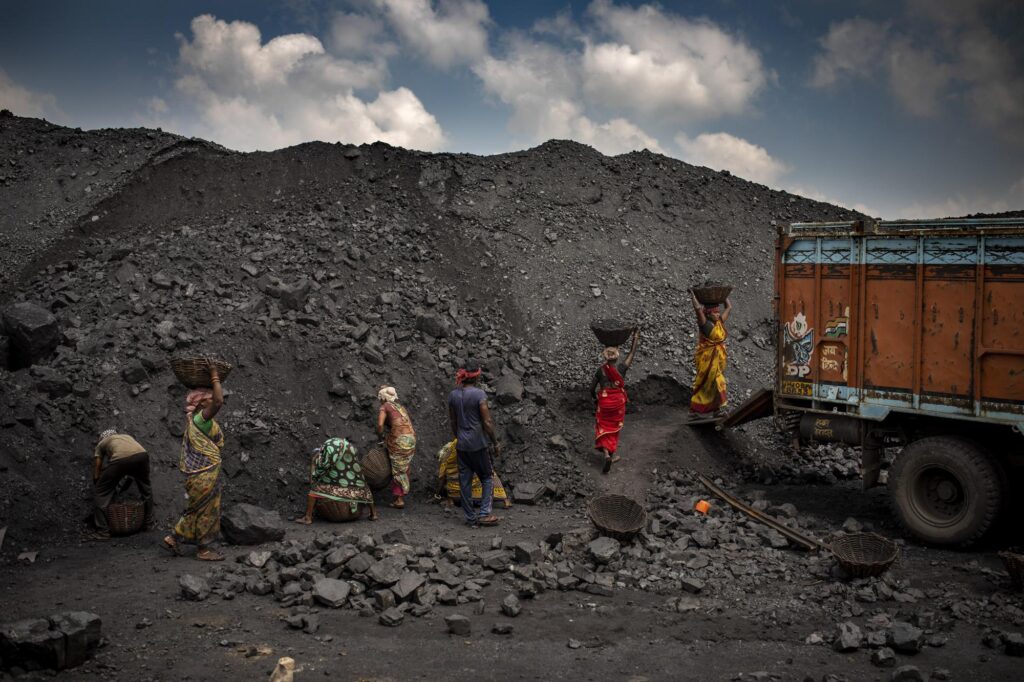
Labourers load coal into a truck (Representational Image: AP)
The Congress party on Wednesday launched a scathing attack on the BJP-led government, accusing it of eroding people’s rights by dismantling the Mahatma Gandhi National Rural Employment Guarantee Act (MGNREGA) framework. In a press conference, Rachnatmak Congress chairperson Sandeep Dikshit announced a nationwide dialogue to amplify workers’ voices and symbolically bring their struggles to the national capital.
Dikshit claimed the BJP has replaced MGNREGA with a new law, VB-G RAM G, which the Congress has vehemently opposed. “The BJP has replaced MGNREGA with a new law — referred to as VB-G RAM G — a move the Congress has been consistently opposing,” he stated. Protest campaigns under the banner “MGNREGA Bachao Sangram” are already underway in several states and districts, he added.
Highlighting MGNREGA’s vital role during the Covid-19 pandemic, Dikshit described it as a lifeline for millions. “MGNREGA truly earned a place in the hearts of the people,” he said. Extensive consultations with farmer and labor organizations revealed widespread concern: “Across all discussions, one message came through clearly — people’s rights are being snatched away,” he noted.
The dialogue, scheduled for Thursday at Jawahar Bhawan in Delhi, will unite MGNREGA workers from across the country. Participants will share experiences, recount struggles, and deliberate on the scheme’s future. Dikshit emphasized the workers’ contributions. “These workers have used the scheme to build roads, schools, panchayat buildings, ponds and water-harvesting structures, contributing directly to grassroots development and nation-building,” he said.
He praised the scheme’s decentralized spirit, where panchayats had autonomy to plan and execute works. “Panchayats once had the autonomy to plan and execute development works for their own prosperity, with the government acting as a supportive partner,” he said, alleging the Modi government is “destroying” this participatory process.
In a powerful symbolic gesture, each participant will bring a fistful of soil from their MGNREGA worksite. “All the soil will be collected together to send a collective message of struggle,” Dikshit explained, representing “both the dignity of labour and the fight to protect people’s rights.”
The event underscores Congress’s commitment to defending MGNREGA against what it sees as the BJP’s assault on rural livelihoods. As workers converge in Delhi, the dialogue aims to reignite national focus on the scheme’s role in poverty alleviation and sustainable development, challenging the government’s reforms.
In its previous form, MGNREGA aimed to enhance livelihood security in rural areas by providing at least 100 days of assured and guaranteed wage employment in a financial year to at least one member of every Indian rural household whose adult members volunteer to do unskilled manual work. Women were guaranteed one half of the jobs made available under the MGNREGA.
Another aim of MGNREGA was to create durable assets (such as roads, canals, ponds and wells). Employment was to be provided within 5 km of an applicant’s residence, and minimum legal wage under the law was to be paid. If work was not provided within 15 days of applying, applicants were entitled to an unemployment allowance. That is, if the government failed to provide employment, it had to provide certain unemployment allowances to those people. Thus, employment under MGNREGA was a legal entitlement. Apart from providing economic security and creating rural assets, other advantages of NREGA were that it could help in protecting the environment, empowering rural women, reducing rural-urban migration and fostering social equity, among others.
The act was first proposed in 1991 by then Prime Minister P.V. Narasimha Rao. It was finally accepted in the Parliament and commenced implementation in 625 districts of India. Based on this pilot experience, NREGA was scoped up to cover all the districts of India from 1 April 2008. The statute was praised by the government as “the largest and most ambitious social security and public works program in the world”.
In 2009, the World Bank had chided the act, along with others, for hurting development through policy restrictions on internal movement. However, in its World Development Report 2014, the World Bank called it a “stellar example of rural development”. MGNREGA was implemented mainly by gram panchayats. The erstwhile law stated that it provides many safeguards to promote its effective management and implementation.