Unnao Rape Case: Public Welcomes SC Decision
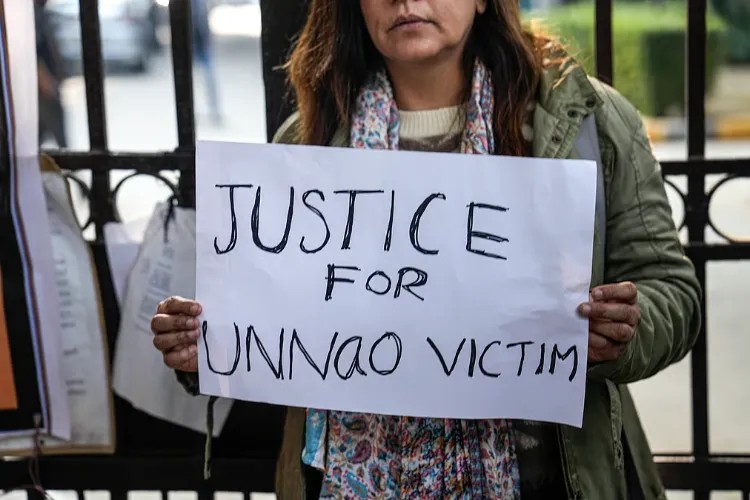
The Supreme Court has put on hold a controversial order that had suspended the life sentence of Kuldeep Singh Sengar, convicted of raping a teenager. Sengar, formerly of the ruling Bharatiya Janata Party (BJP), was found guilty in 2019 under the POCSO Act
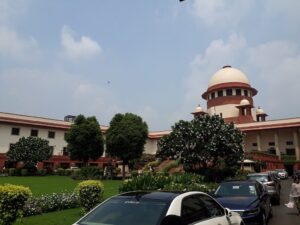
In a decisive move that highlighted the judiciary’s responsiveness to public sentiment and political pressures, the Supreme Court of India on Monday stayed a Delhi High Court order suspending the life sentence of former BJP MLA Kuldeep Singh Sengar in the 2017 Unnao rape case involving a minor. The apex court’s three-judge vacation bench, led by Chief Justice of India Surya Kant and including Justices J.K. Maheshwari and Augustine George Masih, issued a notice to Sengar to file a counter-affidavit within four weeks and ordered his continued detention, despite the high court’s conditional bail grant.
The ruling addressed a CBI plea challenging the December 23 high court order. The survivor, whose ordeal has defined the case, expressed immense relief. “I am very happy with this decision. I have got justice from the Supreme Court. I have been raising my voice for justice from the very beginning,” she told PTI over the phone from Delhi. “I do not make any allegations against any court. I have faith in all courts, but the Supreme Court has given me justice and will continue to do so.” Her statement underscores the emotional weight of the verdict, restoring her confidence in the judicial process after years of struggle.
The Supreme Court bench emphasized its connection to societal realities, declaring, “We are not sitting in ivory towers.” This came in response to Sengar’s counsel’s complaint about social media posts featuring photographs of Delhi High Court judges with captions urging people to “identify these judges.” CJI Surya Kant remarked that the court was aware of efforts to exploit the situation politically, stating, “We are conscious of the fact that when a convict or an undertrial has been released, such orders are not ordinarily stayed by this court without hearing such persons. But in view of peculiar facts, where the convict is also convicted for a separate offence, we stay the operation of the Delhi High Court.” The bench cautioned against social media trials while affirming judicial accountability. “Even the finest judges are prone to errors,” it observed, noting that appellate corrections are essential to constitutional adjudication.
The Delhi High Court had suspended Sengar’s life imprisonment and granted conditional bail, arguing he had served seven years and five months, exceeding the maximum punishment at the time. Sengar, a four-time MLA from Unnao, was convicted in December 2019 for raping a 17-year-old and sentenced to life. He remains jailed due to a 10-year sentence in the custodial death case of the survivor’s father, where bail was denied.
Solicitor-General Tushar Mehta, representing the CBI, opposed the suspension vehemently, calling the case “very horrific” and prioritizing the survivor’s rights. “We are answerable to the girl,” Mehta told the bench. He challenged the high court’s view on sentence duration, noting post-amendment minimums of 20 years, though the bench clarified these applied after the offence. Mehta also contested the high court’s stance that Sengar, as an MLA, wasn’t a public servant under POCSO, emphasizing the victim’s minority and the act’s strict provisions.
The POCSO framework has been central to the case, which sparked nationwide outrage over the minor’s assault, the 2018 custodial death of the survivor’s father, the 2019 road accident killing two relatives and injuring the survivor and her lawyer, and allegations of intimidation. The case symbolized political impunity, leading to Sengar’s BJP expulsion. The Supreme Court transferred proceedings to Delhi for safety and fairness.
This ruling reinforces judicial vigilance in sensitive cases, ensuring appeals are heard without premature releases. By staying the bail and highlighting awareness of public discourse, the court balances societal expectations with legal integrity. The survivor’s renewed faith in the Supreme Court reflects its role as a guardian of justice.
The Unnao case exposes flaws in handling powerful accused and vulnerable victims, urging reforms for accountability. As proceedings continue, it may influence future cases, emphasizing that justice transcends status. The court’s “ivory towers” remark signals a judiciary engaged with realities, committed to fair adjudication amid political storms.