Oppn Slams Centre’s Bid To Redefine Aravalli Hills
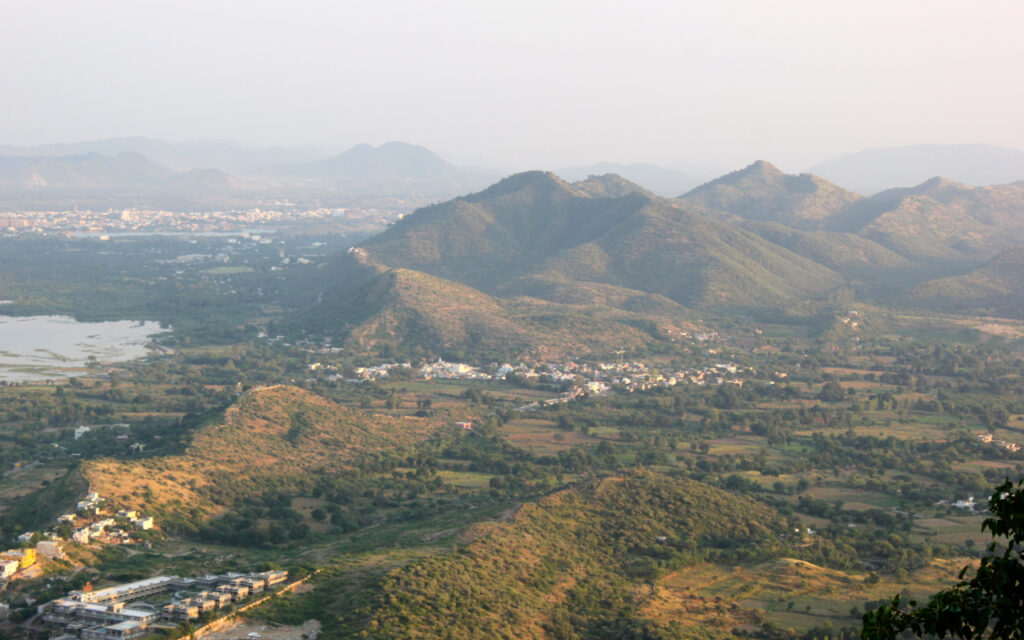
FILE PHOTO: At the heart of the dispute is the government's claim that mining leases cover just 0.19 percent of the Aravalli region
The ancient Aravallis, a weathered spine of stone that has guarded the subcontinent for millennia, have emerged as a fierce battleground between the Congress party and the Modi government. Opposition leaders accuse the Centre of being “hell-bent” on redefining this irreplaceable natural heritage, sparking debates over ecology, mining, and legal semantics.
Congress general secretary Jairam Ramesh ignited the row on Tuesday, emphasizing the Aravallis’ ecological significance. “The Aravallis are part of our natural heritage and have immense ecological value. They need meaningful protection,” Ramesh stated in a pointed post on X. He questioned the government’s motives, asking, “why the government was determined to redraw their definition and ‘for whose benefit’ such an exercise was being undertaken.” Ramesh criticized the administration for allegedly ignoring expert recommendations from the Forest Survey of India, arguing that recent “clarifications” from the Union environment minister only fueled suspicions.
At the heart of the dispute is the government’s claim that mining leases cover just 0.19 percent of the Aravalli region. While this figure appears minimal, Ramesh contended it equates to about 68,000 acres—an area he deemed too significant to dismiss. He challenged the calculation’s baseline, which uses the total landmass of 34 Aravalli districts across four states, spanning approximately 1.44 lakh square kilometers.
“This is the wrong denominator,” Ramesh asserted, insisting the correct metric should focus on the actual hilly terrain within these districts. Drawing from data in 15 districts, he revealed that the Aravallis constitute nearly a third of the landmass there. Yet, he warned of uncertainty: “there is no clarity on how much of this hilly terrain would lose protection under the revised definition and be opened up to mining or other development.”
Ramesh further cautioned that adopting local elevation profiles, as proposed by the minister, could remove legal safeguards from hills exceeding 100 meters, potentially exposing vast areas in the Delhi-NCR region to real estate projects. This, he said, would exacerbate environmental pressures in an already strained area. Linking the redefinition to broader plans, Ramesh highlighted threats to the Sariska Tiger Reserve, where boundary changes might enable mining. “Such fragmentation elsewhere is already wreaking havoc,” he noted, stressing the risk to the ecosystem’s integrity.
The government responded vehemently, with environment minister Bhupender Yadav accusing Congress of spreading “misinformation.” On Monday, Yadav defended the administration, stating that mining is “legally permitted in only 0.19 per cent of the Aravalli area” and that the Modi government is “fully committed” to protecting and restoring the range. He countered Ramesh’s allegations by claiming that Congress oversaw “rampant illegal mining in Rajasthan” during its tenure.
This clash unfolds against the Supreme Court’s November 2025 ruling, which endorsed a uniform legal definition of the Aravalli Hills and Range, based on an environment ministry committee’s recommendations. An “Aravalli Hill” is now defined as a landform rising at least 100 meters above its surroundings, while an “Aravalli Range” comprises two or more such hills within 500 meters. The court aimed to provide clarity, but critics argue it opens doors to exploitation.
For Congress, the debate transcends definitions and statistics—it’s about preserving a fragile, ancient ecosystem vital for biodiversity and water resources. Ramesh framed it as a fight against “semantic reengineering” that could undermine India’s natural heritage. The government, however, views it as a matter of legality and development balance, insisting on evidence-based policies.
As the standoff intensifies, environmentalists and experts warn of irreversible damage. The Aravallis, one of the world’s oldest mountain ranges, face threats from urbanization, mining, and climate change. Ramesh’s call for restoration echoes broader concerns: “They need meaningful protection.” With elections looming, the controversy could shape political narratives, pitting ecological preservation against economic interests. Ultimately, the outcome may determine whether these millennia-old guardians endure or succumb to human ambition.