As Tourism Surges, Lakshadweep Faces A Mounting Waste Crisis
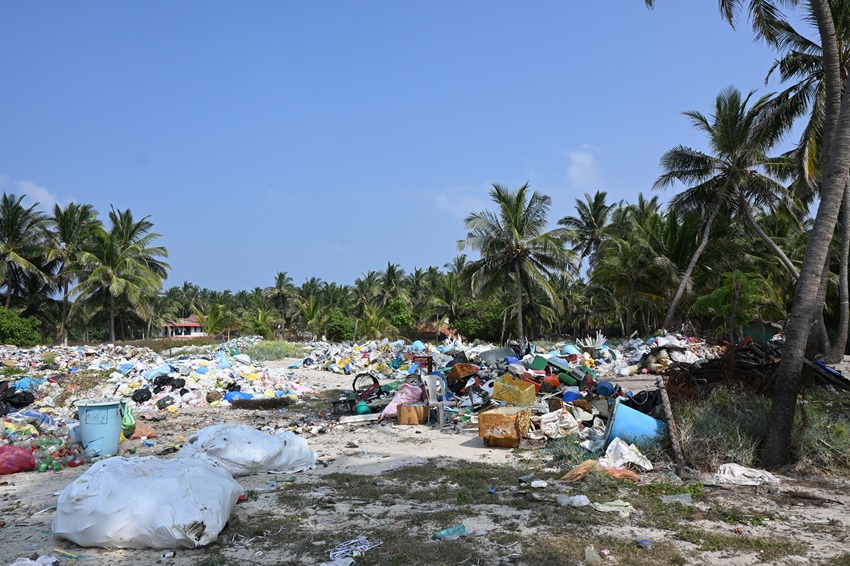
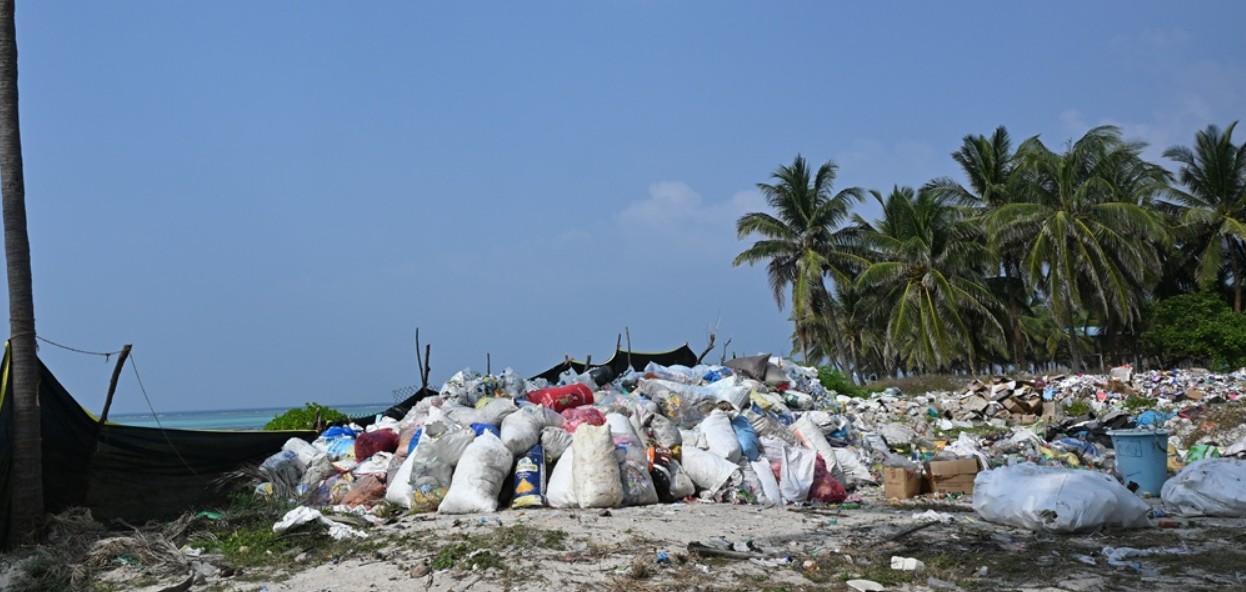
Waste dumped near the ladies’ hostel of Government College, Kadamath, Lakshadweep (Image by Muneera Beegum C.P.)
- Lakshadweep is facing a worsening waste crisis. Community bins have been removed and garbage now accumulates in open dumping yards near the sea.
- A surge in tourism, increased plastic use, and lack of planning have intensified the waste disposal problem, affecting beaches, lagoons and everyday life for residents.
- Plastic pollution now threatens fisheries and public health. Locals blame administrative failures and poor waste-management systems.
A short film, that won a 2023 competition by the Lakshadweep Administration on ways to build back the island’s biodiversity, encouraged residents to use public trash cans instead of littering.
Two years later, another video now shows that these public bins have been removed. Social activist Sabith P.K., who posted the video, said, “This irony defines the waste management crisis in Lakshadweep.”
Ten of the 36 islands that make up the Lakshadweep archipelago, India’s smallest union territory, are inhabited by humans, according to the official website. In the last few years, several islands which make up the archipelago that is part of the Chagos Ridge in the Arabian Sea, have been leased to private players. For example, Suheli has been leased to a private hotel chain for lagoon villas, while Bangaram and Thinnakara, both uninhabited islands, have been leased for resort tourism.
Waste has become one of the most urgent and poorly managed issues in Lakshadweep, where land is limited, and almost all goods arrive from the mainland wrapped in layers of plastic and other non-biodegradable material, said Sabith, who uses short videos and vlogs to raise awareness about political and environmental issues.
Waste management, a systemic failure
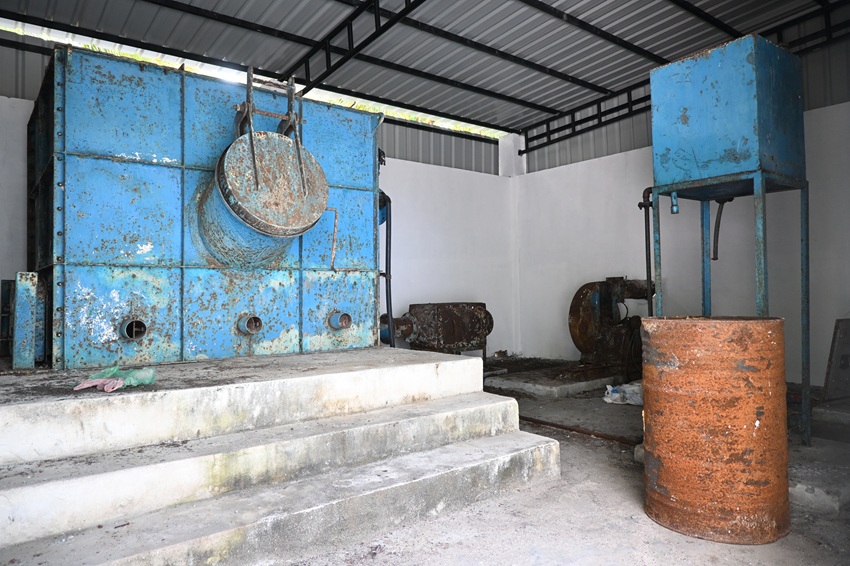
Before Praful Patel took charge as Administrator of the union territory in December 2020, Lakshadweep had a crude waste collection system. Sanitation workers, or safai karamcharis, under the Environment and Forest Department managed waste collection in all 10 inhabited islands. The collected waste was taken to a Central Garbage Depository (CGD) on each island, which are based on plots of land leased from local residents, where segregation was carried out. Non-recyclable waste was sent to the mainland through contracted buyers, while items such as diapers and sanitary napkins, which the mainland refused to accept, were incinerated locally.
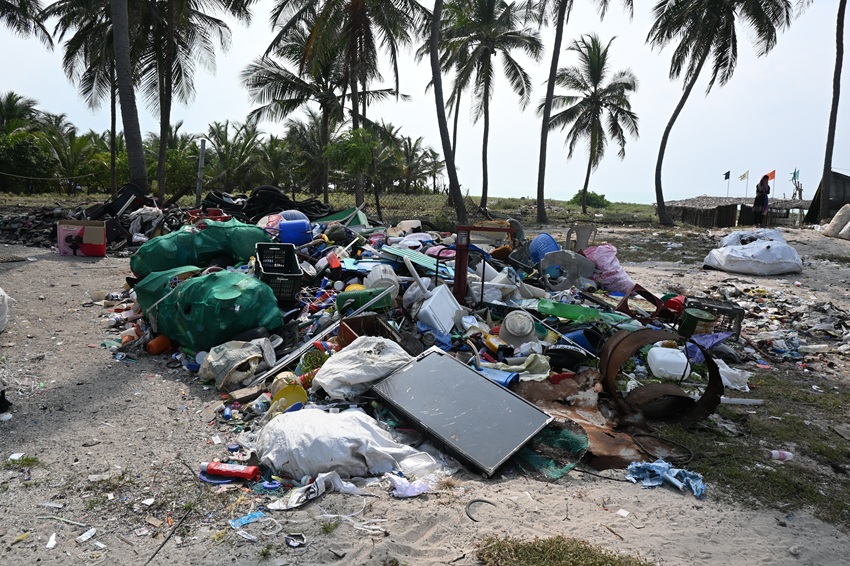
Then, in 2021, a tender notice calling for managing waste generated in community bins, stated that a total of 3,737 bins were placed on the ten inhabited islands, and around 12 tonnes of plastic/solid waste were generated per day from these bins.
According to Habeeb, a former sanitation worker, even this system was flawed. “Even when segregation was done, there were issues with the very process. Vendors often refused to ship items like diapers or sanitary pads to the mainland. Even the waste they agreed to take would be delayed due to transport issues. For the last four years, no waste has been transported out of Lakshadweep. Incinerators were installed in all the garbage depositories, but none of them have been in working condition for the last eight years,” he claimed.
Habeeb was among the 3,500 employees removed during a mass disengagement in March 2022. He now works in coconut plantations, struggling like many of his former colleagues.
After the disengagement, the Department of Environment, Forest and Climate Change passed the waste management responsibilities, in 2021, to the Village Panchayats, as was the old system prevailing around two decades ago.
However, after a failed attempt to outsource the task, the panchayats removed the community bins from the streets.
“Now, once a week, a vehicle collects only household waste and dumps everything — unsegregated — into the same Central Garbage Depository. Without any preliminary segregation, the CGD has become a dumping yard, with serious ecological impacts. Sometimes the dump catches fire, causing significant damage,” said Mahada Hussain, a social activist from Kiltan.
Earlier, in July, Hussain had filed a complaint with the Ministry of Environment, Forest and Climate Change (MoEF&CC) after a recent fire at the CGD. The ministry forwarded it to the Central Pollution Control Board and Lakshadweep Pollution Control Committee.
Fathima Quraisha, a native of Chetlat now living in Minicoy, said that despite strict instructions from the ministry, no action has been taken, and waste continues to pile up, with leachate entering the lagoon because the yard is located close to the shoreline.
Tourism boom and the growing waste crisis
The collapse of the waste-management system has coincided with another major shift on the islands: an unprecedented boom in tourism. This rapid rise in visitor numbers has added further pressure to an already failing system.
In recent years, Lakshadweep has experienced a sharp surge in tourist footfall. The islands recorded a 107% year-on-year increase in arrivals between April and June 2024, with 22,990 visitors compared to 11,074 during the same period in 2023. Travel platform MakeMyTrip also reported a 3,400% spike in online searches for Lakshadweep.
“Contrary to popular perception, the waste crisis in Lakshadweep has been worsened by tourism, but it is not the sole cause,” said a tour operator from Agatti on the condition of anonymity as he fears adverse action from the local authority. “Except for Bangaram, tourism in Lakshadweep remained limited until the 2000s. The boom has begun recently, as the government of India aims to promote tourism in the islands. Prime Minister Narendra Modi even visited Lakshadweep in 2024 during the diplomatic tensions between India and the Maldives. But this growth happened without planning or preparation. On the southern side of Agatti alone, there are at least 89 resorts and rooms. Each facility must provide at least two bottles of packaged water per room per day. This means hundreds of single-use bottles are discarded daily. Yet there are no bottle crushers and no designated disposal area.” He added that the government collects a heritage fee of ₹200 per tourist per day, but this amount, however, has not been put to use to date, he claimed.
“Other than the occasional beach clean-ups by non-profits or local clubs, no systematic effort has been made,” said Muhammed Shajahan, a fisherman from Agatti. “As fishermen, we often pick up litter along the beach, but without community bins, even that becomes difficult.”
“There are diapers everywhere underwater,” said Sameer Aman, a dive master from Kavaratti. “Even before tourism boomed, divers complained about indiscriminate dumping and poor waste management. We notice it first during our dive trips across the islands. We try to clean what we can, but the situation now needs a massive, organised effort.”
Impact beyond land
Besides tourism, the fisheries sector has also grown significantly over the past few decades. Fish production has increased from about 500 tonnes in the 1950s to 16,891 metric tonnes in 2024–25. A 2020 study on beach plastic concluded that fishing and tourism are the two major contributors to plastic pollution in Lakshadweep. Now, the recent tourism boom and the rising volume of waste are beginning to affect fisheries themselves.
“In recent years, tourism has sharply increased the amount of waste generated on the islands. The mismanagement of this waste has made the situation worse. While the fisheries sector produces far less waste than tourism, it is the primary victim of this pollution. Marine ecosystems — and the livelihoods that depend on them — are bearing the brunt,” said John Adam, a Lakshadweep-based researcher in marine socio-ecology.
He added that plastic accumulation on the islands has increased substantially, and its degradation into microplastics threatens the marine food chain. “Once plankton consume these microplastics, they move rapidly up the food chain, eventually reaching humans.”
A study published in Environmental Science and Pollution Research found microplastics in the intestinal tracts of skipjack tuna around Kavaratti. This is alarming for Lakshadweep, where tuna processing, canning and exports are among the few viable economic activities.
Medical waste adds to the crisis
Earlier, the village panchayats also handled medical waste in Lakshadweep. Abdul Salam from Kiltan, an old sanitation worker, said that with no designated facility for disposal, this waste was dumped in the Central Garbage Depositories along with other materials. A few years ago, the workers refused to segregate hazardous waste without proper equipment or safety gear. Since then, medical waste has become the sole responsibility of the medical department and individual hospitals.
Lakshadweep has two main hospitals — one in Kavaratti and another in Minicoy — along with a speciality hospital in Agatti and several Primary Health Centres (PHCs) and Community Health Centres (CHCs) across the islands. In December 2024, Indira Gandhi Hospital in Kavaratti faced backlash after allegations that biomedical waste was being burned openly. The hospital denied the claim. “With the amount of biomedical waste generated every day, and considering its hazardous nature, the real question is: what is being done with it? Nowhere in Lakshadweep has a proper facility for its disposal,” said Sadakath, a witness to the incident.
Researchers warn that Lakshadweep’s waste crisis must also be seen against the backdrop of global ocean pollution. “Improper waste management, combined with unregulated tourism, threatens the fragile marine ecosystem,” said a researcher with a local non-profit on the condition of anonymity, as he fears action from the local authority.
For local content creators, the situation reflects a deeper governance issue. “Our film was made to promote social responsibility. Today, the very communal bins we encouraged people to use have vanished. Where is that waste going now?” asked Navas K.R., director of the short film Benjaal.
Ajmal Ahmed, senior vice president of the Youth Congress in Lakshadweep, said the crisis reflects a larger administrative failure. “From transportation to waste management, Lakshadweep is managed by a bureaucratic system led by an unelected administrator. The focus is on building large tourism projects while basic services like waste management remain neglected,” he said.
(Published under Creative Commons from Mongabay India)